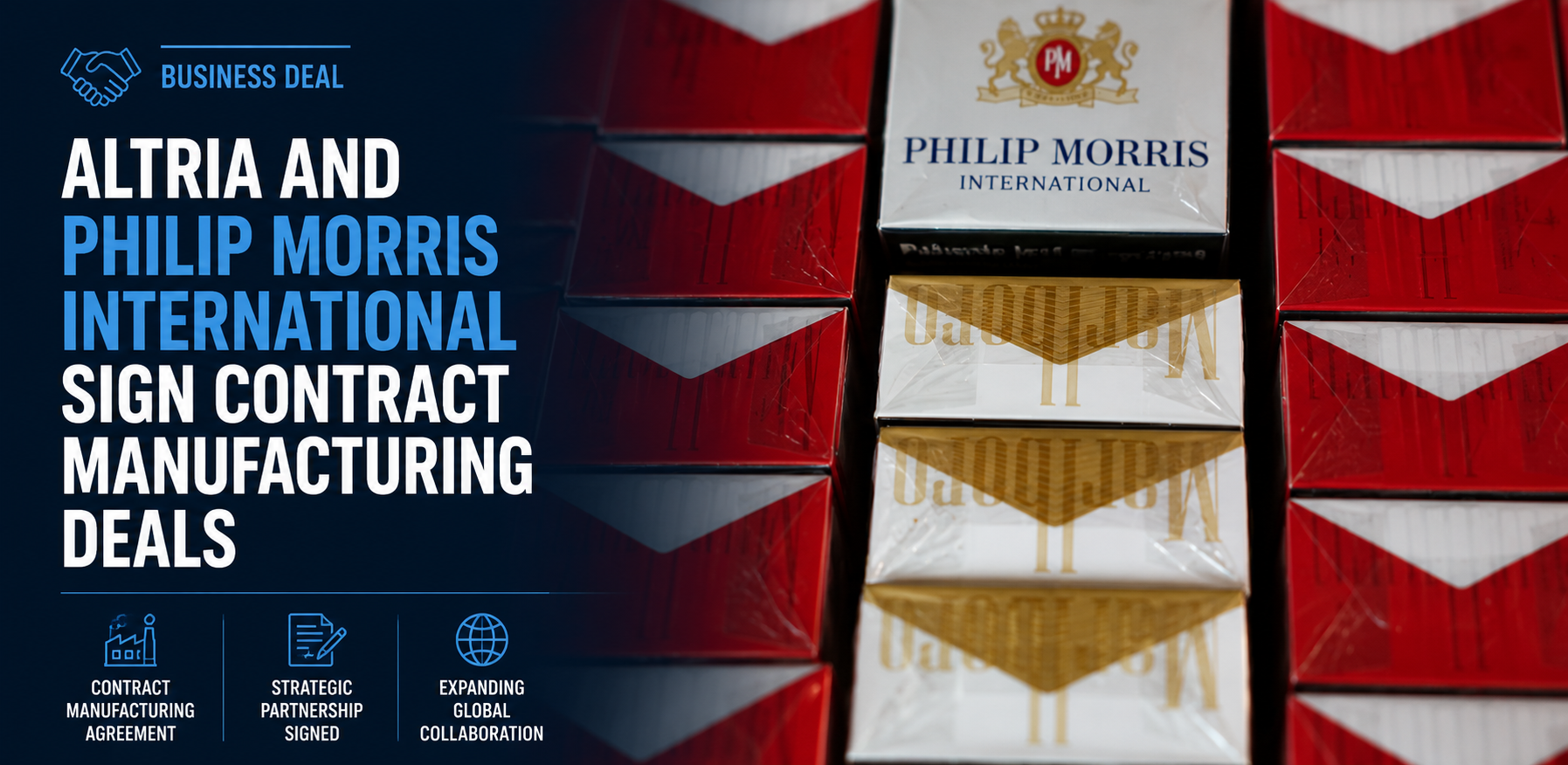
Altria and Philip Morris International Sign Contract Manufacturing Deals
What's Happening
Altria and Philip Morris International (PMI) have entered into reciprocal contract manufacturing agreements that will allow the two tobacco companies to manufacture certain cigarettes for each other.
The arrangements are designed in part to help Altria take advantage of a U.S. tax provision known as the “double duty drawback,” which allows U.S. tobacco companies exporting products to reclaim certain federal excise taxes previously paid on products sold domestically. (Reuters)
What the Deal Does
- Under the arrangement, Altria's Philip Morris USA will work with non-U.S. PMI affiliates on manufacturing.
- The companies will remain separate businesses and retain responsibility for their own commercialization, distribution and regulatory activities. (citybiz)
- The first shipments under the arrangement are expected in early 2027, subject to operational readiness and regulatory requirements. (Nicotine Insider)
Why This Matters for U.S. Healthcare
Although this is primarily a tobacco-industry business story, it has a clear U.S. public-health connection because it concerns the manufacturing and distribution of combustible cigarettes.
Tobacco use remains a major source of preventable disease and death in the United States, so changes in cigarette production, pricing and distribution can have implications for tobacco consumption and tobacco-control efforts.
Industry Impact
- Tobacco Companies: The agreements could improve manufacturing efficiency and reduce costs associated with exporting and importing cigarettes.
- U.S. Government & Regulation: The deal demonstrates how tobacco companies can use existing federal tax provisions to alter the economics of cigarette manufacturing and international trade. (Reuters)
- Public Health: Any changes that affect cigarette availability, pricing or distribution are relevant to tobacco-control organizations and public-health agencies.
- Smoke-Free Products: Both companies are also pursuing strategies beyond traditional cigarettes. PMI has been expanding its smoke-free portfolio, while Altria has been investing in alternatives to combustible tobacco.
Looking Ahead
The companies expect the manufacturing arrangements to begin taking effect in 2027.
The agreements are primarily aimed at improving operational economics rather than combining the companies' broader businesses. (citybiz)
Key Takeaways
- Altria and PMI have entered into contract manufacturing arrangements with each other. (Reuters)
- The agreements are designed partly to take advantage of the U.S. double duty drawback tax provision.
- Philip Morris USA will work with PMI's non-U.S. affiliates.
- Initial shipments are expected in early 2027.
- The companies remain operationally independent.
- The story is relevant to U.S. public health because it concerns the production and distribution of combustible tobacco products.
What This Means for Healthcare Marketers
The development is relevant to organizations working in tobacco control, smoking cessation, public health, addiction prevention and population health. Changes in tobacco-company manufacturing and distribution strategies can affect the broader environment in which tobacco-control and cessation programs operate.