Abbott and Alzpath Partner to Advance Blood Test for Alzheimer's Disease Detection
What's Happening
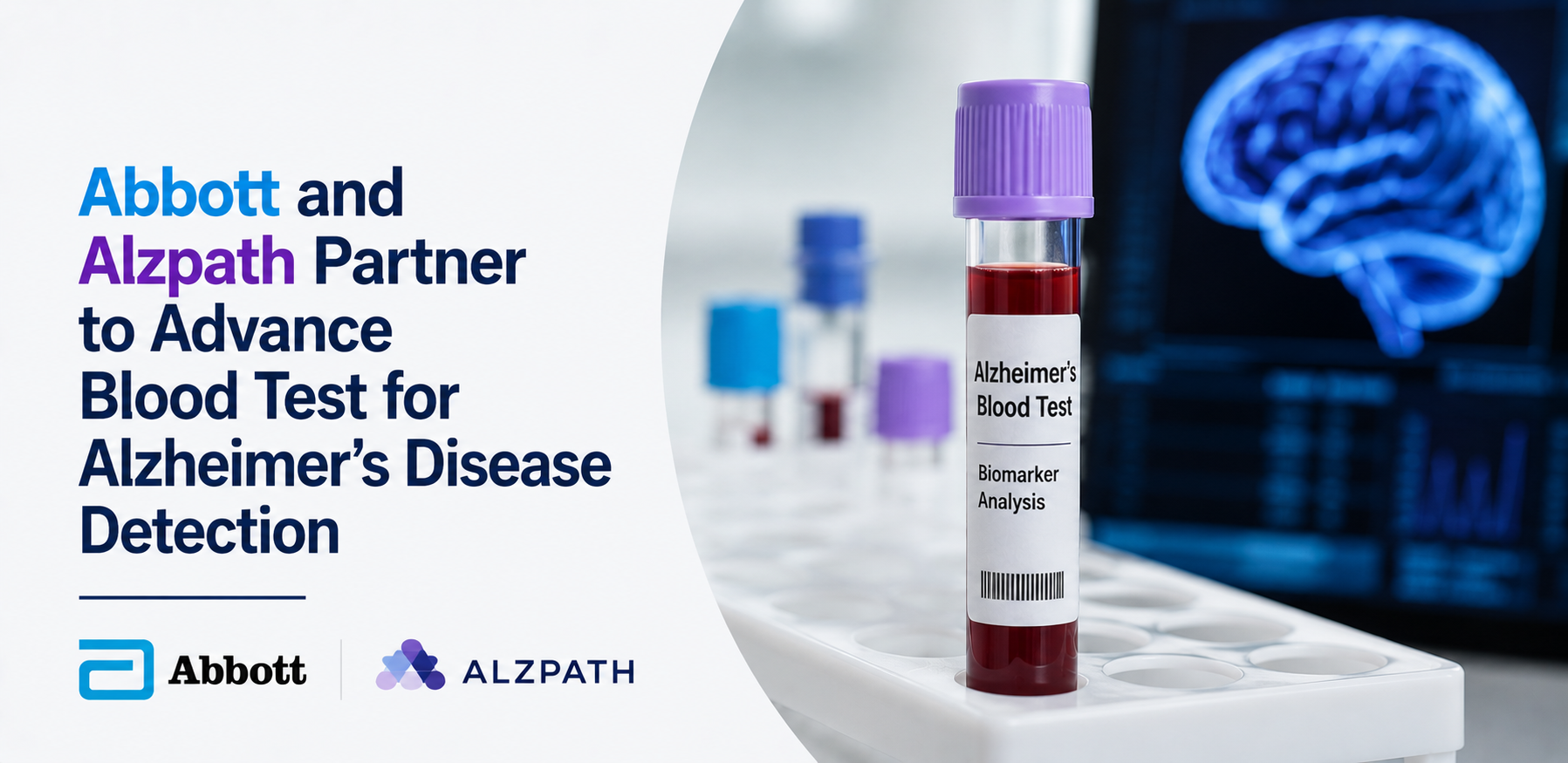
Alzpath announced a licensing agreement with Abbott Laboratories aimed at advancing the development and commercialization of a blood test designed to help detect Alzheimer's disease.
The agreement gives Abbott access to Alzpath's proprietary biomarker technology, which measures a form of tau protein associated with Alzheimer's disease. The companies hope the partnership will help bring a simpler and more accessible diagnostic tool to healthcare providers and patients.
The deal comes as interest in Alzheimer's diagnostics continues to grow. New Alzheimer's treatments have increased demand for earlier and more accurate diagnosis because patients typically benefit most when treatment begins before significant brain damage occurs.
If successfully developed and validated, the blood test could help physicians identify patients who may need additional evaluation for Alzheimer's disease without relying solely on more expensive or invasive testing methods.
The partnership reflects a broader trend in healthcare toward earlier disease detection through blood-based diagnostics.
Why Alzheimer's Disease Is Such a Major Healthcare Challenge
Alzheimer's disease is the most common form of dementia and affects millions of people worldwide.
The condition is a progressive neurological disorder that gradually affects:
- Memory
- Thinking abilities
- Communication skills
- Decision-making
- Daily functioning
Symptoms often develop slowly and worsen over time. As populations age, the number of people living with Alzheimer's disease is expected to increase significantly, creating growing challenges for patients, caregivers, healthcare systems, and governments.
The disease also carries substantial economic costs due to long-term care needs, medical expenses, and lost productivity among both patients and caregivers. Because no cure currently exists, early detection and intervention have become major priorities within Alzheimer's research.
Why Diagnosing Alzheimer's Has Traditionally Been Difficult
Historically, diagnosing Alzheimer's disease has been complex. Doctors often rely on a combination of:
- Medical history
- Cognitive assessments
- Neurological examinations
- Brain imaging
- Laboratory testing
Advanced diagnostic tools such as PET scans can identify certain biological changes associated with Alzheimer's, but these tests can be expensive and may not be widely available. In some cases, physicians also use spinal fluid testing to evaluate biomarkers associated with the disease.
While these approaches can be effective, they may require specialized equipment, trained personnel, or invasive procedures. Researchers have therefore spent years searching for simpler methods that could help identify Alzheimer's earlier and more efficiently.
Why Blood Tests Could Change Alzheimer's Care
Blood-based diagnostics are viewed as one of the most promising developments in Alzheimer's detection. A blood test offers several potential advantages:
- Greater Accessibility: Blood testing can often be performed in routine healthcare settings, making it easier for patients to access screening.
- Earlier Detection: Researchers hope blood biomarkers can help identify disease-related changes before significant symptoms appear.
- Lower Costs: Compared with imaging procedures, blood tests may be more affordable and scalable.
- Faster Decision-Making: Physicians may be able to identify patients who require additional evaluation more quickly.
The healthcare industry believes these benefits could significantly expand access to Alzheimer's screening and diagnosis.
What Are Biomarkers?
Biomarkers are measurable biological indicators that provide information about a person's health. Examples include:
- Blood glucose levels
- Cholesterol measurements
- Genetic markers
- Proteins associated with disease
In Alzheimer's disease, researchers have focused heavily on proteins such as amyloid and tau because they are linked to changes occurring in the brain. Alzpath's technology focuses on a specific form of tau protein that researchers believe may help identify Alzheimer's-related pathology. By measuring these biomarkers through a blood sample, scientists hope to improve diagnostic accuracy while reducing the need for more invasive testing.
Why Diagnostics Are Becoming More Important
Interest in Alzheimer's diagnostics has increased significantly following recent advances in treatment. Several newer therapies aim to slow disease progression rather than simply manage symptoms. Because these treatments are generally expected to work best during earlier stages of disease, accurate diagnosis has become increasingly important.
Healthcare providers now face growing demand for tools that can:
- Identify patients earlier
- Support treatment decisions
- Improve clinical trial enrollment
- Monitor disease progression
As a result, diagnostics companies, pharmaceutical firms, and healthcare providers are investing heavily in technologies that improve detection capabilities.
The Growing Market for Alzheimer's Testing
The Alzheimer's diagnostics market has attracted significant investment in recent years. Companies are pursuing a variety of approaches, including:
- Blood-based biomarkers
- Imaging technologies
- Genetic testing
- Digital cognitive assessments
- Artificial intelligence tools
Many healthcare experts believe widespread blood testing could eventually become a routine part of evaluating memory-related concerns. While additional validation and regulatory review remain necessary, industry interest continues to grow. The Abbott-Alzpath partnership is one example of how major healthcare companies are positioning themselves within this rapidly evolving market.
Industry Impact
- Diagnostic Companies: The partnership highlights increasing investment in blood-based diagnostic technologies.
- Pharmaceutical Companies: Improved diagnostics may help identify patients who could benefit from emerging Alzheimer's therapies.
- Healthcare Providers: Simpler testing options could improve access to earlier evaluation and treatment.
- Patients and Caregivers: Earlier diagnosis may support faster treatment decisions and care planning.
Why This Matters
The collaboration between Abbott and Alzpath reflects a broader shift toward earlier disease detection and precision medicine. As healthcare moves toward more proactive approaches, blood-based diagnostics are becoming increasingly important tools for identifying disease before symptoms become severe. For Alzheimer's disease in particular, earlier detection may become even more valuable as treatment options continue evolving.
While additional research and regulatory review remain necessary, the partnership signals growing confidence in the potential role of blood testing within Alzheimer's care. If successful, these technologies could help reshape how one of the world's most challenging neurological diseases is diagnosed and managed.
Key Takeaways
- Abbott and Alzpath signed a licensing agreement focused on Alzheimer's blood-test technology.
- The test is designed to measure biomarkers associated with Alzheimer's disease.
- Blood-based diagnostics may provide a simpler alternative to more invasive or expensive testing methods.
- Growing interest in Alzheimer's treatments is increasing demand for earlier diagnosis.
- The partnership reflects broader investment in precision diagnostics and disease detection.
What This Means for Healthcare Marketers
This story highlights the growing importance of diagnostics as a driver of healthcare innovation. For healthcare marketers, advancements in disease detection often create opportunities across the healthcare ecosystem, including diagnostics, pharmaceuticals, digital health, provider education, and patient engagement. As Alzheimer's treatments evolve, the ability to identify appropriate patients efficiently may become increasingly valuable.
The partnership also reflects a broader shift toward precision medicine and earlier intervention. Healthcare organizations are investing more heavily in technologies that help identify diseases before symptoms become severe, creating new opportunities for companies involved in testing, analytics, and care management. For healthcare intelligence teams, developments in Alzheimer's diagnostics can provide insight into future market growth areas. The combination of aging populations, increasing disease prevalence, and new treatment options is driving significant interest in tools that support earlier diagnosis. More broadly, the collaboration demonstrates how advances in diagnostics are becoming central to modern healthcare strategies, helping connect scientific innovation with earlier and potentially more effective patient care.