Abbott Investigates Two Cyber Incidents, Says Patient Care and Operations Remain Unaffected
What's Happening
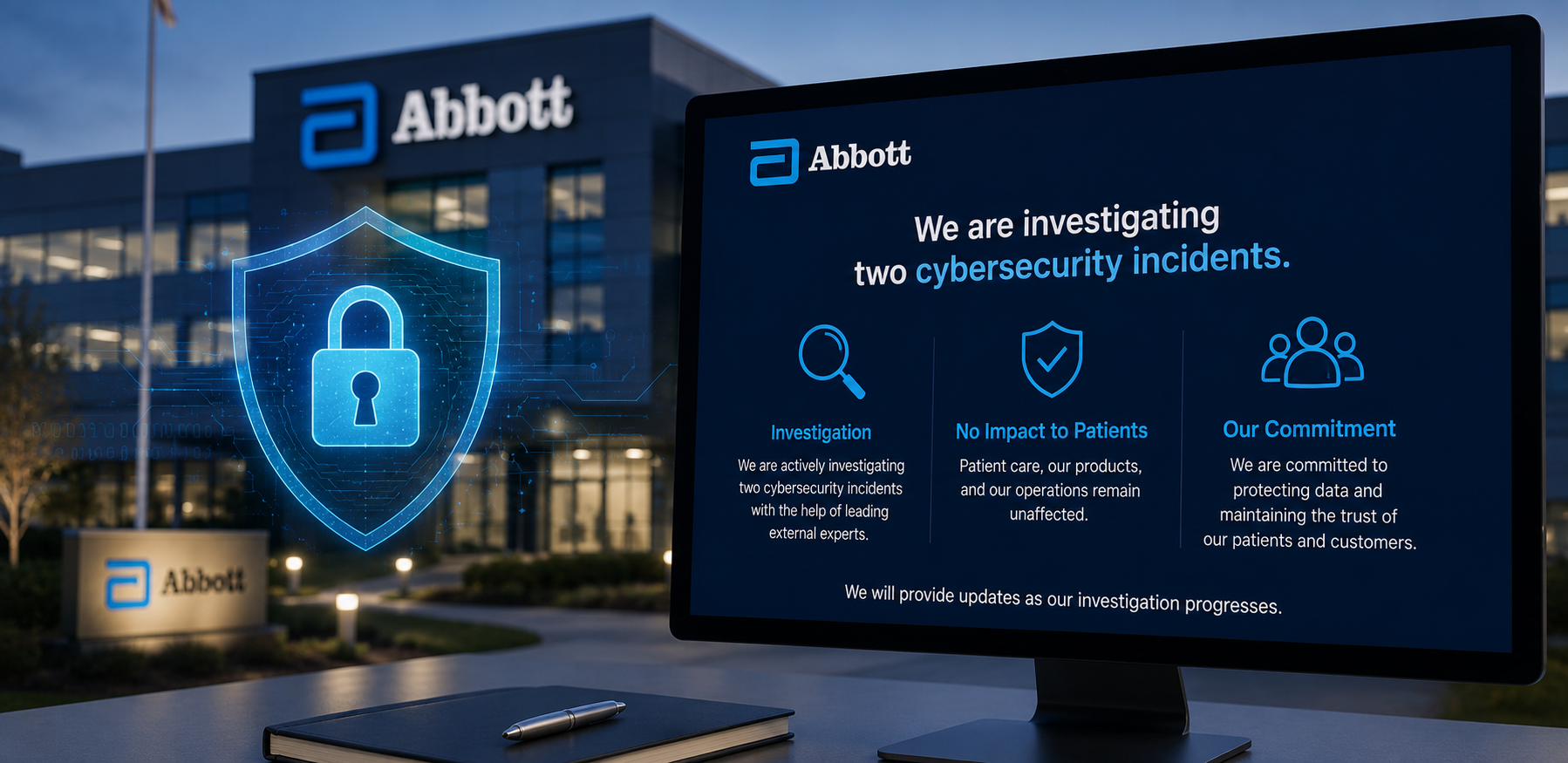
Abbott Laboratories is investigating two separate cybersecurity incidents involving unauthorized access to portions of its systems, but the company says its business operations, manufacturing, laboratory services, and patient care have not been affected.
One incident involved a limited number of internal systems within Abbott's Cancer Diagnostics business. The second involved LabCentral, a third-party-hosted online portal used by the company's core laboratory diagnostics division. Abbott stated that the two incidents are unrelated and that neither has disrupted its ability to serve customers or patients.
The company has launched investigations into both incidents, engaged external cybersecurity experts, and notified law enforcement while assessing exactly what information may have been accessed. At this stage, Abbott says it does not expect either incident to have a material impact on its financial performance or operations.
What Happened?
According to Abbott, the first cybersecurity incident involved unauthorized access to certain internal systems used within its Cancer Diagnostics business.
The company emphasized that:
- The incident was isolated to the Cancer Diagnostics division.
- Other Abbott businesses and systems were not affected.
- Legacy systems acquired from Exact Sciences remain separate from Abbott's broader infrastructure.
- Manufacturing, laboratory operations, and product availability continue as normal.
The second incident involved LabCentral, an externally facing portal hosted by a third-party provider.
Abbott said the portal primarily contains publicly available technical reference materials such as:
- Operating manuals.
- Product specifications.
- Troubleshooting guides.
- Technical documentation.
Importantly, the company stated there is no evidence that sensitive customer information, proprietary business information, or confidential healthcare data was exposed through the portal.
Cybersecurity Has Become a Growing Healthcare Challenge
Healthcare organizations have become one of the most frequently targeted industries for cybercriminals.
Hospitals, insurers, pharmaceutical companies, and medical device manufacturers manage enormous amounts of valuable information, including:
- Patient records.
- Clinical research.
- Intellectual property.
- Financial information.
- Supply chain systems.
- Manufacturing operations.
Cyberattacks can lead to:
- Operational disruptions.
- Delayed patient care.
- Data theft.
- Financial losses.
- Regulatory investigations.
- Reputational damage.
Because healthcare services often operate continuously, attackers sometimes view healthcare organizations as particularly attractive targets.
Why Medical Device Companies Are Being Targeted
Medical technology companies like Abbott maintain large digital ecosystems that include:
- Research and development systems.
- Manufacturing facilities.
- Diagnostic laboratories.
- Customer support platforms.
- Cloud-based software.
- Connected medical devices.
As these organizations continue digitizing operations, they also expand the number of systems that must be protected from cyber threats.
Recent years have seen several healthcare manufacturers experience attempted ransomware attacks, unauthorized access incidents, and software vulnerabilities, prompting greater investment in cybersecurity across the industry.
Abbott's Response
Abbott said it acted immediately after identifying the incidents.
The company has:
- Begun internal investigations.
- Engaged external cybersecurity specialists.
- Notified law enforcement.
- Continued monitoring affected systems.
- Implemented remediation measures.
- Evaluated what information may have been accessed.
Based on the information available so far, Abbott believes neither incident has interrupted product manufacturing, laboratory operations, or customer services.
The company also stated that patient care has continued without disruption.
Why Cybersecurity Is Now a Patient Safety Issue
Healthcare cybersecurity extends well beyond protecting confidential information.
If attacks disrupt hospitals, laboratories, or manufacturers, they can potentially affect:
- Delivery of medical devices.
- Diagnostic testing.
- Medication supply chains.
- Clinical workflows.
- Hospital operations.
Because of these risks, cybersecurity is increasingly viewed as an essential component of patient safety and healthcare resilience.
Healthcare organizations are investing more heavily in:
- Network monitoring.
- Multi-factor authentication.
- Employee cybersecurity training.
- Third-party vendor risk management.
- Incident response planning.
- Continuous system monitoring.
Industry Impact
- Medical Device Manufacturers: The incidents highlight the increasing cybersecurity challenges facing companies that rely on interconnected digital systems for manufacturing, diagnostics, and customer support.
- Healthcare Providers: Hospitals and laboratories continue depending on secure technology partners whose products and services support patient care.
- Regulators: Cybersecurity remains an area of growing regulatory focus as government agencies encourage healthcare organizations to strengthen defenses against evolving cyber threats.
- Patients: Although Abbott reported no disruption to services or exposure of sensitive customer information, the incidents reinforce the importance of protecting healthcare infrastructure that millions of patients rely upon every day.
Why This Matters
Abbott's announcement illustrates how cybersecurity has become a core operational priority throughout healthcare.
While the company reported that its operations remained unaffected, the incidents reflect the increasing frequency with which healthcare organizations are targeted by cybercriminals. As healthcare becomes more connected through cloud computing, digital diagnostics, and networked medical devices, organizations must continuously strengthen their cyber defenses to maintain both business continuity and patient trust.
The fact that Abbott was able to isolate the incidents and continue operations also demonstrates the growing importance of cybersecurity preparedness, incident response planning, and system segmentation within large healthcare organizations.
Key Takeaways
- Abbott is investigating two separate cybersecurity incidents involving its Cancer Diagnostics business and its LabCentral portal.
- The company said manufacturing, laboratory operations, and patient services have not been affected.
- Abbott reported no known exposure of sensitive customer or business information through the LabCentral portal.
- External cybersecurity experts and law enforcement have been engaged to investigate the incidents.
- The company does not expect either incident to materially affect its operations or financial performance.
What This Means for Healthcare Marketers
Abbott's experience highlights that cybersecurity is no longer simply an IT responsibility, it has become a strategic priority across the healthcare industry. Medical device manufacturers, diagnostics companies, and healthcare providers are increasingly evaluated not only on clinical innovation but also on their ability to protect critical systems, maintain operational resilience, and safeguard customer trust. Organizations that demonstrate strong cybersecurity governance can strengthen relationships with providers, partners, and regulators.
For healthcare marketers, the incident reinforces the growing importance of communicating organizational resilience alongside product performance. As healthcare becomes more digitally connected, buyers are paying closer attention to cybersecurity capabilities, third-party risk management, and business continuity planning when evaluating technology partners.
For healthcare intelligence teams, cybersecurity incidents have become important competitive and operational signals. Monitoring data breaches, ransomware activity, regulatory guidance, vendor security practices, and organizational responses can help identify emerging risks while informing decisions related to partnerships, procurement, and digital health investments.