Abbott Raises 2026 Profit Forecast as Heart Devices and Cancer Diagnostics Drive Strong Growth
What's Happening
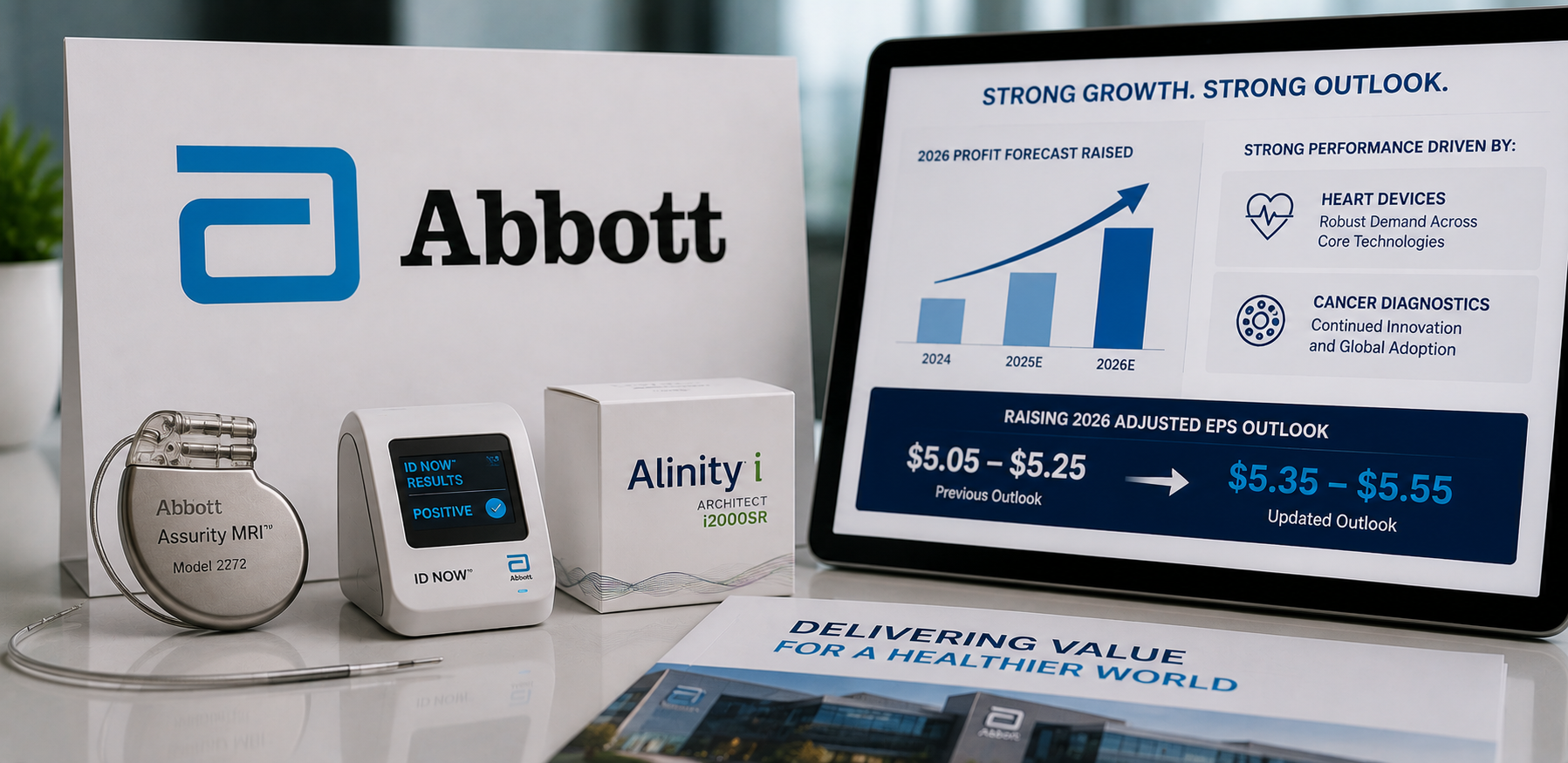
Abbott Laboratories has raised its full-year 2026 profit forecast after reporting stronger-than-expected quarterly results, fueled by robust demand for its cardiovascular devices, diabetes technologies, and newly expanded cancer diagnostics business.
The medical technology company exceeded Wall Street expectations for both revenue and earnings, reflecting continued demand for products that address chronic diseases such as heart disease, diabetes, and cancer. Investors responded positively to the results, pushing Abbott's shares sharply higher following the announcement.
The results also helped reassure investors who had been concerned that declining Affordable Care Act enrollment and softer hospital procedure volumes could hurt medical device companies. Abbott said demand for its core technologies has remained resilient despite those concerns.
A Strong Quarter Across Key Businesses
Abbott reported second-quarter revenue of $12.59 billion, exceeding analyst expectations, while adjusted earnings reached $1.31 per share, also beating forecasts. Based on this performance, the company increased its expected adjusted earnings for 2026 to $5.45–$5.60 per share, up from its previous guidance.
Growth came from several high-performing businesses:
- Medical device sales increased approximately 9%, driven by cardiovascular technologies and diabetes care products.
- Cancer diagnostics revenue surged following Abbott's acquisition of Exact Sciences' screening business, including products such as Cologuard and Oncotype DX.
- Diabetes Care continued growing through strong demand for the FreeStyle Libre continuous glucose monitoring system.
Together, these businesses helped offset the continued decline in COVID-19 testing revenue, which had previously been a major contributor during the pandemic.
Why Abbott's Heart Device Business Continues to Grow
Heart disease remains the leading cause of death in the United States, creating sustained demand for innovative cardiovascular technologies.
Abbott manufactures a wide range of heart-related products, including devices used for:
- Structural heart disease treatment.
- Cardiac rhythm management.
- Electrophysiology procedures for abnormal heart rhythms.
- Coronary interventions.
- Heart failure management.
An aging population, improved diagnosis of cardiovascular disease, and increasing adoption of minimally invasive procedures continue to support long-term growth for these technologies.
Healthcare providers also continue investing in advanced cardiac care as hospitals work to improve patient outcomes while reducing recovery times.
Cancer Diagnostics Become an Increasingly Important Growth Driver
One of the biggest contributors to Abbott's strong performance was its expanded cancer diagnostics portfolio.
Following its acquisition of Exact Sciences' cancer diagnostics business, Abbott now offers widely used screening and genomic testing products that help physicians detect cancer earlier and personalize treatment decisions.
Examples include:
- Cologuard, a non-invasive colorectal cancer screening test.
- Oncotype DX, which helps guide treatment decisions for certain breast cancer patients.
Demand for these tests continues to rise as healthcare providers place greater emphasis on early detection and precision medicine.
Earlier diagnosis often leads to more treatment options, improved patient outcomes, and potentially lower long-term healthcare costs.
Diabetes Care Remains a Major Opportunity
Abbott's diabetes business also delivered another strong quarter.
Its FreeStyle Libre continuous glucose monitoring (CGM) platform allows people with diabetes to monitor blood glucose levels continuously without routine finger-stick testing.
The growing adoption of CGM technology reflects several healthcare trends:
- Rising diabetes prevalence.
- Greater focus on preventive disease management.
- Expansion of remote patient monitoring.
- Increased insurance coverage for CGM devices.
As diabetes continues affecting millions of Americans, technologies that simplify disease management are expected to remain an important area of growth.
Addressing Concerns About Medical Device Demand
Some investors had recently expressed concern that medical technology companies could face slower growth because hospitals reported softer elective surgical volumes and changes in insurance coverage following the expiration of certain pandemic-era subsidies.
Abbott pushed back on those concerns, noting that demand for products treating chronic conditions—including heart disease, diabetes, and cancer—has remained stable. The company indicated that patients continue seeking treatment for these conditions regardless of broader economic uncertainty, supporting continued growth across its core businesses.
Industry Impact
- Medical Device Industry: Abbott's results suggest that demand for innovative medical technologies remains strong despite concerns about hospital utilization and insurance coverage.
- Healthcare Providers: Hospitals and physicians continue adopting advanced cardiovascular, diabetes, and cancer diagnostic technologies that improve patient care and support earlier intervention.
- Investors: The stronger-than-expected earnings and higher profit outlook reinforced confidence in the resilience of the medical technology sector, particularly companies focused on chronic disease management.
- Patients: Continued investment in diagnostics and medical devices expands access to earlier disease detection, better monitoring, and more personalized treatment options.
Why This Matters
Abbott's latest results highlight a broader shift occurring across healthcare. Rather than relying on temporary pandemic-related revenue, the company is increasingly driven by long-term demand for technologies that manage chronic diseases.
Heart disease, diabetes, and cancer remain among the largest healthcare challenges in the United States, and healthcare systems continue investing in technologies that improve diagnosis, monitoring, and treatment.
The company's performance also demonstrates that innovation in medical devices and diagnostics continues to be a major source of growth even as healthcare organizations navigate changing reimbursement environments and economic pressures.
Key Takeaways
- Abbott raised its 2026 profit forecast after reporting stronger-than-expected quarterly earnings.
- Growth was driven by cardiovascular devices, diabetes technologies, and the company's expanded cancer diagnostics portfolio.
- Medical device sales and cancer diagnostics both posted strong growth despite broader market concerns.
- Abbott believes demand for chronic disease treatments remains resilient even amid changing insurance coverage trends.
- The results reinforce continued momentum in the medical technology sector.
What This Means for Healthcare Marketers
Abbott's performance demonstrates where healthcare investment continues to concentrate: chronic disease management, early diagnosis, and minimally invasive medical technologies. Organizations developing solutions for cardiovascular disease, diabetes, and oncology are benefiting from sustained clinical demand that extends well beyond temporary market cycles.
For healthcare marketers, the results reinforce the growing importance of communicating measurable clinical value rather than product features alone. Providers and health systems increasingly prioritize technologies that improve patient outcomes, support earlier intervention, and reduce long-term healthcare costs. Messaging that highlights evidence-based benefits, workflow improvements, and patient impact is becoming increasingly important in competitive medical technology markets.
For healthcare intelligence teams, Abbott's earnings offer valuable insight into where healthcare spending remains strongest. Monitoring earnings reports, product adoption trends, acquisition strategies, and chronic disease markets can help identify emerging opportunities across diagnostics, medical devices, and precision medicine.