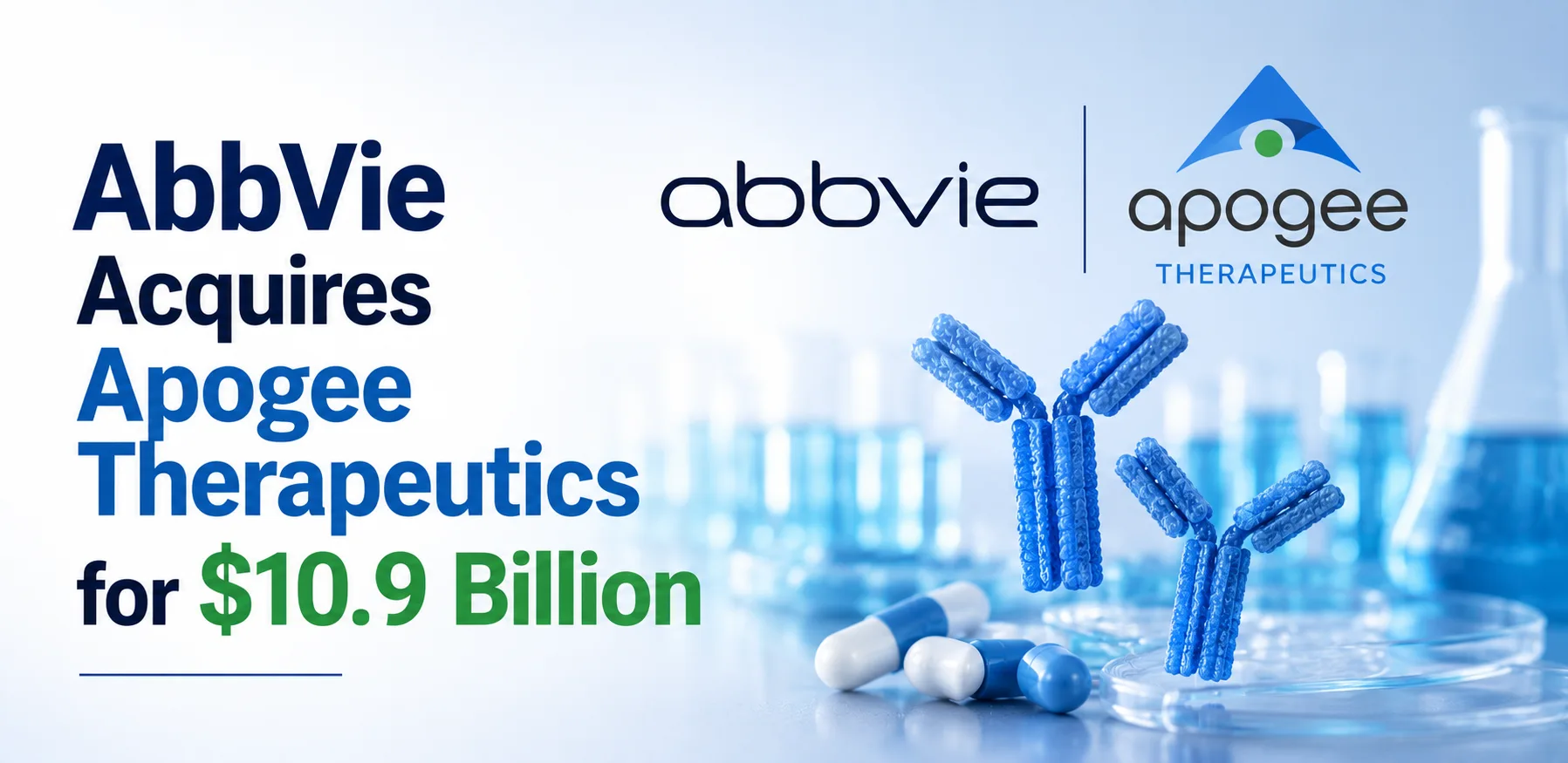
AbbVie Acquires Apogee Therapeutics for $10.9 Billion
What's Happening
AbbVie has announced a definitive agreement to acquire Apogee Therapeutics in an all-cash transaction valued at approximately $10.9 billion. This acquisition, one of the largest biotechnology deals of 2026, significantly expands AbbVie’s immunology and respiratory pipelines.
Under the terms of the agreement, AbbVie will acquire all outstanding shares of Apogee for $135.11 per share. The transaction has been unanimously approved by both companies' boards of directors and is expected to close in the third quarter of 2026, subject to customary closing conditions and shareholder approval.
Strategic Rationale
The deal centers on Apogee’s diverse pipeline of clinical-stage candidates, most notably its lead asset, zumilokibart. An anti-IL-13 monoclonal antibody, zumilokibart is being developed as a potential best-in-category, long-acting injectable for atopic dermatitis and asthma.
For AbbVie, this acquisition is a key component of its long-term strategy to maintain leadership in the immunology space following the patent expiration of its former blockbuster, Humira. By integrating Apogee's late-stage assets, AbbVie aims to complement its existing immunology portfolio, led by Skyrizi and Rinvoq, and bolster its footprint in the respiratory market.
Why Immunology Remains a Top Priority
Immunology focuses on diseases driven by abnormal immune-system activity, including psoriasis, rheumatoid arthritis, Crohn's disease, and atopic dermatitis. Because these conditions are often chronic and require lifelong treatment, they represent one of the most commercially attractive and competitive therapeutic areas in healthcare.
As scientific understanding of these pathways matures, the industry is shifting toward more targeted, long-acting therapies that offer higher efficacy and more convenient dosing intervals, a key competitive advantage for assets like zumilokibart, which is being studied for dosing every three to six months compared to the current two-week standard of care.
What This Means for the Industry
The AbbVie-Apogee transaction highlights several prevailing industry trends:
- External Innovation: Large pharmaceutical companies are increasingly relying on acquisitions and licensing deals to replenish their pipelines rather than relying exclusively on internal R&D.
- Consolidation Pressures: As patent cliffs loom for many blockbuster treatments, Big Pharma firms are aggressively deploying capital to acquire "mega-blockbuster" potential candidates.
- Competitive Differentiators: The focus of clinical innovation is shifting from simply "treating" disease to "elevating the standard of care" through improved efficacy, specificity, and convenience.
Key Takeaways
- AbbVie will acquire Apogee Therapeutics in an all-cash deal valued at $10.9 billion ($135.11 per share).
- The deal adds Apogee’s lead asset, zumilokibart, to AbbVie’s immunology portfolio.
- The transaction is expected to close in Q3 2026, pending regulatory and shareholder approval.
- AbbVie continues to leverage strategic acquisitions to counteract the impact of patent expirations on its legacy products.
Implications for Healthcare Marketers
For healthcare marketers, this deal signals that immunology remains a primary driver of pharmaceutical investment and commercial strategy. Large-scale commitments like this often precede significant future shifts in market dynamics, provider education, and patient engagement strategies within the immunology and respiratory disease landscapes.
As these clinical-stage programs advance, healthcare intelligence teams should monitor the competitive positioning of these new assets, particularly regarding their potential to displace established therapies. Organizations supporting clinical development, commercialization, and market access should prepare for increased activity as AbbVie works to integrate these new programs into its global sales infrastructure.