AbbVie Lowers 2026 Profit Forecast Following Apogee Acquisition Despite Strong Quarterly Results
What's Happening
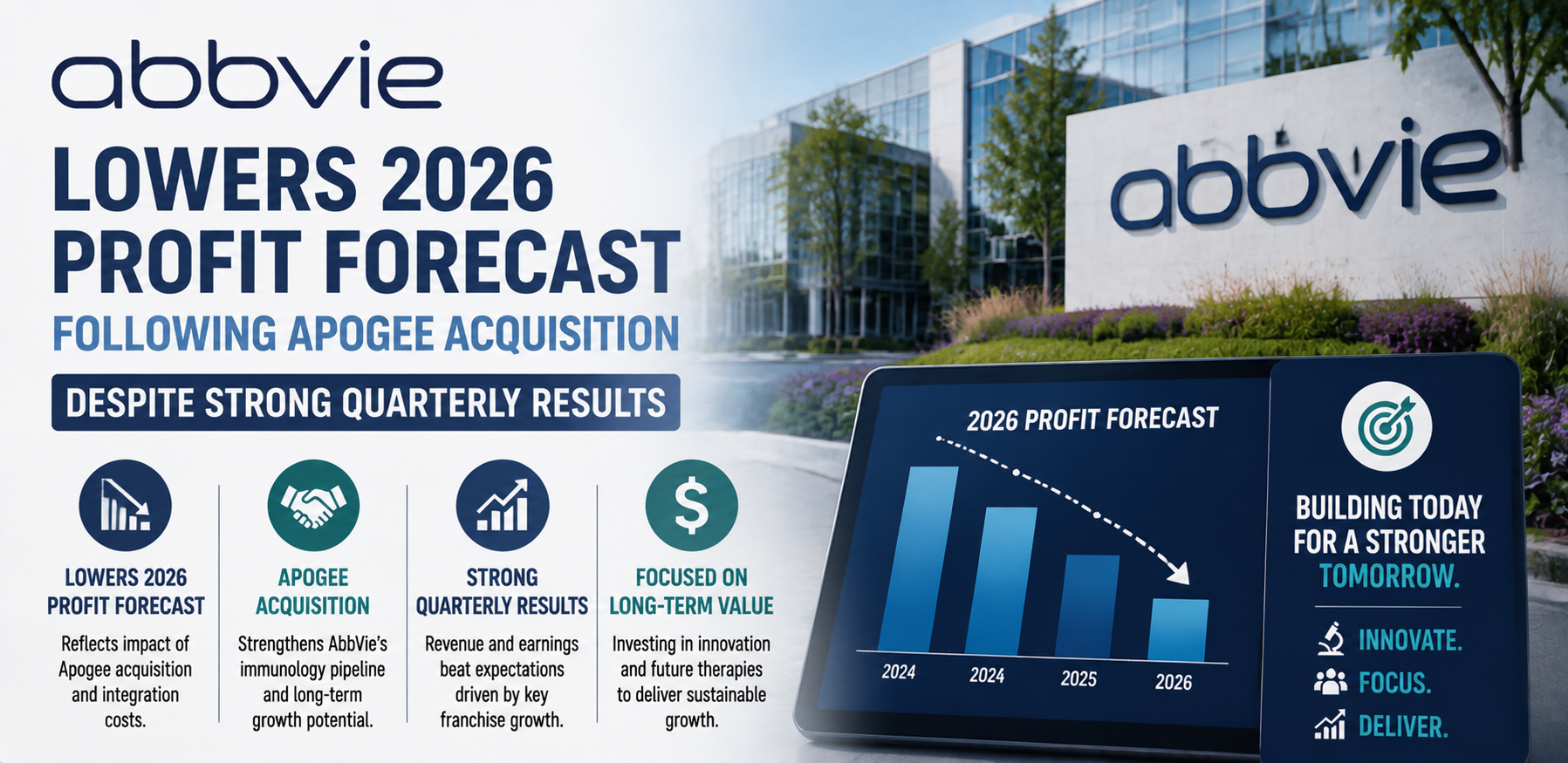
AbbVie has lowered its full-year 2026 profit forecast after completing its acquisition of biotechnology company Apogee Therapeutics, even as the pharmaceutical company reported second-quarter earnings that exceeded Wall Street expectations.
The revised forecast reflects the financial impact of integrating the acquisition, including higher transaction costs and increased investment in expanding AbbVie's pipeline of experimental medicines.
Despite lowering its annual outlook, AbbVie delivered stronger-than-expected quarterly revenue, supported by continued growth in its immunology portfolio and newer medicines that are helping offset declining sales of its former blockbuster drug, Humira.
Understanding the Apogee Acquisition
AbbVie's acquisition of Apogee Therapeutics is part of the company's long-term strategy to strengthen its pipeline of innovative medicines, particularly in immunology.
Apogee develops therapies for immune-mediated diseases, including inflammatory and autoimmune conditions that affect millions of people worldwide.
By adding Apogee's research programs, AbbVie aims to expand future treatment options while reducing its dependence on older products whose sales have declined following increased competition.
Why the Profit Forecast Was Reduced
Although AbbVie's core business continues to perform well, acquisitions often create short-term financial pressure.
The updated forecast reflects factors such as:
- Acquisition-related expenses.
- Integration costs.
- Increased research and development investments.
- Operational expenses associated with expanding the company's product portfolio.
These costs can temporarily reduce profitability while supporting long-term growth through new product development.
Industry Impact
- Pharmaceutical Companies: The acquisition highlights the continued importance of mergers and acquisitions as pharmaceutical companies seek to strengthen their research pipelines and maintain long-term growth.
- Healthcare Providers: Future therapies emerging from AbbVie's expanded pipeline could provide physicians with additional treatment options for autoimmune and inflammatory diseases.
- Biotechnology Companies: The transaction demonstrates continued interest from large pharmaceutical companies in acquiring innovative biotechnology firms with promising early-stage therapies.
- Investors: The results show that pharmaceutical companies continue balancing strong current financial performance with significant investments in future innovation.
Looking Ahead
AbbVie will continue integrating Apogee's research programs while advancing its broader pipeline of medicines across immunology, neuroscience, oncology, and other therapeutic areas.
The company is expected to focus on developing new products that can drive long-term growth as sales of older blockbuster medicines continue to decline.
Future clinical trial results and regulatory approvals will play an important role in determining the success of AbbVie's expanded portfolio.
Why This Matters
Large pharmaceutical companies are increasingly relying on acquisitions to strengthen their research pipelines and remain competitive in rapidly evolving therapeutic markets.
AbbVie's revised outlook illustrates how strategic investments can temporarily affect financial performance while positioning companies for future growth through innovation.
The acquisition also reflects continued confidence in biotechnology research focused on treating chronic autoimmune and inflammatory diseases.
Key Takeaways
- AbbVie lowered its 2026 profit forecast following its acquisition of Apogee Therapeutics.
- The company still reported stronger-than-expected second-quarter financial results.
- Integration costs and continued investment in research contributed to the revised outlook.
- The acquisition strengthens AbbVie's pipeline of potential treatments for autoimmune and inflammatory diseases.
- Pharmaceutical companies continue using acquisitions to drive long-term innovation and growth.
What This Means for Healthcare Marketers
AbbVie's acquisition reinforces continued investment in biotechnology, immunology, and pharmaceutical innovation. Large drug manufacturers are actively expanding their research pipelines through acquisitions while preparing future therapies for commercialization. For healthcare marketers, pharmaceutical companies investing in autoimmune diseases, specialty therapeutics, and biotechnology partnerships represent high-intent opportunities for physician education, launch planning, scientific communications, and commercial collaboration.