Adaptive Biotechnologies Plans Separation of Immune Medicine Platform
What's Happening
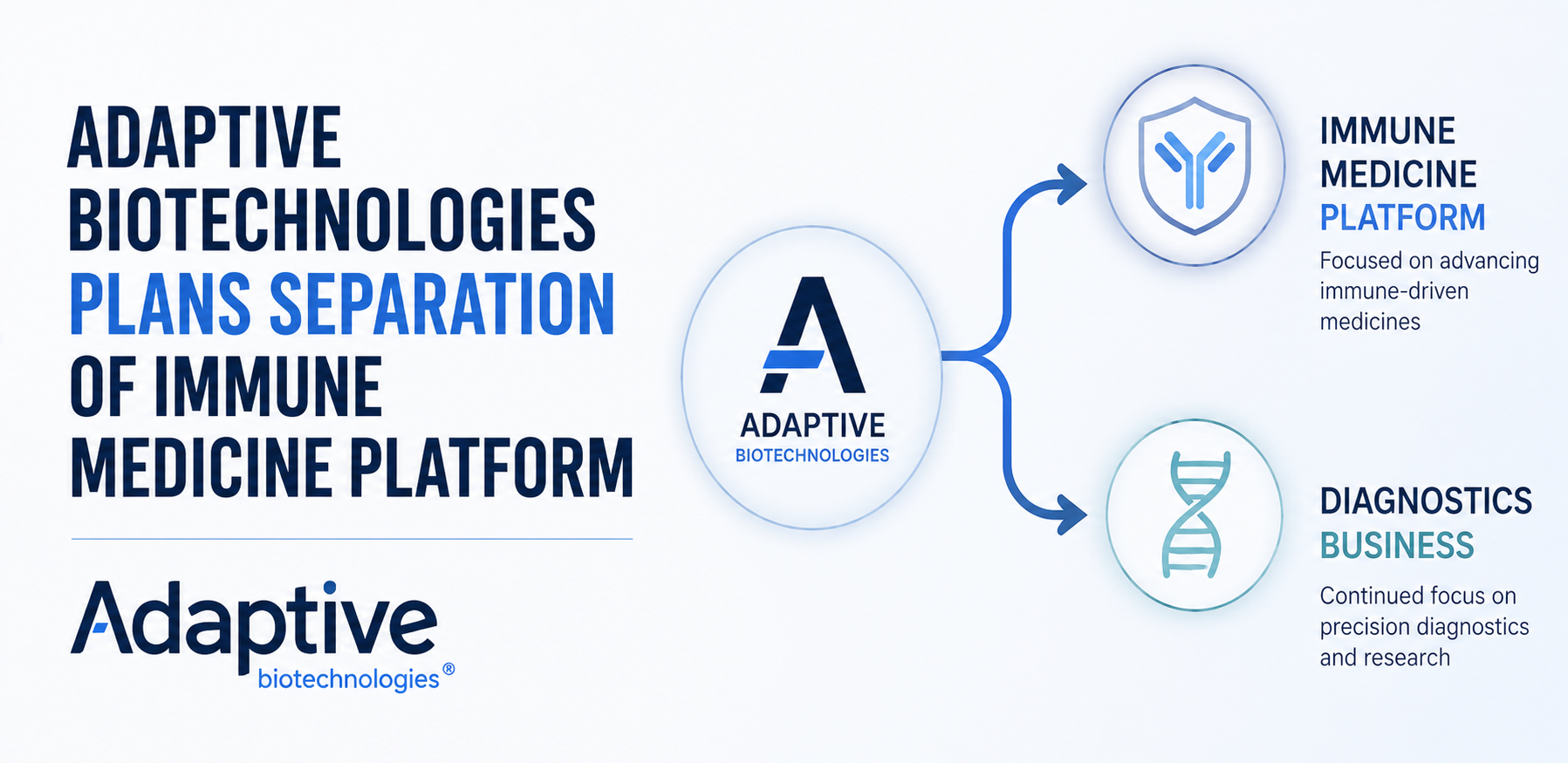
Adaptive Biotechnologies announced plans to separate its immune medicine business from the rest of the company, a move that could reshape its long-term strategy and allow each business to focus on different growth opportunities.
The company is best known for using immune-system data to develop diagnostic tests and research tools. Over time, Adaptive built two distinct businesses. One focuses on commercial products and diagnostics, while the other focuses on discovering and developing immune-based medicines.
Management believes these businesses have reached a point where they may be more valuable and effective operating independently.
The announcement follows a growing trend across the biotechnology industry where companies split businesses into separate entities when leadership believes investors are undervaluing certain assets inside a larger organization.
Understanding Adaptive Biotechnologies
Adaptive operates in one of the most advanced areas of modern healthcare: immune system analysis.
Every person's immune system contains billions of unique immune-cell receptors that help recognize infections, diseases, and other threats.
Adaptive has developed technologies capable of analyzing these immune responses at massive scale.
The company uses this information in several ways:
- Disease detection and diagnostics
- Research partnerships
- Drug discovery
- Immune-based medicine development
Its technology has attracted interest from pharmaceutical companies, researchers, and healthcare organizations seeking new ways to understand disease.
Why Separate the Businesses?
Biotechnology companies often face a challenge when they operate multiple business models under one corporate structure.
Investors may struggle to value:
- Commercial diagnostic businesses
- Early-stage drug development programs
- Research platforms
all at the same time.
Diagnostic businesses are typically valued based on revenue growth, customer adoption, and profitability.
Drug-development businesses are often valued based on scientific potential, clinical-trial progress, and future market opportunities.
Because these businesses operate very differently, investors sometimes believe that combining them inside one company makes it difficult to understand their true value.
By separating the businesses, Adaptive hopes that investors can evaluate each segment more clearly.
Why the Immune Medicine Platform Matters
The immune medicine division is focused on using immune-system data to develop new treatments.
Scientists increasingly believe that understanding how the immune system responds to disease could unlock new approaches for treating:
- Cancer
- Autoimmune diseases
- Infectious diseases
- Rare disorders
Rather than focusing solely on symptoms, immune-based therapies attempt to work directly with the body's natural defense systems.
This area has become one of the most active fields in biotechnology. The success of immunotherapy in cancer treatment has encouraged significant investment into immune-focused research across the healthcare industry.
What Investors Are Looking At
Investors will likely focus on several key questions.
First, how much value does the immune medicine business have on its own?
Second, can the diagnostics business achieve sustainable growth without being tied to drug-development activities?
Third, will the separation improve operational efficiency and management focus?
Corporate separations often create opportunities, but they also create uncertainty. Newly independent businesses must establish their own leadership structures, financial plans, and long-term strategies. As a result, investors often closely monitor these transactions during the first few years following a separation.
Broader Industry Trend
Adaptive is not the only healthcare company pursuing this strategy.
Across biotechnology and pharmaceutical industries, companies increasingly separate businesses when they believe different segments require different investment profiles.
Examples include:
- Drug developers separating research units
- Healthcare companies spinning off diagnostics businesses
- Pharmaceutical firms separating consumer-health divisions
The goal is usually the same: allow each business to focus on its own priorities while making its value easier for investors to understand. Healthcare has become so specialized that many companies now believe focused organizations can perform better than large, diversified structures.
Industry Impact
Biotechnology Investors: Investors may gain clearer visibility into the performance and growth potential of each business.
Pharmaceutical Partners: Drug companies working with Adaptive could benefit from a more focused immune-medicine organization.
Researchers: Scientists using Adaptive's technology may see increased investment in platform development and research capabilities.
Healthcare Industry: The move reflects growing confidence that immune-system science will play an increasingly important role in future medical innovation.
Key Takeaways
- Adaptive Biotechnologies plans to separate its immune medicine platform.
- The move is intended to allow each business to focus on its own growth strategy.
- Investors often favor clearer business structures and more specialized organizations.
- Immune-based medicine remains one of the fastest-growing areas of biotechnology.
- The separation reflects a broader trend toward specialization within healthcare.
What This Means for Healthcare Marketers
For healthcare marketers, this story highlights a growing shift in healthcare toward specialization and focused business models.
For marketers selling to biotechnology companies, pharmaceutical firms, and research organizations, specialized messaging is becoming increasingly important. As businesses separate and narrow their strategic focus, broad value propositions often become less effective.
The planned separation could also create new buying centers. Independent organizations frequently reassess technology vendors, marketing partners, data providers, research platforms, and commercial strategies following major corporate restructurings.
For healthcare intelligence providers, the story serves as another example of how organizational changes can create new opportunities for engagement. Newly independent companies often revisit market positioning, partnership strategies, commercialization plans, and growth initiatives.
Marketers should pay close attention to spin-offs, restructurings, and business separations because these events frequently signal upcoming changes in budgets, priorities, leadership teams, and purchasing decisions.