Altimmune's Experimental Drug Shows Positive Mid-Stage Results for Alcohol Use Disorder
What's Happening
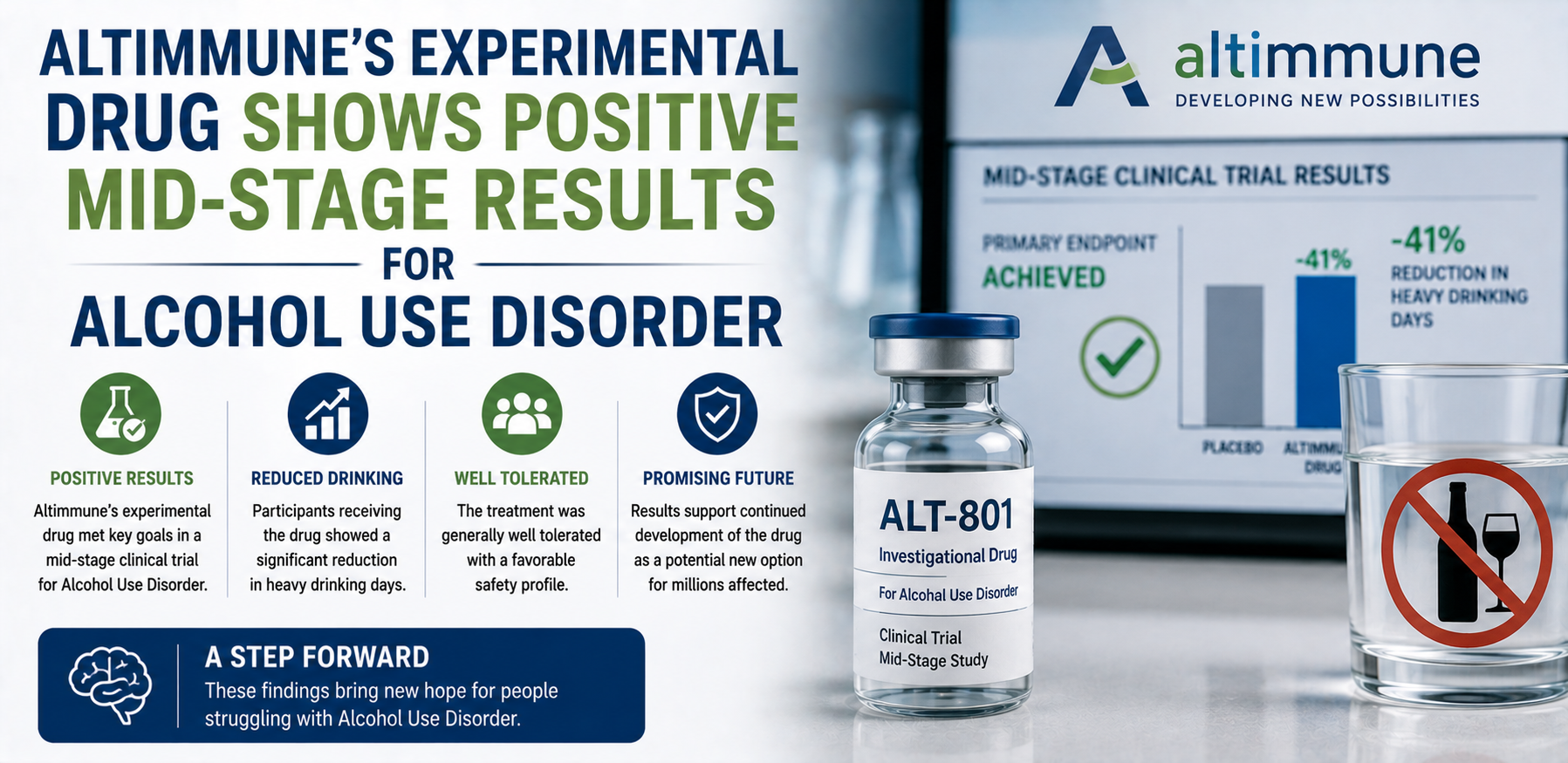
Altimmune has announced positive results from a mid-stage clinical trial evaluating its experimental therapy for alcohol use disorder (AUD), with the drug achieving the study's primary goal.
The treatment demonstrated a meaningful reduction in alcohol consumption among participants compared with placebo, marking an important milestone in the company's clinical development programme.
The results strengthen Altimmune's position as it prepares for larger late-stage studies and highlight growing industry interest in developing more effective treatments for alcohol addiction, an area where medical options remain limited.
Understanding Alcohol Use Disorder
Alcohol use disorder is a chronic medical condition characterised by an impaired ability to control alcohol consumption despite negative health, social or occupational consequences.
The condition affects millions of people worldwide and is associated with a wide range of serious health complications, including:
- Liver disease.
- Heart disease.
- Several types of cancer.
- Depression and anxiety.
- Cognitive impairment.
- Increased risk of accidents and injuries.
Although behavioural therapy and counselling remain important components of treatment, relatively few medications are currently available to help reduce alcohol cravings and support long-term recovery.
Why the Trial Results Matter
Developing new therapies for alcohol use disorder has historically been challenging because treatment success depends on multiple behavioural and biological factors.
Altimmune's positive phase 2 results suggest that its investigational therapy may offer another pharmacological option for patients who struggle to reduce alcohol consumption using existing treatments alone.
The study achieved its primary endpoint, providing evidence that the drug could play a role in helping patients manage alcohol dependence. However, additional late-stage clinical trials will be needed to confirm its safety and effectiveness before regulatory approval can be considered.
Industry Impact
- Addiction Medicine: The results represent encouraging progress in an area where treatment options remain limited. New medicines could expand the range of therapies available to physicians treating alcohol dependence.
- Pharmaceutical Industry: Positive mid-stage data increases the likelihood that the programme will move into larger clinical trials. Success in later studies could position Altimmune within a significant and underserved therapeutic market.
- Healthcare Providers: Clinicians treating patients with alcohol use disorder may eventually have access to additional evidence-based treatment options that complement behavioural therapy and existing medications.
- Public Health: Alcohol use disorder remains a major contributor to preventable illness, injury and premature death. Continued investment in new therapies supports broader public health efforts to reduce the long-term burden of alcohol-related disease.
Looking Ahead
Alcohol use disorder is one of the most common yet under-treated chronic health conditions. While many individuals benefit from counselling and support programmes, treatment outcomes can improve when effective medications are available as part of a comprehensive care plan.
The encouraging trial results also demonstrate continued investment in addiction medicine, an area that has historically received less pharmaceutical innovation than many other therapeutic fields. As research advances, new treatment options could help improve long-term recovery rates and reduce the substantial healthcare burden associated with alcohol misuse.
Key Takeaways
- Altimmune's experimental therapy achieved the primary goal in a phase 2 clinical trial for alcohol use disorder.
- The results showed a reduction in alcohol consumption compared with placebo.
- The company is expected to continue development through larger late-stage clinical trials.
- Alcohol use disorder remains an area of significant unmet medical need with limited pharmacological treatment options.
- Positive clinical trial results represent an important step toward expanding treatment choices for patients living with alcohol dependence.
What This Means for Healthcare Marketers
The positive trial results highlight growing innovation in behavioural health and addiction medicine. For healthcare marketers, this represents an opportunity to support awareness of alcohol use disorder as a treatable medical condition rather than solely a behavioural issue. Organisations developing therapies, digital health platforms and care management solutions can help improve patient engagement by communicating the benefits of integrated treatment approaches that combine medication, behavioural support and long-term care.