
Altria Sues FDA Over U.S. Tobacco Product Review System
What's Happening
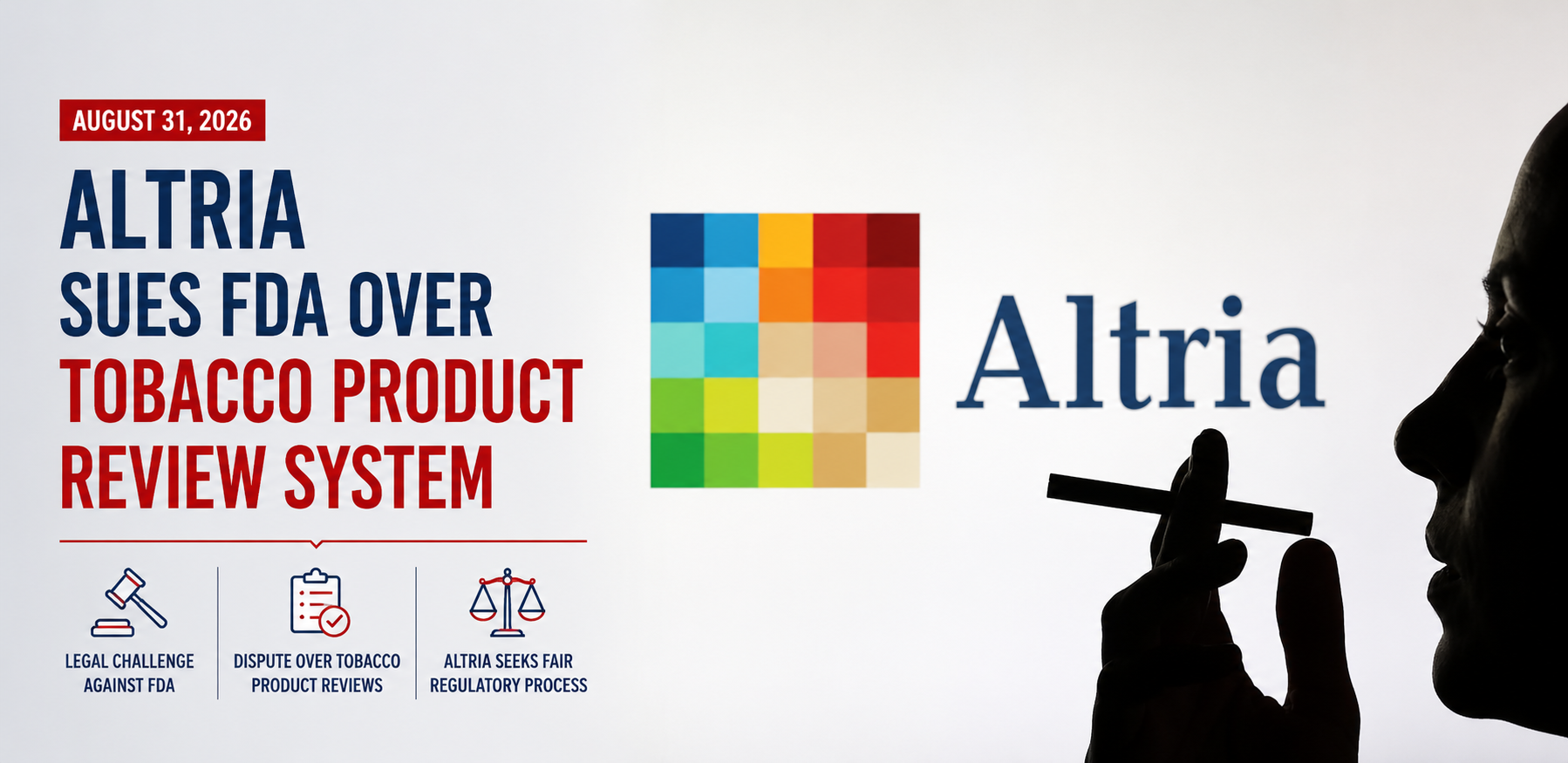
Altria, the maker of Marlboro, has sued the U.S. Food and Drug Administration (FDA), asking a federal court to force the agency to overhaul how it reviews applications for new tobacco and nicotine products.
The lawsuit, filed in federal court in Lubbock, Texas, argues that the FDA's current review process has become so slow and burdensome that it is preventing tobacco companies from bringing products to market while competitors selling unauthorized products gain ground. (Reuters)
The dispute is centered on the FDA's regulatory review system for products such as nicotine pouches and e-cigarettes. Under U.S. law, companies generally must receive FDA authorization before selling new tobacco products. The agency evaluates whether a product's marketing would be appropriate for the protection of public health, including whether it could benefit adult smokers without creating significant risks of new nicotine addiction among young people. (Reuters)
Altria argues that the system is effectively broken because applications can remain pending for years, while an expanding illegal market allows unauthorized products to reach consumers.
Altria Wants the FDA Review System Reworked
The company says the FDA is missing its legal deadline
A central argument in Altria's complaint is that federal law requires the FDA to make decisions on tobacco-product applications within 180 days.
Altria says the FDA has never met that deadline, leaving companies waiting far longer than the law contemplates. (Reuters)
The lawsuit asks the court to set aside the existing approach and require the FDA to develop a new system for handling applications.
For Altria, the issue is not simply speed. The company argues that lengthy regulatory delays are affecting its ability to compete in a changing nicotine market.
Altria points specifically to its nicotine-pouch business
The complaint says the FDA's regulatory process has effectively buried products such as Altria's On! nicotine pouches in regulatory red tape.
Altria argues that while its products remain tied up in the approval process, foreign competitors that do not comply with the same rules can gain market share. (Reuters)
That creates a particularly important commercial problem as consumers increasingly move away from traditional cigarettes toward alternative nicotine products.
The U.S. Tobacco Market Is Worth About $22 Billion
The dispute comes in a U.S. tobacco market worth roughly $22 billion, making regulatory approvals commercially significant for manufacturers.
Tobacco companies increasingly depend on newer products such as nicotine pouches and vaping products to supplement or replace declining cigarette sales.
For established companies such as Altria, Philip Morris International and British American Tobacco, gaining regulatory approval for new products can therefore be an important part of their growth strategies. (Reuters)
When applications sit unresolved for years, companies can lose valuable time establishing distribution, building consumer awareness and defending market share.
Some Tobacco Applications Have Been Stuck for Years
Reviews can stretch beyond six years
According to Reuters, some tobacco-product applications have remained under FDA review for more than six years.
The agency has rejected very large numbers of applications involving products such as vapes and nicotine pouches, while other applications remain unresolved for extended periods. (Reuters)
That creates an unusual market dynamic: legal products can be delayed by the regulatory process while unauthorized products remain available through illicit channels.
Tobacco companies argue that this puts compliant manufacturers at a competitive disadvantage.
Altria Says Recent FDA Changes Actually Support Its Argument
A fast-track pathway has not solved the problem
The FDA has recently introduced changes intended to speed review of certain nicotine products.
Those include a fast-track pathway for nicotine pouches and other efforts to streamline tobacco-product regulation. (Reuters)
But Altria argues that the reforms themselves demonstrate that the existing system is inadequate.
For example, Altria's applications for nicotine pouches placed in the fast-track program were still under review even though the FDA had targeted December 2025 for decisions, according to the company's complaint. (Reuters)
That gives the company a concrete example of what it considers to be a gap between the agency's promised timelines and actual outcomes.
The FDA Is Trying to Balance Two Competing Goals
Faster access for adult smokers
An FDA official said the agency is committed to facilitating access to less harmful alternatives for adult smokers.
This is important because the agency's regulatory framework is not simply intended to prevent new tobacco products from entering the market. It is also designed to determine whether particular products could help existing adult smokers move away from more harmful forms of tobacco use. (Reuters)
Protecting young people from nicotine addiction
At the same time, the FDA has to consider the potential for new nicotine products to attract young people.
The statutory review standard therefore involves a broader public-health assessment, rather than simply determining whether a product is safer than cigarettes.
That tension is at the center of the industry's criticism: manufacturers want faster decisions, while public-health advocates argue that speed cannot come at the expense of scientific scrutiny.
Public-Health Advocates Oppose Altria's Position
Critics say the scientific standard should not be weakened
Brian King, who previously led the FDA's Center for Tobacco Products and now works at the Campaign for Tobacco-Free Kids, criticized the lawsuit.
He argued that Altria is seeking to lower the scientific standard established by Congress, saying this could increase the company's sales and profits while creating additional public-health risks. (Reuters)
Public-health advocates have repeatedly argued that nicotine products can expose young people to addiction even when they may pose fewer toxic risks than combustible cigarettes.
That makes the regulatory review process a critical part of determining which products should legally reach consumers.
The Illegal Nicotine Market Is a Major Part of the Dispute
One of Altria's strongest arguments is that the slow legal market exists alongside a booming illegal market.
The company says unauthorized products can enter the United States and build consumer followings without going through the same regulatory process.
That creates a difficult enforcement problem for the government.
On one side, the FDA wants manufacturers to demonstrate that their products meet legal and public-health standards. On the other, products that have not received authorization can still be sold outside the legal regulatory framework.
Altria argues that prolonged review delays can unintentionally reward companies that ignore the rules. (Reuters)
The Tobacco Industry Has Escalated Its Pressure on Washington
Lawsuits are part of a broader campaign
Altria's lawsuit is the latest in a series of legal challenges from tobacco companies seeking changes to the FDA's regulatory regime.
The industry has also engaged in an extensive lobbying campaign directed at the administration. (Reuters)
Companies have increasingly pushed for faster approval pathways and more predictable regulatory timelines as they attempt to expand their portfolios beyond conventional cigarettes.
The administration has already made some changes
The industry's lobbying efforts have coincided with several changes in tobacco regulation, including:
- the first FDA marketing authorizations for certain flavored vapes
- a fast-track pathway for nicotine pouches
- a plan under which the FDA would not prioritize enforcement against companies launching certain vapes or nicotine pouches without agency authorization. (Reuters)
These moves suggest that authorities are already considering alternatives to the previous regulatory approach.
Altria's lawsuit could push that debate further by asking the courts to require a fundamental redesign of the system.
What the Lawsuit Could Mean for Competitors
Altria is not the only major tobacco company affected by long FDA review timelines.
Philip Morris International and British American Tobacco have also faced delays affecting newer products. (Reuters)
A meaningful change to the review system could therefore benefit the broader industry.
Faster decisions would give manufacturers greater certainty about which products they can legally commercialize, allowing them to make longer-term investments in manufacturing, distribution and marketing.
But quicker approvals could also intensify competition between tobacco companies as more products enter the U.S. market.
The Regulatory Question Is Bigger Than Altria
The lawsuit ultimately raises a broader question:
How should the FDA regulate a rapidly changing nicotine market when companies are developing products that may be less harmful than cigarettes but can still create addiction?
Traditional tobacco regulation was built around products such as cigarettes and smokeless tobacco.
The rise of vaping and nicotine pouches has created a much more complicated environment in which regulators must evaluate differences in toxicity, addiction potential, youth appeal and potential benefits for existing smokers.
The FDA's approach needs to account for all of these factors, which helps explain why the review process can be complicated and time-consuming.
Why This Matters
This case matters because FDA authorization can determine whether a tobacco or nicotine product can legally compete in the U.S. market.
For manufacturers, a years-long regulatory delay can mean lost revenue, delayed product launches and lost market share.
For consumers, changes to the system could affect which nicotine products are legally available and how quickly new products reach the market.
For public-health officials, however, the challenge is ensuring that a faster regulatory system does not allow products with significant addiction or youth-use risks to move forward without adequate evidence.
The central conflict is therefore between regulatory speed, commercial competition and public-health protection. (Reuters)
Looking Ahead
The immediate question is how the federal court responds to Altria's request to force the FDA to redesign its review system.
The FDA has said it will carefully review the issues raised by the lawsuit. (Reuters)
The case could also add pressure on the agency to make voluntary changes even without a court order. Industry analysts cited by Reuters said a comprehensive overhaul would be a major positive for tobacco companies and that the lawsuit could encourage additional voluntary reforms. (Reuters)
At the same time, public-health groups are likely to resist changes that they believe would weaken the scientific standard for approving nicotine products.
The outcome could influence how quickly the next generation of tobacco and nicotine products reaches the U.S. market and how much regulatory certainty manufacturers have when investing in those products.
Key Takeaways
- Altria has sued the FDA over its system for reviewing new tobacco and nicotine products.
- The company wants the court to require the FDA to overhaul the review process.
- Altria says federal law requires decisions within 180 days, but the FDA has never met that deadline.
- Some applications have reportedly remained under review for more than six years. (Reuters)
- Altria says its On! nicotine pouches have been delayed while unauthorized competitors gain market share.
- The U.S. tobacco market is worth about $22 billion.
- The FDA has recently introduced measures including a fast-track pathway for nicotine pouches and authorizations for some flavored vapes. (Reuters)
- The FDA says it wants to facilitate access to less harmful alternatives for adult smokers while protecting young people from nicotine addiction.
- Public-health advocates argue that speeding approvals could weaken the scientific protections established by Congress.
- The lawsuit could accelerate broader changes to how the FDA regulates the expanding nicotine-product market.
What This Means for Healthcare Marketers
This case is a strong example of how regulatory timing can become a market signal.
For companies operating in tobacco, nicotine, smoking cessation, respiratory health or adjacent healthcare categories, an FDA review delay is not merely an administrative issue. It can affect product launches, competitive positioning, investment decisions, distribution and consumer demand.
The bigger marketing lesson is that regulatory activity can reveal where a market is about to change. A fast-track designation, delayed application, new enforcement policy or lawsuit can signal that products, competitors and buyer behavior may shift well before the market impact appears in sales data.