Apnimed Targets $608 Million IPO as Interest Grows in Sleep Apnoea Treatments
What's Happening
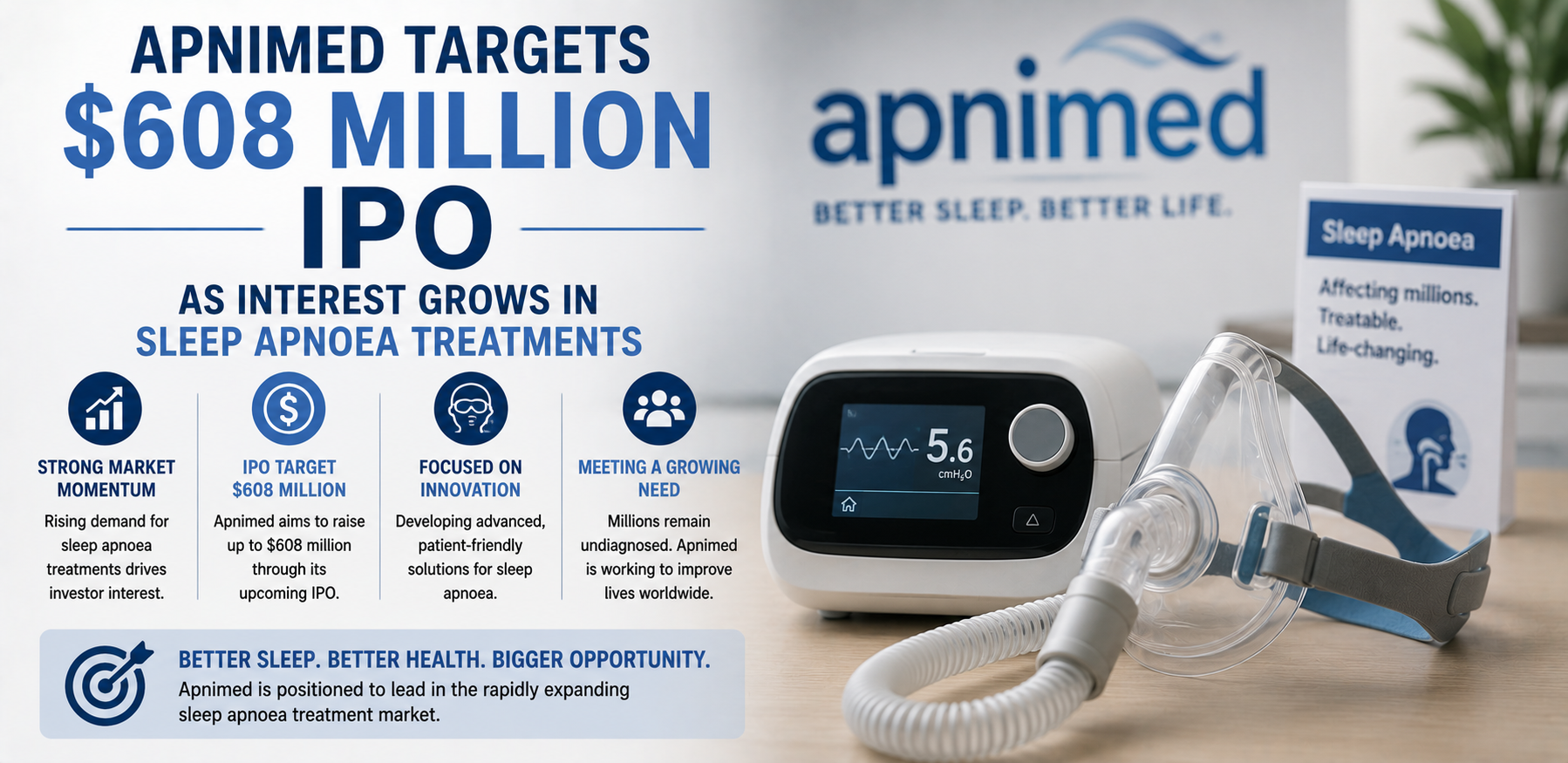
Apnimed, a biotechnology company developing oral treatments for obstructive sleep apnoea (OSA), has filed for an initial public offering (IPO) in the United States, seeking a valuation of approximately $608 million.
The company plans to use the proceeds to advance the development and commercialisation of its lead therapy, which aims to provide a non-invasive alternative to traditional sleep apnoea treatments such as continuous positive airway pressure (CPAP) machines.
The IPO reflects continued investor interest in innovative therapies targeting chronic conditions with large unmet medical needs.
Understanding Obstructive Sleep Apnoea
Obstructive sleep apnoea is one of the most common sleep disorders, occurring when the muscles in the throat relax repeatedly during sleep, temporarily blocking the airway.
The condition can lead to:
- Loud snoring
- Interrupted breathing during sleep
- Excessive daytime sleepiness
- Poor concentration
- Increased risk of high blood pressure
- Heart disease
- Stroke
- Type 2 diabetes
Although millions of adults are affected worldwide, many remain undiagnosed or untreated.
Why an Oral Therapy Could Be Significant
The current standard treatment for moderate to severe obstructive sleep apnoea is CPAP therapy, which delivers pressurised air through a mask to keep the airway open during sleep.
While highly effective, many patients struggle with long-term adherence because they find the equipment uncomfortable or inconvenient.
Apnimed is developing a once-daily oral medication designed to improve upper airway muscle function during sleep. If approved, the therapy could provide a simpler treatment option for patients who cannot tolerate CPAP or are looking for a less intrusive alternative.
The company's lead drug candidate has shown encouraging results in mid-stage clinical studies, supporting further development as it moves toward later-stage trials.
Industry Impact
- Sleep Medicine: A successful oral therapy could significantly expand treatment options for obstructive sleep apnoea, particularly among patients who discontinue or avoid CPAP therapy.
- Pharmaceutical Industry: The IPO demonstrates continued investor confidence in companies developing treatments for chronic conditions that affect large patient populations. Successful funding would enable Apnimed to advance late-stage clinical development and prepare for potential regulatory submissions.
- Healthcare Providers: Sleep specialists may eventually have additional treatment options that allow care plans to be tailored to individual patient needs, potentially improving long-term treatment adherence.
- Investors: Healthcare IPO activity has been relatively subdued in recent years, making Apnimed's public offering another indicator that capital markets may be reopening for biotechnology companies with promising clinical programmes.
Looking Ahead
Obstructive sleep apnoea remains significantly underdiagnosed despite its association with serious cardiovascular and metabolic complications. Expanding treatment options beyond medical devices could encourage more patients to seek diagnosis and remain on therapy.
The IPO also reflects renewed investor interest in biotechnology innovation, particularly for companies addressing widespread chronic diseases with unmet treatment needs.
Key Takeaways
- Apnimed is seeking a valuation of approximately $608 million through its planned U.S. IPO.
- The company is developing an oral therapy for obstructive sleep apnoea as an alternative to CPAP treatment.
- The funding will support continued clinical development and future commercialisation efforts.
- Obstructive sleep apnoea affects millions of adults and remains significantly underdiagnosed.
- The IPO signals improving investor confidence in innovative biotechnology companies and sleep medicine.
What This Means for Healthcare Marketers
Sleep health is becoming an increasingly important area of preventive medicine as awareness grows around its connection to cardiovascular disease, metabolic disorders and overall quality of life. For healthcare marketers, innovations in sleep medicine create opportunities to educate both clinicians and patients about emerging treatment options beyond traditional devices. Companies that clearly communicate clinical evidence, ease of use and real-world patient benefits will be well positioned as the sleep therapeutics market continues to evolve.