
U.S. Appeals Court Revives Lawsuits Alleging Tylenol Use During Pregnancy Caused Autism and ADHD
What's Happening
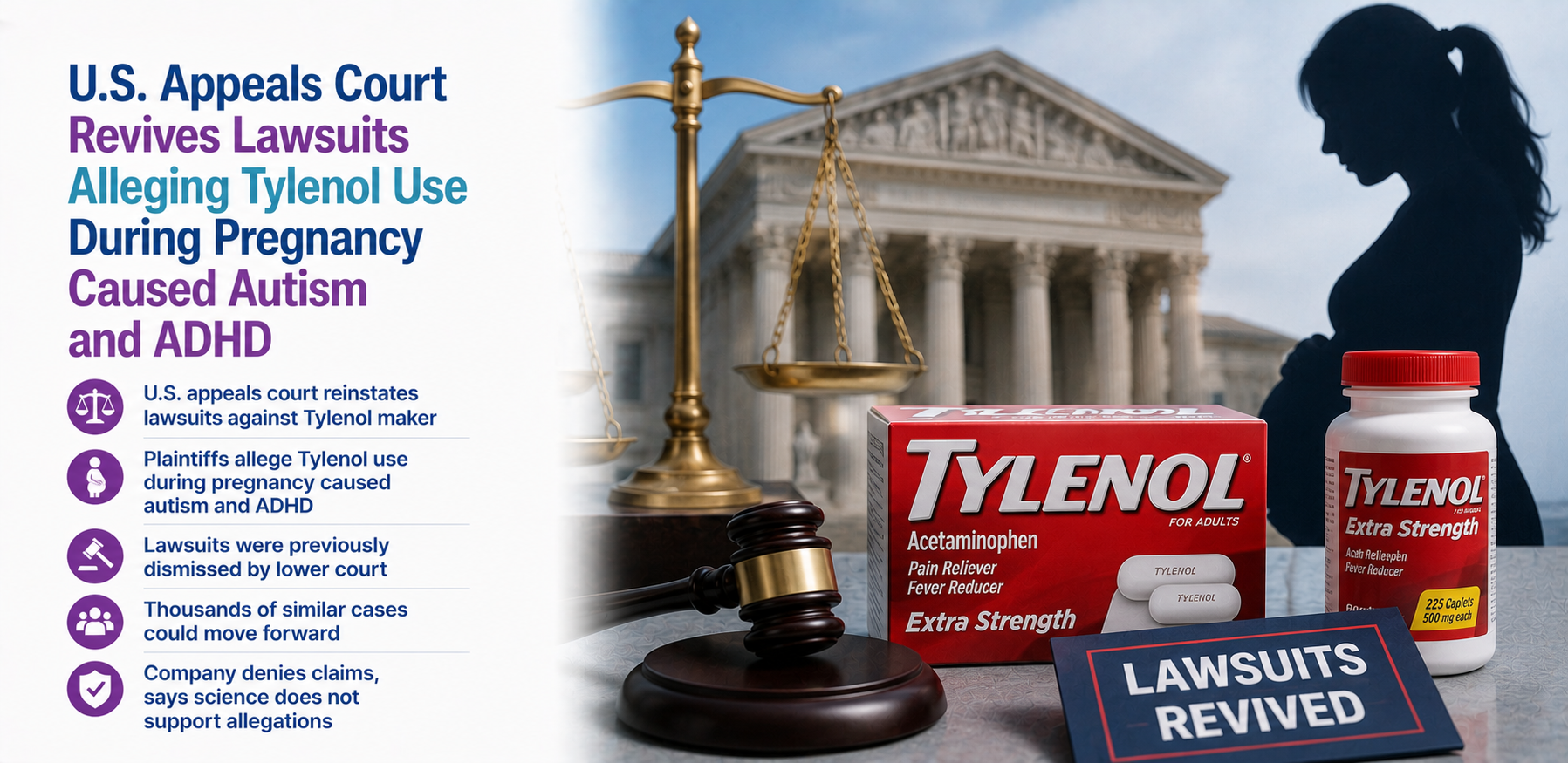
A U.S. federal appeals court has revived hundreds of lawsuits alleging that Tylenol (acetaminophen) use during pregnancy contributed to children developing autism spectrum disorder (ASD) or attention-deficit/hyperactivity disorder (ADHD). The decision overturns a lower court ruling that had dismissed the cases and allows the litigation to move forward.
Importantly, the appeals court did not conclude that Tylenol causes autism or ADHD. Instead, it ruled that the lower court applied the wrong legal standard when excluding expert testimony presented by the plaintiffs. The lawsuits will now return to the trial court for further proceedings. The manufacturers continue to deny the allegations, maintaining that decades of scientific evidence support acetaminophen's safety when used as directed during pregnancy.
What Is Acetaminophen?
Acetaminophen, commonly sold under the brand name Tylenol, is one of the most widely used pain relievers and fever-reducing medicines worldwide. It is commonly used to treat:
- Fever
- Headaches
- Muscle pain
- Back pain
- Arthritis
- Minor aches and pains
For many years, acetaminophen has generally been considered the preferred over-the-counter pain medication during pregnancy because alternatives such as certain nonsteroidal anti-inflammatory drugs (NSAIDs) may carry known risks during particular stages of pregnancy.
What Are the Lawsuits About?
The lawsuits allege that prenatal exposure to acetaminophen increased the likelihood that some children later developed autism spectrum disorder (ASD) or attention-deficit/hyperactivity disorder (ADHD). The plaintiffs argue that manufacturers failed to adequately warn consumers about these potential risks. The companies dispute these claims, arguing that current scientific evidence does not establish a causal relationship between acetaminophen use during pregnancy and these neurodevelopmental conditions. The litigation focuses on whether available scientific evidence is sufficient to support the plaintiffs' claims.
Why Did the Appeals Court Revive the Cases?
The appeals court's decision was based on legal procedure, not on whether the scientific claims are correct. The judges determined that the trial court should reconsider whether expert scientific testimony should be admitted under the appropriate legal standards. This means:
- The lawsuits are not resolved.
- The court has not determined that acetaminophen causes autism or ADHD.
- The plaintiffs will have another opportunity to present scientific evidence.
- The manufacturers will continue defending the safety of their products.
The decision simply allows the litigation to continue.
What Does the Scientific Evidence Say?
Researchers have studied acetaminophen use during pregnancy for many years. Some observational studies have reported possible associations between prenatal acetaminophen exposure and certain neurodevelopmental conditions. However, other studies have found little or no evidence of such a relationship. One of the biggest challenges is that observational studies cannot prove cause and effect because many other factors may influence child development, including genetics, maternal health, underlying infections, pregnancy complications, and environmental factors. As a result, scientific organizations have generally concluded that current evidence remains inconclusive. Healthcare providers continue recommending that pregnant individuals use any medication only when medically necessary and under appropriate medical guidance.
What Should Pregnant Patients Do?
Medical experts continue advising pregnant individuals to:
- Consult their healthcare provider before taking any medication.
- Use the lowest effective dose when medication is needed.
- Avoid unnecessary medication use.
- Follow approved labeling and medical advice.
Patients should not stop taking prescribed or recommended medications solely because litigation has been filed. Treatment decisions should always be made in consultation with qualified healthcare professionals.
What Happens Next?
The lawsuits will return to the lower court for additional proceedings. Future steps may include:
- Reconsideration of expert scientific testimony.
- Additional legal arguments.
- Discovery and evidence review.
- Potential settlement discussions.
- Trial if the cases are not resolved beforehand.
The litigation is expected to continue for some time before any final legal outcome is reached.
Industry Impact
- Pharmaceutical Companies: The decision highlights the continuing importance of product liability litigation involving widely used medications.
- Healthcare Providers: Clinicians are likely to continue following established medical guidelines while monitoring future research and regulatory developments.
- Researchers: The litigation may increase attention on additional studies evaluating medication safety during pregnancy.
- Patients: Pregnant individuals should continue discussing medication use with their healthcare providers rather than relying on ongoing litigation to guide medical decisions.
Why This Matters
The appeals court's ruling illustrates how scientific evidence and legal standards can intersect in complex pharmaceutical litigation. The decision does not establish that acetaminophen causes autism or ADHD, nor does it determine whether manufacturers are legally responsible. Instead, it ensures that the plaintiffs' scientific evidence will receive additional judicial review before the courts determine whether the cases should proceed to trial. The litigation also highlights the continuing importance of research into medication safety during pregnancy. As scientists continue studying factors that may influence fetal development, healthcare providers will rely on evolving evidence to help patients make informed treatment decisions while balancing the benefits and risks of medication use during pregnancy.
Key Takeaways
- A U.S. appeals court revived lawsuits alleging prenatal Tylenol use contributed to autism and ADHD.
- The court did not rule that acetaminophen causes either condition.
- The decision allows the cases to continue after finding that the lower court used the wrong legal standard when evaluating expert testimony.
- Manufacturers continue to maintain that acetaminophen is safe when used as directed.
- Pregnant patients should continue consulting their healthcare providers before taking any medication.
What This Means for Healthcare Marketers
The ruling demonstrates how healthcare litigation can shape public discussion even when scientific questions remain unresolved. For pharmaceutical companies, product liability cases involving widely used medicines require careful communication that distinguishes ongoing legal proceedings from established scientific evidence. Maintaining public trust depends on providing accurate, balanced information while avoiding conclusions that extend beyond the available research.
For healthcare marketers, medication safety during pregnancy remains an area where clear, evidence-based education is essential. Patients frequently seek information about potential risks, making transparent communication and guidance from healthcare professionals especially important. Organizations should ensure that educational materials reflect current clinical recommendations while acknowledging areas where research continues to evolve.
For healthcare intelligence teams, the case highlights the importance of monitoring both scientific developments and legal decisions. Court rulings, new clinical studies, and regulatory guidance can all influence healthcare communications, prescribing discussions, and public perception, even before any final legal or scientific conclusions are reached.