What's Happening
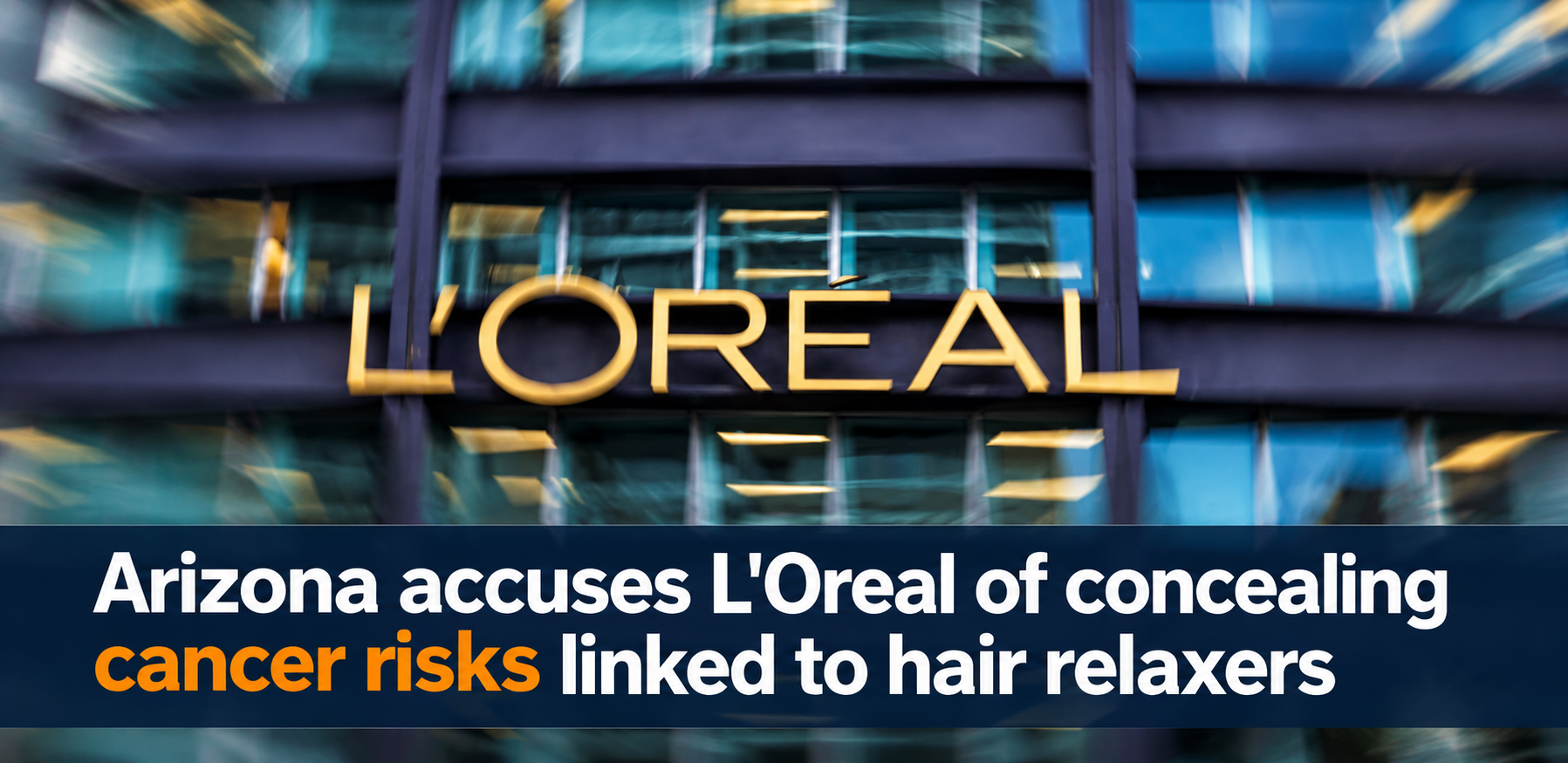
The state of Arizona has sued L’Oréal and its U.S. subsidiary, accusing the cosmetics company of concealing evidence that its hair-relaxer products could be linked to cancer in women.
The lawsuit, filed by Arizona Attorney General Kristin Mayes, alleges that L’Oréal marketed hair-relaxer products without adequately warning consumers about alleged risks of uterine and ovarian cancers. Arizona is the first U.S. state to bring a lawsuit specifically over the alleged cancer risks associated with hair relaxers. (Reuters)
The state is seeking damages and penalties, as well as a court order requiring L’Oréal to warn consumers about the alleged cancer risks before continuing to sell the products. (Reuters)
The lawsuit adds another layer to a much larger legal battle already facing manufacturers of chemical hair relaxers.
L’Oréal Is Facing More Than 12,000 Similar Lawsuits
The litigation has already become a major mass-tort case
L’Oréal is currently facing more than 12,000 lawsuits filed by women and their families over alleged health risks associated with hair-relaxer products.
Those cases have been consolidated in a federal multidistrict litigation proceeding in Chicago, allowing similar lawsuits from different parts of the country to be managed together more efficiently. (Reuters)
The companies named in the broader litigation include L’Oréal, Revlon and other manufacturers of hair-relaxer products.
Revlon has also denied a connection between its products and cancer. (Reuters)
Trials Could Begin Next Year
Legal proceedings are moving toward trial
The federal multidistrict litigation is continuing to move forward, and trials could begin in 2027.
That means Arizona's lawsuit is entering an already active legal environment in which scientific evidence, product warnings and potential liability are being closely examined. (Reuters)
Arizona Says Consumers Were Not Properly Warned
The lawsuit alleges concealed health risks
Arizona's complaint argues that L’Oréal knew or should have known about evidence suggesting potential cancer risks associated with hair relaxers but continued marketing the products without sufficient warnings.
The state is accusing the company of violating Arizona consumer-protection laws by selling and marketing the products without disclosing the alleged risks. (Reuters)
Arizona is also seeking damages and penalties from the company.
More importantly, the state wants a court order requiring L’Oréal to stop selling the products unless consumers are warned about the alleged cancer risk. (Reuters)
The Products Are Used Predominantly by Black Women
The case has a significant health-equity dimension
The products at the center of the litigation are used predominantly by African American women.
The lawsuit argues that L’Oréal marketed hair relaxers for decades to women and children while benefiting from longstanding beauty expectations and social pressures surrounding textured hair. (Reuters)
Arizona's complaint describes those marketing practices as taking advantage of historical and discriminatory beauty standards while prioritizing company profits over consumer safety. (Reuters)
That makes the dispute about more than product liability.
It also raises questions about how products marketed to particular racial or demographic communities are studied, communicated and regulated when potential health risks emerge.
The Scientific Debate Began With a 2022 NIH Study
Research helped trigger the wave of lawsuits
The first wave of lawsuits followed the publication in 2022 of a study conducted by the National Institutes of Health.
The study found that women who used chemical hair relaxers several times a year were more than twice as likely to develop uterine cancer as women who did not use the products. (Reuters)
The finding became an important piece of evidence cited by plaintiffs in the growing litigation.
However, the study itself did not establish that hair relaxers caused uterine cancer.
L’Oréal's spokesperson emphasized that point, saying the research did not establish a causal connection between use of the products and the health conditions alleged by plaintiffs. (Reuters)
L’Oréal Denies the Allegations
The company says its products are safe
L’Oréal USA said it is confident in the safety of its products and believes the claims made against the company lack both legal and scientific merit. (Reuters)
That means the central dispute is not simply whether an association has been observed.
The legal and scientific questions include whether the products actually cause cancer, whether manufacturers knew about a potential risk, whether the evidence was strong enough to require warnings and whether the companies violated consumer-protection laws by continuing to sell the products without those warnings.
Those questions will be examined through the broader litigation and future trials.
Hair Relaxers Permanently Straighten Textured Hair
The products have been marketed for decades
The products involved include brands such as Dark & Lovely and Optimum, among others.
They are designed to permanently straighten textured hair through chemical processing. (Reuters)
Because the products can be used repeatedly over many years, the litigation is also concerned with potential long-term exposure.
That makes questions about cumulative exposure particularly relevant to the scientific evidence being examined by courts.
Arizona's Lawsuit Could Increase Pressure on Manufacturers
A state lawsuit creates another source of legal exposure
The existing federal litigation already represents substantial potential exposure for L’Oréal and other manufacturers.
Arizona's decision to bring its own state-level case adds another legal pathway.
The state is not merely seeking compensation for individual consumers. It is asking for penalties, damages and an order requiring warnings. (Reuters)
That could create additional pressure on the industry to address how risks associated with hair-relaxer products are communicated to consumers.
Product Warnings Are Likely to Become a Major Issue
The core question is what consumers were told
One of the most important elements of the case is the question of consumer warnings.
Even if courts ultimately determine that a product is not conclusively proven to cause cancer, the litigation could still examine whether companies had sufficient information to justify stronger warnings about potential risks.
For consumer-health products, labeling and safety communication can become central to product liability because consumers make purchasing decisions based partly on the information manufacturers provide.
Arizona's requested injunction directly focuses on this issue by seeking to prevent continued sales without a warning. (Reuters)
Why This Matters
This case is significant because it brings together consumer protection, product safety, cancer research and health equity.
Arizona is the first U.S. state to sue over alleged cancer risks associated with hair relaxers, while more than 12,000 related lawsuits are already pending against manufacturers. (Reuters)
The case could increase pressure on manufacturers to provide more information about potential risks and could influence how courts evaluate scientific evidence surrounding long-term exposure.
It also highlights how health risks involving products predominantly used by a particular community can become both a public-health and consumer-protection issue.
Looking Ahead
Next steps in litigation and state enforcement
The broader federal litigation will continue moving forward, with trials potentially beginning in 2027. (Reuters)
Arizona's lawsuit will proceed separately under state consumer-protection laws.
The major questions will be whether courts find a causal relationship between hair relaxers and the cancers alleged by plaintiffs, whether manufacturers had an obligation to provide stronger warnings and whether companies can be held liable for the way the products were marketed.
Additional scientific evidence will be especially important because L’Oréal disputes both the scientific and legal basis of the claims.
Key Takeaways
- Arizona has sued L’Oréal and its U.S. subsidiary over alleged cancer risks linked to hair-relaxer products. (Reuters)
- Arizona is the first U.S. state to file a lawsuit specifically over alleged cancer risks associated with hair relaxers. (Reuters)
- The state alleges that L’Oréal failed to warn consumers about potential risks involving uterine and ovarian cancers.
- Arizona is seeking damages, penalties and a court order requiring warnings before the products can continue to be sold. (Reuters)
- L’Oréal faces more than 12,000 similar lawsuits consolidated in federal court in Chicago. (Reuters)
- The products include brands such as Dark & Lovely and Optimum and are primarily used by African American women.
- A 2022 NIH study found that women who used hair relaxers several times a year were more than twice as likely to develop uterine cancer. (Reuters)
- L’Oréal says the study did not establish causation and maintains that its products are safe. (Reuters)
- Revlon and other manufacturers are also defendants in related litigation and have denied a connection between the products and cancer. (Reuters)
- The multidistrict litigation is continuing, with trials potentially beginning in 2027. (Reuters)
What This Means for Healthcare Marketers
This is a strong example of how new scientific evidence can quickly become a commercial and reputational signal.
For consumer-health and personal-care companies, a health study does not need to establish definite causation to affect consumer trust, regulatory attention and litigation risk. Once research suggests a possible health concern, marketers may need to reassess product claims, safety communication and how clearly potential risks are communicated.
The broader lesson is that scientific evidence, consumer behavior and legal action can reinforce one another. A research finding can trigger public concern, which can lead to increased reporting, litigation and eventually changes in how a product is marketed or sold.