AtaiBeckley Shares Surge on Reports of Eli Lilly Acquisition, Highlighting Growing Momentum in Psychedelic Medicine
What's Happening
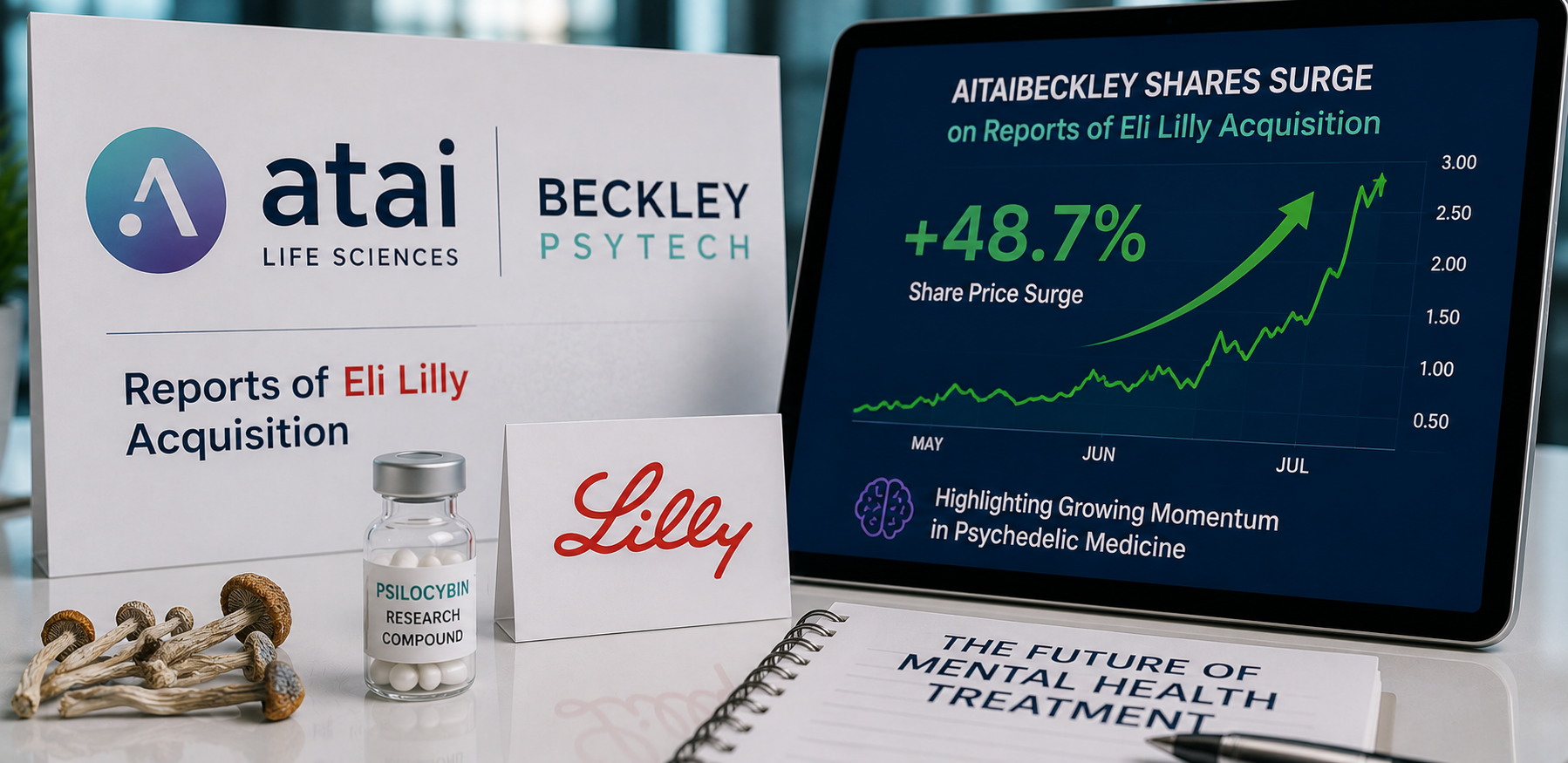
Shares of AtaiBeckley, a clinical-stage biotechnology company developing psychedelic-based mental health treatments, surged sharply after reports emerged that Eli Lilly was in advanced talks to acquire the company. The stock jumped more than 50% in premarket trading, reflecting strong investor optimism that a deal could significantly accelerate the commercialization of psychedelic therapies.
The reported acquisition, which was later confirmed by Lilly, underscored growing interest among major pharmaceutical companies in psychedelic medicines as potential treatments for difficult-to-manage psychiatric disorders. Analysts noted that the transaction could exceed $2 billion, with expectations that it would strengthen Lilly's neuroscience pipeline and further legitimize the rapidly evolving psychedelic therapeutics sector.
The news also boosted shares of several other companies developing psychedelic treatments, suggesting investors believe the sector is entering a new phase of mainstream pharmaceutical investment.
Why Investors Reacted So Strongly
Biotechnology companies often experience significant stock price movements when acquisition rumors emerge.
In AtaiBeckley's case, investors viewed Lilly's reported interest as validation of both:
- The company's clinical pipeline.
- The broader commercial potential of psychedelic medicine.
Large pharmaceutical acquisitions typically occur only after extensive scientific, commercial, and regulatory evaluations. As a result, takeover interest from an established drugmaker is often interpreted as confidence in a company's technology and future prospects.
The reported premium also suggested shareholders could receive substantially more than the company's previous market valuation if the acquisition were completed.
Who Is AtaiBeckley?
AtaiBeckley is a biotechnology company focused on developing psychedelic-inspired medicines for mental health disorders with significant unmet medical needs.
Its research pipeline includes therapies for conditions such as:
- Treatment-resistant depression.
- Social anxiety disorder.
- Other psychiatric illnesses.
The company's lead candidate, BPL-003, is an intranasal formulation of 5-MeO-DMT, a psychedelic compound being studied as a rapid-acting treatment for patients whose depression has not responded to conventional antidepressants.
Why Big Pharma Is Entering Psychedelic Medicine
For decades, psychedelic compounds received relatively little pharmaceutical investment.
That has begun changing because of encouraging early clinical data suggesting certain psychedelic therapies may:
- Produce rapid antidepressant effects.
- Help patients who have exhausted existing treatments.
- Deliver longer-lasting symptom improvement after relatively few treatment sessions.
Major pharmaceutical companies are increasingly viewing neuroscience as an area with significant unmet medical need.
Lilly's reported interest reflects a broader strategy of expanding beyond diabetes and obesity medicines into innovative psychiatric treatments that could become future growth drivers.
Industry Momentum Continues to Build
The reported acquisition also fueled gains across the psychedelic biotechnology sector.
Companies developing similar therapies experienced stock price increases as investors anticipated:
- Greater pharmaceutical investment.
- Increased research funding.
- Broader acceptance of psychedelic medicine.
- Faster commercialization of promising therapies.
Industry analysts suggested the sector is gradually transitioning from a niche research area into a more established segment of pharmaceutical innovation.
Challenges Still Ahead
Despite growing enthusiasm, psychedelic medicines remain under clinical investigation.
Before these therapies become widely available, developers must still demonstrate:
- Long-term safety.
- Durable clinical effectiveness.
- Appropriate treatment protocols.
- Successful completion of late-stage clinical trials.
- Regulatory approval.
Healthcare providers will also require specialized training because many psychedelic therapies involve supervised administration and psychological support rather than routine outpatient prescribing.
Industry Impact
- Pharmaceutical Companies: The reported acquisition signals increasing confidence that psychedelic medicines may become an important future therapeutic category, encouraging additional mergers, partnerships, and investment.
- Biotechnology Companies: Smaller neuroscience firms developing innovative psychiatric therapies may attract greater attention from investors and larger pharmaceutical companies.
- Mental Healthcare Providers: Continued investment could eventually expand treatment options for patients with severe depression and other psychiatric disorders that remain difficult to manage with current therapies.
- Investors: The market reaction demonstrates strong confidence in companies developing novel mental health treatments and highlights growing investor interest in neuroscience innovation.
Why This Matters
The sharp rise in AtaiBeckley's share price illustrates how rapidly perceptions of psychedelic medicine are changing.
Once considered a highly speculative area of research, psychedelic therapeutics are increasingly attracting investment from some of the world's largest pharmaceutical companies. If ongoing clinical trials continue producing positive results, these therapies could reshape treatment for several serious mental health conditions.
The acquisition discussions also reflect broader trends in pharmaceutical strategy. Companies with strong cash flows from established blockbuster medicines are increasingly investing in innovative areas such as neuroscience to diversify future revenue streams and address major unmet medical needs.
Key Takeaways
- AtaiBeckley shares surged after reports that Eli Lilly was negotiating an acquisition of the psychedelic drug developer.
- Investors viewed the reported deal as validation of the company's mental health pipeline and the broader psychedelic therapeutics sector.
- The company's lead program, BPL-003, is being developed for treatment-resistant depression.
- Other psychedelic drug developers also saw their shares rise following the news.
- The reported acquisition highlights growing pharmaceutical investment in neuroscience and innovative mental health treatments.
What This Means for Healthcare Marketers
The strong market reaction demonstrates that mental health innovation is becoming an increasingly important area of pharmaceutical investment. As large drugmakers expand into psychedelic medicine, healthcare organizations will need to communicate emerging scientific evidence with clarity and credibility while educating providers, patients, and policymakers about these novel therapies.
For healthcare marketers, the news highlights how acquisition activity itself can shape market perception. Strategic investments by established pharmaceutical companies often signal where future innovation is headed, making mergers and acquisitions valuable indicators of emerging therapeutic priorities. Organizations that monitor these developments can better anticipate shifts in healthcare investment, clinical research, and competitive positioning.
For healthcare intelligence teams, the AtaiBeckley story reinforces the importance of tracking biotechnology acquisitions, clinical trial progress, neuroscience investment, and regulatory developments. Together, these signals provide early insight into therapeutic areas that may become major drivers of future healthcare innovation.