Average Launch Prices for New U.S. Drugs Fell in 2025 as Fewer Gene Therapies Reached the Market
What's Happening
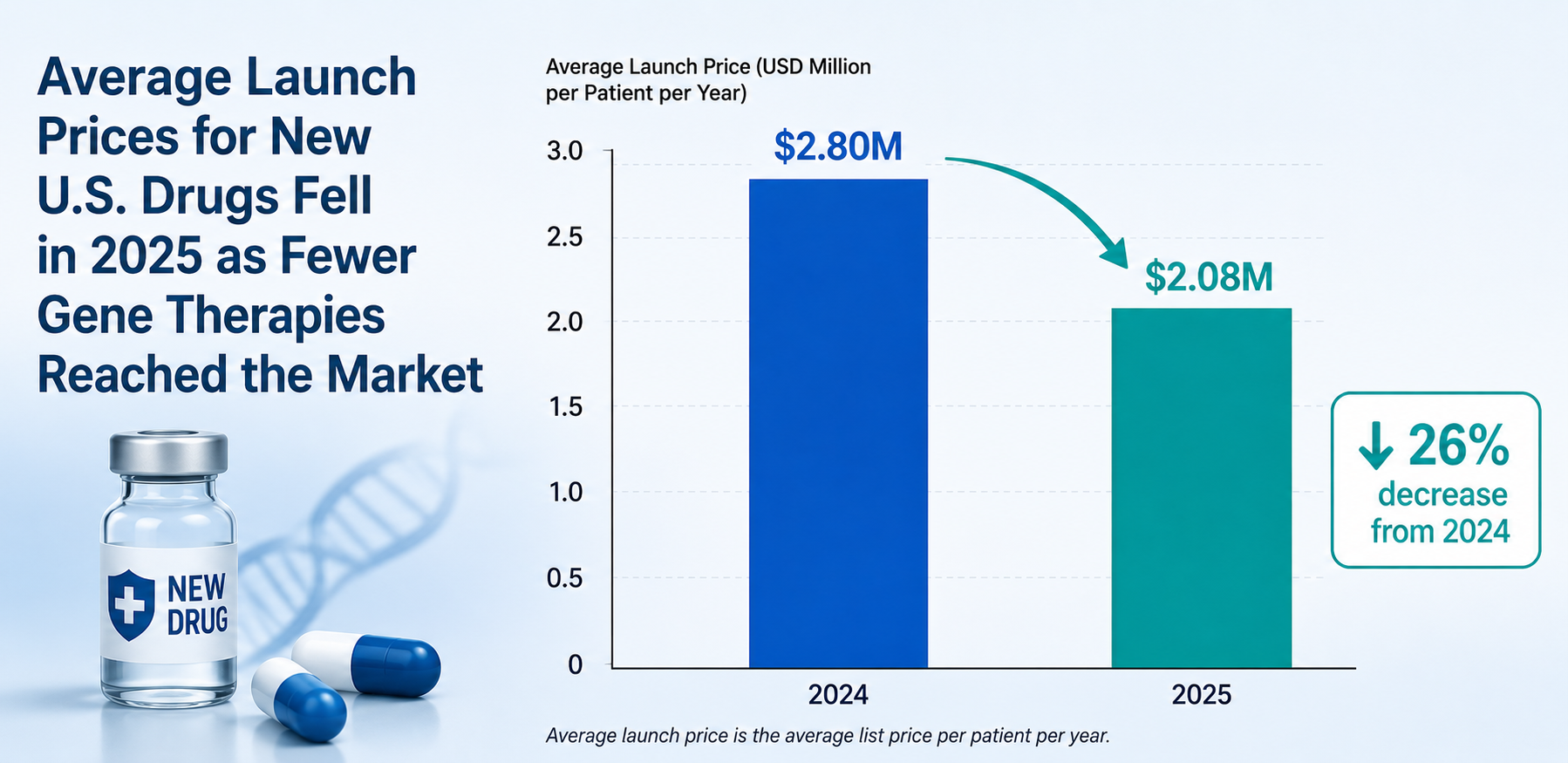
The average launch price of new prescription drugs introduced in the United States declined in 2025, according to a new industry analysis. The drop was largely driven by a decrease in the number of high-priced gene therapies entering the market rather than a broad reduction in drug prices across the pharmaceutical industry.
Although newly approved medicines continued to command premium prices, the absence of several ultra-expensive gene therapies caused the average launch price to fall compared with previous years. The report suggests that the decline does not necessarily mean medicines are becoming less expensive overall. Instead, it reflects a shift in the types of drugs receiving approval during the year.
What Are Drug Launch Prices?
A drug's launch price is the initial list price set by a pharmaceutical company when a newly approved medicine first becomes available to patients. The launch price often serves as the starting point for future negotiations with health insurers, pharmacy benefit managers (PBMs), government healthcare programs, hospitals, and pharmacy chains.
Although many patients do not ultimately pay the full list price because of insurance discounts and rebates, launch prices remain closely watched because they influence healthcare costs throughout the system. Higher launch prices can lead to increased insurance spending, higher employer healthcare costs, larger government expenditures, and greater out-of-pocket costs for some patients.
Why Gene Therapies Affect Average Prices
Gene therapies are among the most expensive medicines ever developed. Unlike traditional drugs that often require lifelong treatment, many gene therapies are designed to treat the underlying cause of a disease through a single treatment or a very limited number of doses. Some approved gene therapies have launch prices exceeding $2 million per patient, making them among the costliest medical products in history.
These therapies are typically developed for rare genetic disorders affecting relatively small patient populations. Because gene therapies are so expensive, even a small number of approvals can significantly increase the average launch price of all new medicines introduced in a given year. In 2025, fewer of these ultra-high-cost therapies reached the market, lowering the overall average despite continued launches of other innovative medicines.
Innovation Is Still Driving New Drug Development
Although average launch prices declined, pharmaceutical innovation remains strong. Companies continue investing heavily in areas such as:
- Gene therapies
- Cell therapies
- Cancer treatments
- Rare disease medicines
- Obesity drugs
- Alzheimer's therapies
- Autoimmune disease treatments
Many of these medicines target conditions that previously had limited or no treatment options. Developing these therapies often requires years of scientific research, complex manufacturing processes, and extensive clinical trials, all of which contribute to higher development costs.
Why Drug Pricing Is Becoming More Complex
The price patients actually pay for a medicine often differs substantially from its published launch price. After a drug reaches the market, pharmaceutical companies negotiate discounts and rebates with insurers, PBMs, and government programs. As a result, several different prices may exist for the same medicine, including list price, negotiated price, net price after rebates, and patient out-of-pocket cost.
Key Takeaways
- The average launch price of new U.S. drugs declined in 2025.
- The decrease was primarily due to fewer high-cost gene therapies receiving approval.
- Gene therapies often cost millions of dollars per patient, significantly influencing average pricing.
- Prescription drug affordability remains a major healthcare policy issue.
- Future launch prices will depend largely on the mix of therapies entering the market.
What This Means for Healthcare Marketers
This story illustrates how pharmaceutical pricing is influenced by shifts in scientific innovation as much as by commercial strategy. For healthcare marketers, understanding launch-price trends is essential because pricing affects payer negotiations, reimbursement strategies, patient access, and market adoption. The growing number of specialty medicines, particularly gene and cell therapies, means commercialization strategies increasingly require strong evidence demonstrating both clinical value and economic benefit.
The report also reinforces the importance of value-based healthcare messaging. As payers and employers become more cost-conscious, pharmaceutical companies must communicate not only how well a therapy works but also how it improves long-term patient outcomes and reduces overall healthcare costs. For healthcare intelligence teams, changes in average launch prices can provide insight into broader industry trends, including the types of therapies reaching the market, future reimbursement challenges, and areas attracting scientific investment.