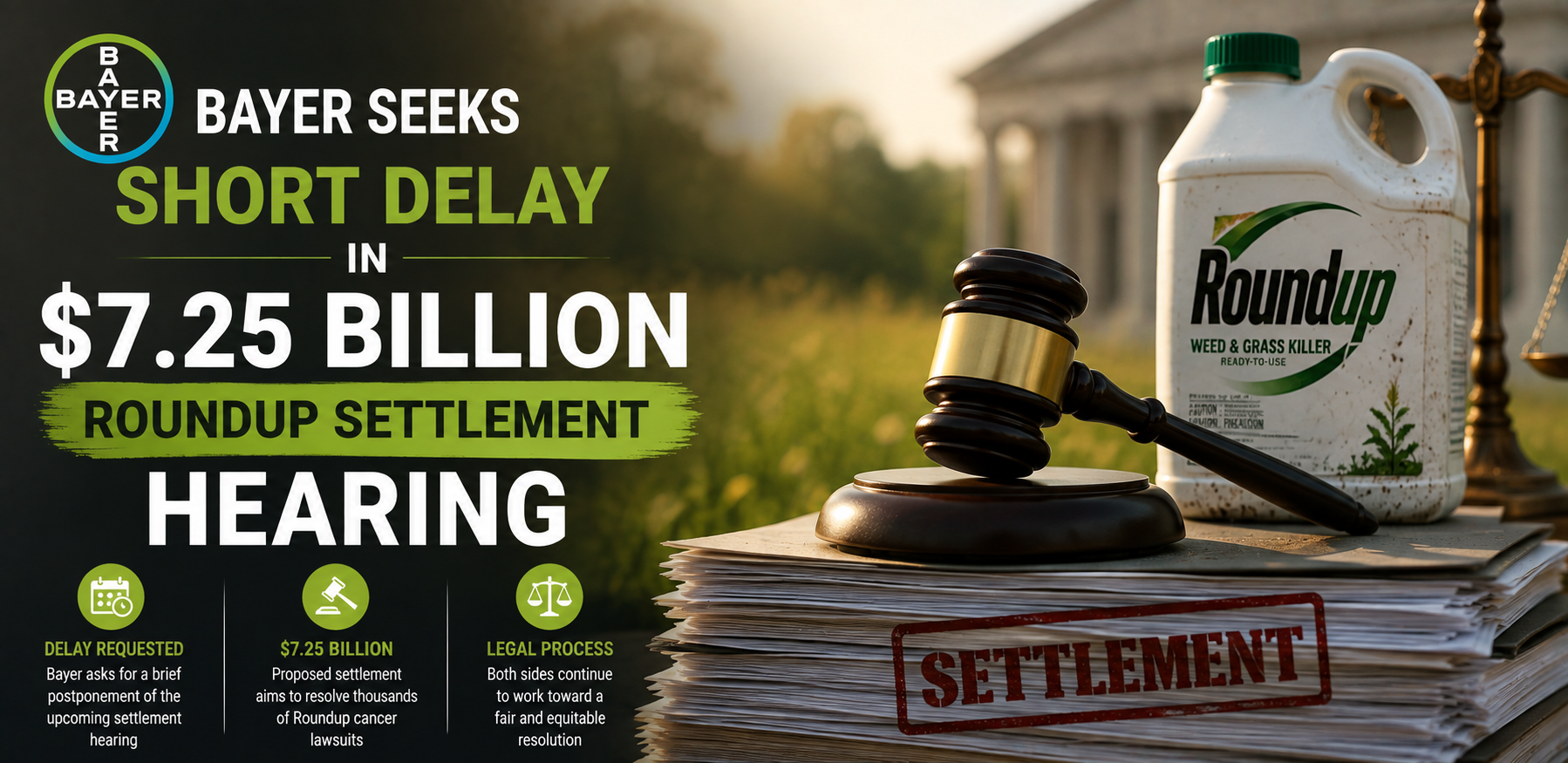
Bayer Seeks Short Delay in $7.25 Billion Roundup Settlement Hearing
What's Happening
Bayer has asked a U.S. court to briefly delay a hearing on its proposed $7.25 billion settlement aimed at resolving a large number of future lawsuits involving its Roundup weedkiller.
The pharmaceutical and life sciences company requested additional time as it continues refining the proposed agreement and addressing legal issues surrounding the settlement. The proposal is intended to resolve claims from individuals who may develop cancer in the future after alleged exposure to Roundup, helping Bayer reduce long-term litigation related to the product.
The request comes as Bayer continues seeking a comprehensive resolution to one of the largest product liability disputes in the healthcare and agricultural industries.
Background on the Roundup Litigation
Roundup is a glyphosate-based herbicide that has been the subject of thousands of lawsuits alleging that long-term exposure caused certain types of cancer.
Bayer inherited the litigation when it acquired Monsanto in 2018.
While Bayer maintains that extensive scientific evidence and regulatory reviews support the safety of glyphosate when used as directed, the company has spent billions of dollars resolving lawsuits and continues pursuing broader legal solutions to reduce future litigation.
Why the Delay Matters
The proposed settlement is designed to establish a framework for handling future claims before they proceed through lengthy court proceedings.
By requesting additional time, Bayer hopes to:
- Finalize legal details of the settlement.
- Address questions raised during court review.
- Improve the likelihood of judicial approval.
- Reduce long-term legal uncertainty.
If approved, the settlement could significantly reduce future litigation risks while providing a structured process for resolving eligible claims.
Industry Impact
- Pharmaceutical and Life Sciences Companies: The case highlights the significant legal and financial risks companies face from long-term product liability litigation, even years after acquisitions.
- Investors: Investors continue monitoring the litigation because its outcome could affect Bayer's financial performance, legal strategy, and future capital allocation.
- Legal and Regulatory Community: The court's decision may influence how future mass tort settlements involving healthcare and life sciences companies are structured.
- Healthcare Industry: Although the litigation centers on an agricultural product, Bayer's pharmaceutical business remains an important part of its overall healthcare portfolio, making the case significant for the broader life sciences industry.
Looking Ahead
The court will determine whether to grant Bayer's request for a short delay before continuing its review of the proposed settlement.
If ultimately approved, the agreement could provide greater legal certainty for Bayer while reducing future litigation over Roundup claims.
The company is expected to continue pursuing both legal appeals and broader settlement efforts as it works toward resolving the remaining cases.
Why This Matters
The Roundup litigation remains one of the largest product liability cases in recent history and continues influencing legal risk management across the life sciences sector.
Bayer's request for additional time demonstrates the complexity of resolving large-scale litigation involving thousands of potential claims while balancing legal, financial, and public health considerations.
The outcome may also shape how future mass settlements are negotiated and approved within the healthcare and life sciences industries.
Key Takeaways
- Bayer has requested a short delay in a court hearing on its proposed $7.25 billion Roundup settlement.
- The settlement aims to resolve future claims related to alleged Roundup exposure.
- Bayer continues to maintain that glyphosate is safe when used as directed.
- The litigation remains one of the largest product liability disputes affecting the life sciences industry.
- The court's decision could influence future mass tort settlements involving healthcare and pharmaceutical companies.
What This Means for Healthcare Marketers
The ongoing litigation highlights the importance of legal risk management, regulatory strategy, and corporate reputation across the life sciences industry. Pharmaceutical companies, biotechnology firms, healthcare manufacturers, and regulatory affairs organizations continue strengthening compliance, safety monitoring, and stakeholder communications while navigating complex legal environments. For healthcare marketers, organizations involved in life sciences, regulatory affairs, pharmacovigilance, and corporate communications represent high-intent opportunities for scientific engagement, thought leadership, and strategic partnership development.