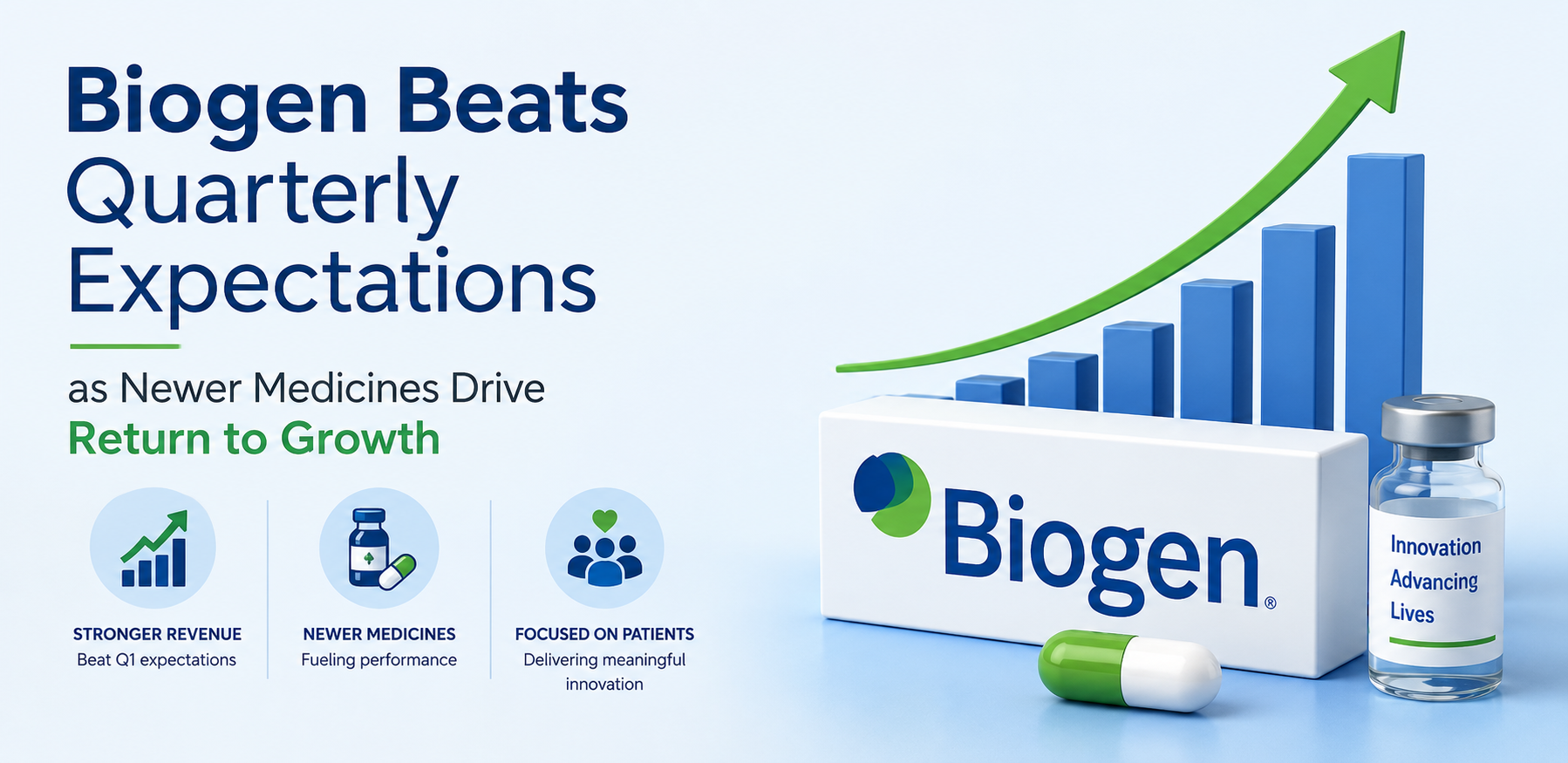
Biogen Beats Quarterly Expectations as Newer Medicines Drive Return to Growth
What's Happening
Biogen reported stronger-than-expected second-quarter financial results, with both revenue and earnings exceeding Wall Street expectations. Growth was driven primarily by the company's newer medicines, particularly its rare disease portfolio and Alzheimer's treatment Leqembi, which helped offset continued declines in sales of its older multiple sclerosis (MS) drugs. (Reuters)
The results suggest that Biogen's strategy of expanding beyond its traditional MS business is beginning to gain traction. Recent acquisitions, including the purchase of Apellis Pharmaceuticals, have also broadened the company's presence in rare diseases and kidney disease, creating additional opportunities for long-term growth. (Reuters)
Although the company lowered its full-year adjusted earnings forecast because of acquisition-related costs, it improved its revenue outlook and now expects sales to grow compared with the previous year. Investors responded positively to the stronger-than-expected quarter despite the revised earnings guidance. (Reuters)
Why Biogen Is Changing Its Business Strategy
For many years, Biogen generated much of its revenue from treatments for multiple sclerosis.
However, as several of these medicines matured, the company began facing:
- Increased competition from newer therapies.
- Patent expirations.
- Generic alternatives.
- Pricing pressure.
- Slower growth in its legacy portfolio.
To reduce dependence on a single therapeutic area, Biogen has invested heavily in newer medicines and acquisitions across neurology, rare diseases, Alzheimer's disease, and kidney disease.
This diversification helps reduce business risk while creating multiple future sources of revenue.
Why New Drug Launches Matter for Pharmaceutical Companies
Developing a successful medicine requires years of research, clinical trials, and regulatory review.
Once older products begin losing exclusivity or facing increased competition, pharmaceutical companies rely on new therapies to replace declining revenue.
Successful launches can:
- Offset declining sales from older medicines.
- Expand into new disease areas.
- Increase long-term revenue growth.
- Strengthen investor confidence.
- Support future research and development.
- Improve treatment options for patients.
Biogen's latest results demonstrate how growth from newer products can gradually replace revenue from an ageing product portfolio.
The Growing Importance of Rare Disease Treatments
Rare diseases individually affect relatively small patient populations, but collectively they impact hundreds of millions of people worldwide.
Many rare diseases have few or no approved treatments, making them an important area for pharmaceutical innovation.
Rare disease medicines often receive:
- Faster regulatory pathways.
- Market exclusivity incentives.
- Strong clinical demand.
- Premium pricing.
- Limited competition.
These characteristics have made rare diseases one of the fastest-growing segments within the biopharmaceutical industry.
Why Alzheimer's Treatments Are Closely Watched
Alzheimer's disease remains one of the largest unmet medical needs in healthcare.
Recent advances have led to the development of therapies that target the biological processes associated with the disease rather than simply treating symptoms.
Biogen's Alzheimer's therapy, Leqembi, continued to grow during the quarter as adoption increased following its initial launch. While uptake has been gradual because of cost, monitoring requirements, and safety considerations, continued sales growth suggests healthcare providers are becoming more familiar with its use. (Reuters)
As additional diagnostic tools and treatment options become available, Alzheimer's care is expected to remain one of the fastest-evolving areas in neurology.
Industry Impact
- Pharmaceutical Companies: Biogen's results highlight the importance of continuously refreshing product portfolios through research, acquisitions, and new drug launches to maintain long-term growth.
- Healthcare Providers: Neurologists and rare disease specialists are gaining access to an expanding range of therapies for conditions that previously had limited treatment options.
- Investors: Strong performance from newer medicines suggests that diversified pharmaceutical pipelines may provide greater long-term stability than relying heavily on ageing blockbuster products.
- Patients: Continued investment in neurological disorders and rare diseases may expand treatment choices and improve outcomes for patients with conditions that have historically lacked effective therapies.
Looking Ahead
Biogen is expected to continue investing in both commercial growth and late-stage clinical development.
Key areas to watch include:
- Continued growth of Leqembi.
- Performance of the rare disease portfolio.
- Integration of recently acquired products.
- Progress of late-stage clinical trials.
- Expansion into kidney disease.
- Future regulatory approvals.
- Commercial adoption of newly launched therapies.
If these programmes continue to perform well, Biogen could further strengthen its position across multiple therapeutic areas while reducing reliance on its legacy MS business.
Why This Matters
Biogen's latest results illustrate an important trend across the pharmaceutical industry: companies must continually evolve as older medicines lose market share.
Rather than relying on a single blockbuster product, many drug manufacturers are building diversified portfolios across multiple disease areas through innovation and strategic acquisitions.
The company's return to revenue growth demonstrates how successful commercial execution, pipeline development, and acquisitions can reshape a pharmaceutical business for long-term sustainability. (Reuters)
Key Takeaways
- Biogen exceeded Wall Street expectations for second-quarter revenue and earnings. (Reuters)
- Growth from newer medicines offset declining sales of older multiple sclerosis treatments. (Reuters)
- The company improved its revenue outlook despite lowering adjusted earnings guidance because of acquisition-related costs. (Reuters)
- Rare disease therapies and Alzheimer's treatment Leqembi continue to become increasingly important growth drivers. (Reuters)
- Biogen's strategy reflects the broader pharmaceutical industry's focus on diversification through innovation and acquisitions. (Reuters)
What This Means for Healthcare Marketers
Biogen's performance highlights continued investment in neurology, rare diseases, Alzheimer's care, and specialty pharmaceuticals. Pharmaceutical companies, biotechnology firms, health systems, specialty pharmacies, diagnostic laboratories, academic medical centres, and clinical research organisations are likely to continue expanding programmes that support complex neurological and rare disease care. For healthcare marketers, organisations launching innovative therapies, expanding specialty treatment portfolios, conducting clinical research, or building provider education programmes represent high-intent opportunities for commercial engagement, clinical communications, patient identification, and market access solutions.