Biohaven Licenses Epilepsy Drug to South Korea's SK Biopharmaceuticals for Up to $795 Million
What's Happening
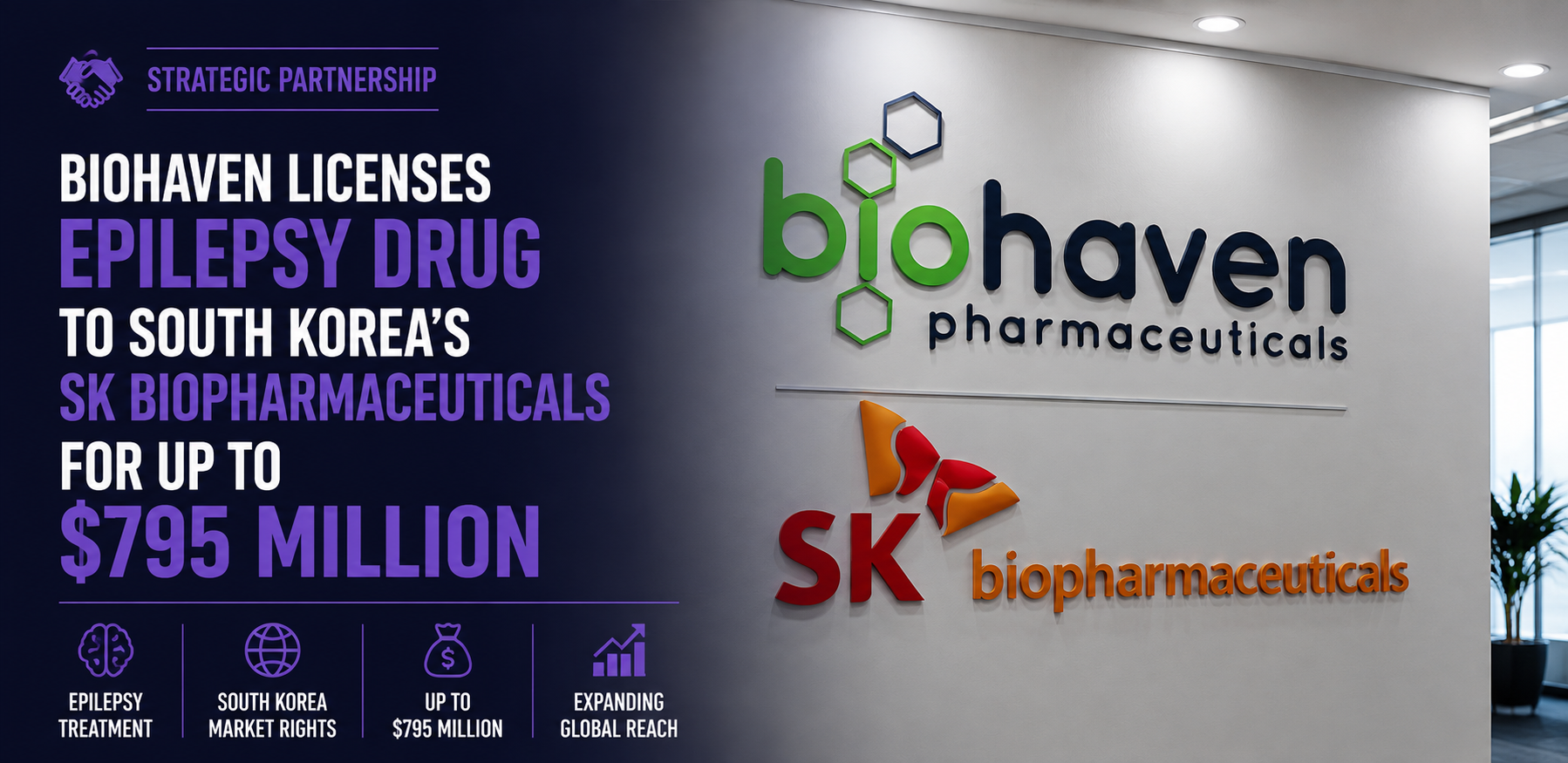
U.S.-based Biohaven has entered into a licensing agreement with South Korean drugmaker SK Biopharmaceuticals for its epilepsy drug platform, including Opakalim, in a deal worth up to $795 million. (Reuters)
Our Article: Reuters article
What the Deal Covers
The agreement gives SK Biopharmaceuticals rights to Biohaven's epilepsy drug platform, including Opakalim.
The total value of the agreement can reach $795 million, although the Reuters report does not provide a breakdown of how much is upfront versus milestone-based. (Reuters)
Why Opakalim Matters
Opakalim is part of Biohaven's efforts to develop new treatments for epilepsy, a neurological disorder characterized by recurrent seizures.
The drug is being developed as part of Biohaven's broader neurological-medicine portfolio.
A successful epilepsy therapy could provide another treatment option for patients whose seizures are not adequately controlled with existing medicines.
Industry Significance
The agreement highlights the continued importance of licensing deals between U.S. biotechnology companies and international pharmaceutical companies.
For Biohaven, licensing gives the company access to SK Biopharmaceuticals' capabilities and commercial presence in South Korea and potentially other markets covered by the agreement.
For SK Biopharmaceuticals, the deal expands its epilepsy pipeline with another potential treatment.
Impact on the U.S. Healthcare Industry
- Biotechnology: Licensing agreements can provide smaller or specialized biotechnology companies with capital and commercial resources to advance drug programs without having to build every market's infrastructure themselves.
- Neurology: Epilepsy remains an important area of pharmaceutical development because a significant number of patients continue to experience seizures despite available treatments.
- Pharmaceutical Partnerships: The deal demonstrates how U.S. biotech companies increasingly use cross-border partnerships to develop and commercialize specialized medicines.
Looking Ahead
The value of the agreement can reach $795 million, meaning future payments will depend on the achievement of specified milestones and other conditions.
The companies will continue development and commercialization activities under the licensing arrangement. (Reuters)
Why This Matters
This qualifies as a U.S. healthcare industry story because it involves U.S.-based biotech company Biohaven, pharmaceutical drug development and a potential new treatment for epilepsy.
It also illustrates the growing role of strategic licensing and international partnerships in bringing specialty medicines to patients.
Key Takeaways
- Biohaven licensed its epilepsy drug platform to South Korea's SK Biopharmaceuticals.
- The deal is worth up to $795 million. (Reuters)
- The agreement includes Opakalim.
- The deal expands SK Biopharmaceuticals' epilepsy portfolio.
- For Biohaven, the partnership provides an international commercialization and development partner.
- The transaction reflects the continued importance of cross-border biotech licensing deals in pharmaceutical development.