BioNTech Lowers 2026 Sales Outlook as COVID-19 Vaccine Demand Continues to Decline
What's Happening
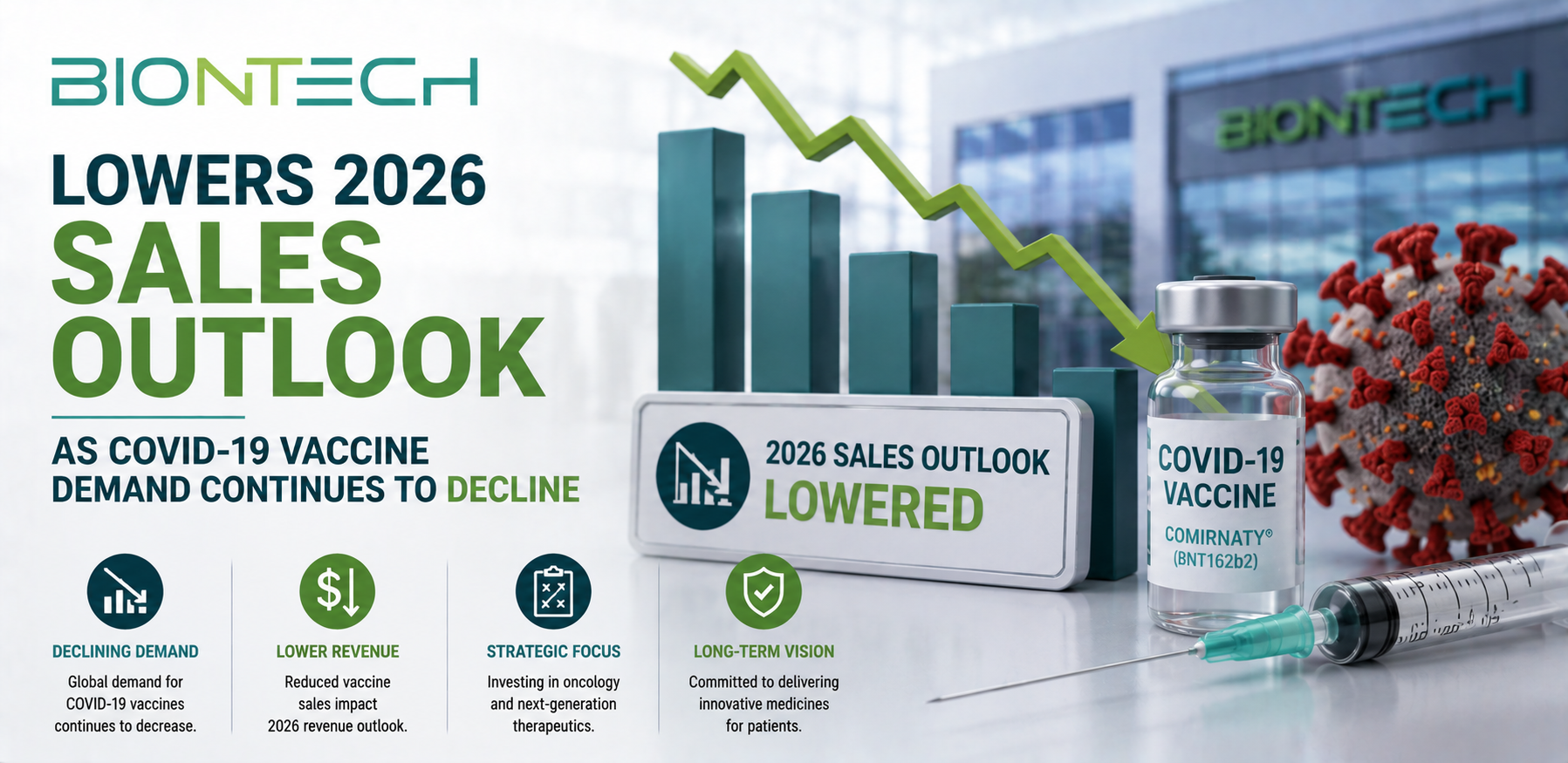
BioNTech has lowered its full-year 2026 sales forecast as demand for its COVID-19 vaccine continues to weaken, reflecting the ongoing transition away from pandemic-era vaccination levels.
The biotechnology company said lower vaccine sales are expected as fewer people receive COVID-19 booster doses and governments continue reducing large-scale vaccine procurement. Despite the revised outlook, BioNTech reaffirmed its commitment to investing heavily in research and development, particularly in oncology and next-generation immunotherapies.
The company is continuing its strategy of transforming from a COVID-19 vaccine developer into a diversified biotechnology company focused on cancer treatment and infectious diseases.
Why COVID-19 Vaccine Sales Are Declining
Demand for COVID-19 vaccines has steadily decreased as the pandemic has evolved into an endemic disease.
Several factors are contributing to lower sales, including:
- Reduced demand for booster vaccinations.
- Smaller government purchasing programs.
- Higher levels of population immunity.
- Greater competition within the COVID-19 vaccine market.
As pandemic-related revenue declines, vaccine manufacturers are increasingly relying on broader research pipelines to support future growth.
BioNTech's Growth Strategy
BioNTech is investing heavily in expanding its pipeline beyond COVID-19 vaccines.
The company's research focuses on:
- Personalized cancer immunotherapies.
- mRNA-based cancer vaccines.
- Infectious disease vaccines.
- Cell therapies.
- Immuno-oncology.
The company believes its mRNA platform can be used to develop treatments for a wide range of diseases, particularly various forms of cancer.
Industry Impact
- Biotechnology Companies: BioNTech's revised outlook reflects the broader shift occurring across the biotechnology industry as companies transition beyond pandemic-driven revenue.
- Healthcare Providers: Healthcare providers continue recommending COVID-19 vaccination for eligible patients while anticipating future innovations in cancer immunotherapy and mRNA-based treatments.
- Patients: Continued investment in oncology research may lead to new treatment options for patients with cancer and other serious diseases.
- Investors: The lower sales forecast highlights the importance of diversified product pipelines as biotechnology companies adapt to changing market conditions.
Looking Ahead
BioNTech plans to continue advancing its oncology pipeline through clinical trials while expanding research into infectious diseases and other therapeutic areas.
The company expects future growth to depend increasingly on successful development and commercialization of cancer therapies rather than COVID-19 vaccines.
Clinical trial progress and regulatory approvals will play an important role in shaping BioNTech's long-term strategy.
Why This Matters
The biotechnology industry is entering a new phase as companies shift their focus from pandemic-related products toward innovative therapies addressing long-term healthcare needs.
BioNTech's revised outlook demonstrates the challenges of declining COVID-19 vaccine demand while highlighting growing investment in cancer immunotherapy and precision medicine.
The company's continued research reflects broader confidence in mRNA technology beyond infectious diseases.
Key Takeaways
- BioNTech lowered its full-year 2026 sales outlook due to declining COVID-19 vaccine demand.
- Reduced booster uptake and lower government purchasing continue affecting vaccine sales.
- The company is investing heavily in oncology, mRNA cancer vaccines, and immunotherapy.
- Future growth is expected to depend increasingly on innovative cancer treatments.
- The biotechnology industry continues transitioning beyond pandemic-driven revenue.
What This Means for Healthcare Marketers
BioNTech's revised outlook highlights continued investment in oncology, mRNA technology, immunotherapy, and precision medicine despite declining COVID-19 vaccine sales. Biotechnology companies, cancer research organizations, healthcare providers, and pharmaceutical manufacturers continue expanding next-generation therapies to drive future growth. For healthcare marketers, organizations involved in cancer research, immunotherapy, mRNA therapeutics, and precision oncology represent high-intent opportunities for physician education, scientific communications, partnership development, and commercial growth.