Biotech IPO Market Rebounds as Latigo and BlossomHill Launch U.S. Public Offerings
What's Happening
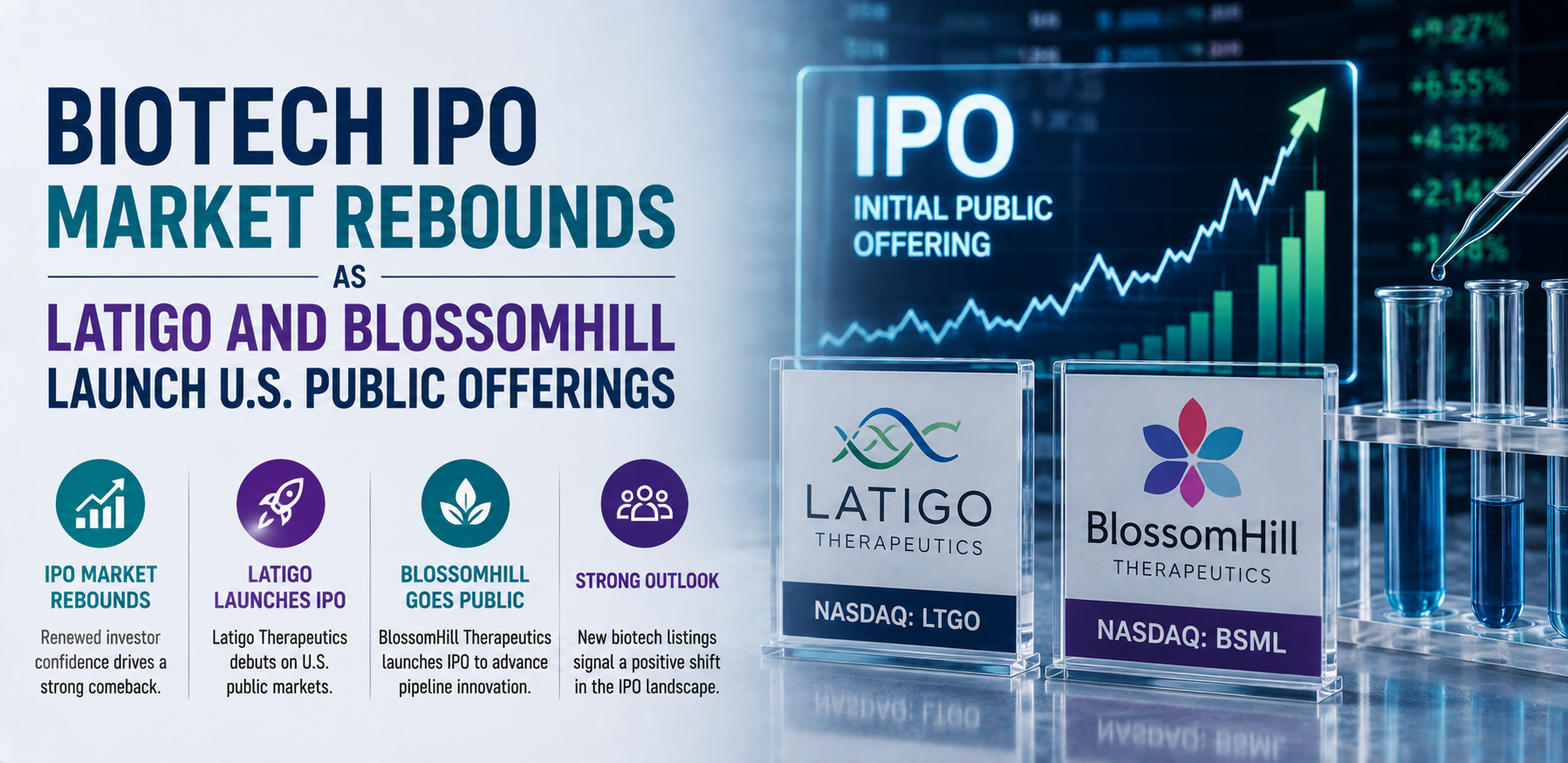
Biotechnology companies Latigo Biotherapeutics and BlossomHill Therapeutics have launched U.S. initial public offerings (IPOs), signaling renewed investor confidence in the biotech sector after a prolonged slowdown in new listings.
Both companies aim to raise capital to advance their experimental drug pipelines and fund clinical development. The IPOs come as improving market conditions encourage biotechnology firms to return to the public markets after several years of cautious investor sentiment.
The offerings reflect growing optimism that innovative drug developers can once again access public funding to support research, clinical trials, and future commercialization.
Understanding Biotech IPOs
An initial public offering (IPO) allows a private company to sell shares to public investors for the first time.
For biotechnology companies, IPO funding is often used to:
- Advance clinical trials.
- Expand research and development.
- Support regulatory submissions.
- Increase manufacturing capabilities.
- Prepare for future product commercialization.
Because many biotech companies operate for years before generating product revenue, access to capital is essential for bringing new therapies to market.
Why Biotech Listings Are Rebounding
The biotechnology IPO market slowed significantly in recent years due to higher interest rates, economic uncertainty, and cautious investor sentiment.
Improving market conditions are now encouraging investors to support companies with promising clinical pipelines and innovative technologies.
As financing becomes more accessible, more biotechnology firms may choose to enter the public markets to secure funding for long-term growth.
Industry Impact
- Biotechnology Companies: The successful launch of new IPOs may encourage additional biotech firms to pursue public listings, improving access to capital across the industry.
- Investors: The renewed IPO activity provides investors with new opportunities to participate in companies developing innovative medicines and emerging healthcare technologies.
- Pharmaceutical Industry: Better funding conditions could accelerate drug discovery, clinical research, and the development of new therapies across multiple disease areas.
- Patients: Greater investment in biotechnology has the potential to speed the development of innovative treatments that address unmet medical needs.
Looking Ahead
The performance of these IPOs will be closely watched by investors and other biotechnology companies considering public offerings.
If market conditions remain favorable, additional biotech firms may move forward with IPO plans, increasing investment across drug development and life sciences.
Continued clinical success and regulatory progress will remain important factors influencing investor confidence in the sector.
Why This Matters
Access to capital is critical for biotechnology companies developing innovative medicines, many of which require years of research before reaching commercialization.
The return of biotech IPO activity suggests improving confidence in the life sciences sector and could provide additional funding for therapies targeting cancer, rare diseases, neurological disorders, and other serious medical conditions.
A healthier IPO market also supports broader innovation across the healthcare industry.
Key Takeaways
- Latigo Biotherapeutics and BlossomHill Therapeutics have launched U.S. initial public offerings.
- The IPOs reflect improving investor confidence in the biotechnology sector.
- Public funding will help support clinical trials, research, and future commercialization efforts.
- The rebound may encourage more biotechnology companies to pursue public listings.
- Stronger capital markets could accelerate healthcare innovation and drug development.
What This Means for Healthcare Marketers
The rebound in biotechnology IPOs signals renewed investment in drug development, clinical research, and life sciences innovation. Biotechnology companies, pharmaceutical manufacturers, contract research organizations, and healthcare investors are expected to increase activity as funding becomes more readily available. For healthcare marketers, organizations preparing for clinical expansion, product commercialization, investor communications, and market entry represent high-intent opportunities for strategic partnerships, physician education, brand development, and commercial growth.