California Supreme Court Rules Drugmakers Do Not Have a Legal Duty to Develop Safer Medicines
What's Happening
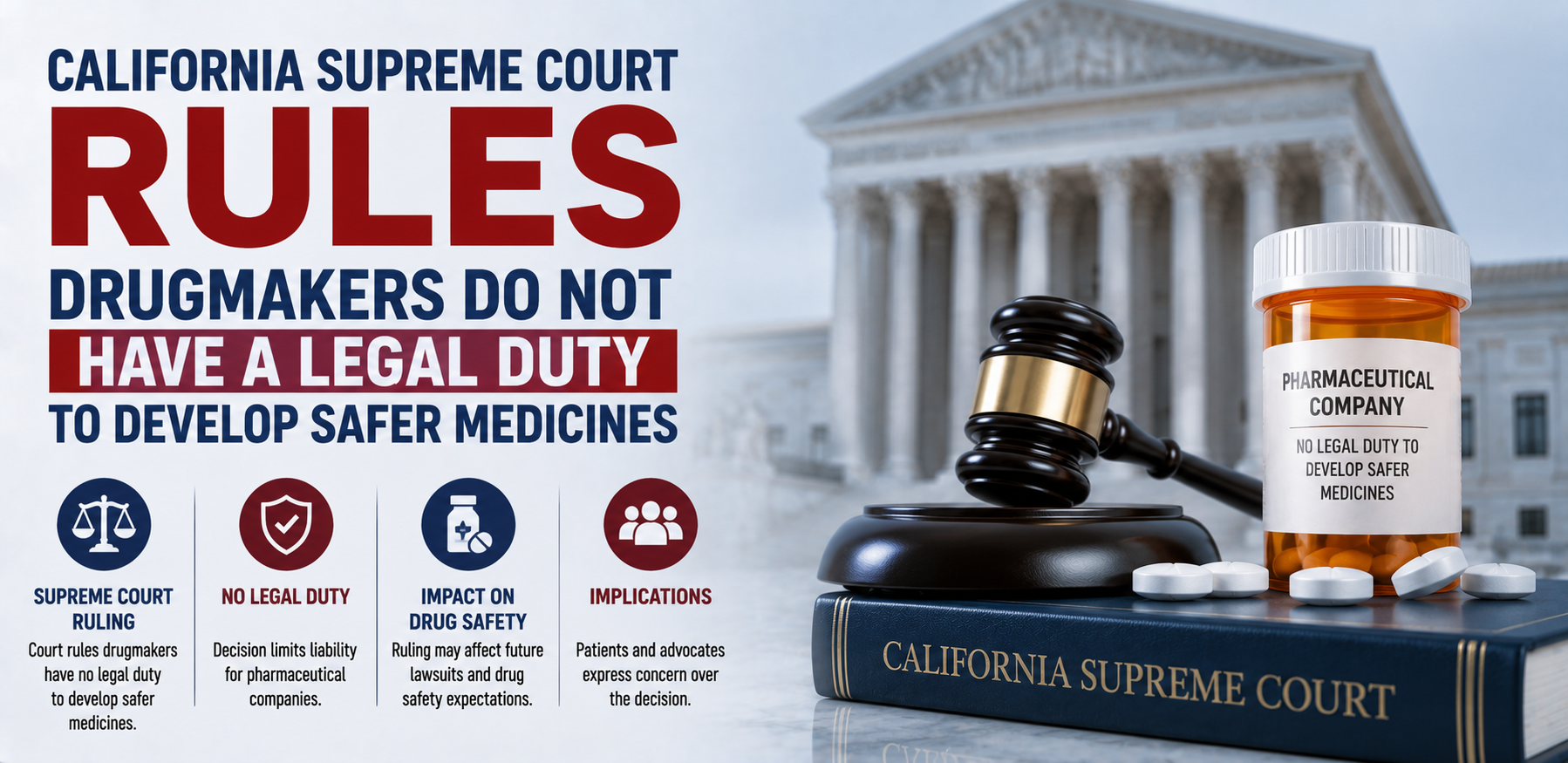
The California Supreme Court has ruled that pharmaceutical companies do not have a legal duty to develop newer or safer versions of their medicines simply because improved alternatives become possible.
The decision came in a lawsuit involving Gilead Sciences, where plaintiffs argued the company should have introduced a newer formulation of its HIV medications sooner because it was believed to have fewer long-term side effects than the older version.
The court rejected that argument, concluding that while drug manufacturers have a duty to ensure medicines they sell are reasonably safe, they are not legally required to continuously innovate or replace existing approved products with newer ones.
The ruling represents an important legal precedent for the pharmaceutical industry and product liability law.
Understanding the Case
The lawsuit centered on two generations of Gilead's HIV medicines.
Plaintiffs alleged that Gilead delayed introducing newer tenofovir alafenamide (TAF)-based medicines while continuing to market older tenofovir disoproxil fumarate (TDF)-based treatments, which have been associated with kidney and bone side effects in some patients.
They argued the company should be held legally responsible for not bringing the newer medicines to market earlier.
The California Supreme Court disagreed, stating that product liability law does not impose a legal obligation on manufacturers to develop improved products when an existing approved product is not found to be defective.
Why the Ruling Matters
The decision clarifies the legal responsibilities of pharmaceutical manufacturers regarding innovation.
While companies remain responsible for ensuring approved medicines are safe and accurately labeled, the ruling distinguishes those obligations from business decisions about research, development, and product improvement.
The case could influence future lawsuits involving claims that manufacturers should have developed newer therapies more quickly.
Industry Impact
- Pharmaceutical Companies: The ruling provides greater legal clarity regarding product liability and innovation, potentially reducing litigation related to delayed product improvements.
- Healthcare Providers: Physicians will continue making treatment decisions based on available clinical evidence and approved medicines rather than legal considerations surrounding product development timelines.
- Patients: Patients will continue benefiting from ongoing pharmaceutical innovation while regulatory agencies remain responsible for evaluating the safety and effectiveness of medicines before approval.
- Legal and Regulatory Community: The decision may become an important precedent in future pharmaceutical product liability cases involving claims about delayed innovation.
Looking Ahead
The ruling is expected to influence future litigation involving pharmaceutical manufacturers and may shape how courts evaluate claims related to drug innovation and product development.
Although the decision reduces one area of legal exposure for drugmakers, companies will continue investing in research and development to remain competitive and meet evolving patient needs.
The case also reinforces the distinction between regulatory approval standards and legal obligations under product liability law.
Why This Matters
Pharmaceutical innovation requires years of scientific research, clinical trials, and regulatory review.
The California Supreme Court's decision establishes that courts should not require manufacturers to continually replace existing approved medicines with newer versions unless legal standards for product liability are met.
The ruling provides greater certainty for pharmaceutical companies while preserving existing legal responsibilities related to drug safety and patient protection.
Key Takeaways
- The California Supreme Court ruled that drug manufacturers do not have a legal duty to develop newer or safer medicines simply because improved alternatives become possible.
- The decision arose from litigation involving Gilead's HIV medicines.
- The court distinguished product safety obligations from legal requirements to innovate.
- The ruling establishes an important precedent for pharmaceutical product liability cases.
- Drug manufacturers remain responsible for ensuring approved medicines are safe and properly labeled.
What This Means for Healthcare Marketers
The decision provides greater legal clarity for pharmaceutical companies regarding product development and innovation strategies. Drug manufacturers, biotechnology companies, legal teams, and regulatory affairs organizations will continue balancing scientific innovation with compliance and commercial planning. For healthcare marketers, organizations involved in pharmaceutical development, regulatory strategy, medical affairs, and life sciences represent valuable opportunities for stakeholder education, scientific communications, and long-term commercial engagement.