California Judge Says State Cannot Seek Damages from 23andMe's Successor Over 2023 Data Breach
What's Happening
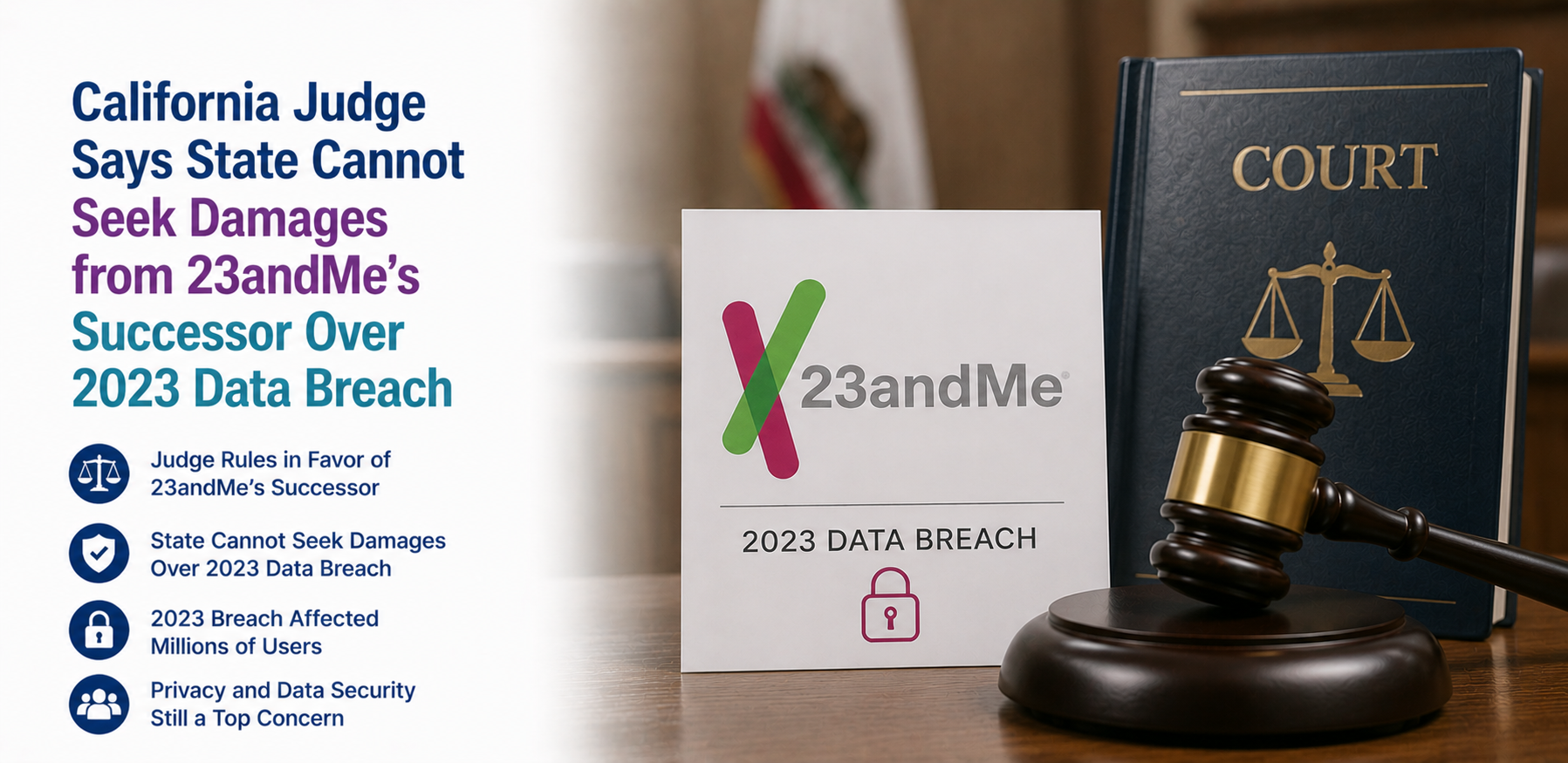
A U.S. bankruptcy judge has ruled that California cannot seek monetary damages from the company acquiring genetic testing firm 23andMe's assets over the company's 2023 data breach. The decision clears a key legal obstacle in the bankruptcy proceedings while allowing the asset sale to move forward. (reuters.com)
California had argued that the acquiring company should remain financially responsible for penalties related to the breach, which exposed sensitive personal and genetic information belonging to millions of users. The court, however, ruled that the purchaser cannot automatically inherit the state's claims for monetary damages through the bankruptcy asset sale. The ruling focuses specifically on bankruptcy law and corporate liability. It does not determine whether the original data breach occurred or whether 23andMe complied with applicable privacy laws.
What Happened in the 2023 Data Breach?
In 2023, cybercriminals gained unauthorized access to certain 23andMe customer accounts by exploiting reused usernames and passwords that had been compromised in unrelated data breaches. Through those accounts, attackers accessed personal information belonging to millions of users. Depending on individual account settings, exposed information included:
- Names
- Birth year
- Geographic information
- Family relationship data
- Ancestry reports
- Genetic ancestry information
The incident became one of the largest breaches involving consumer genetic information. Although the attackers did not directly penetrate 23andMe's core genetic database, the exposed account information raised significant concerns about the protection of sensitive health-related data.
Why Genetic Data Is Different
Unlike many other types of personal information, genetic data is permanent, highly personal, unique to each individual, and potentially relevant to biological relatives. Genetic testing services may provide insights into family history, disease risk, carrier status for inherited conditions, ancestry, and genetic traits. Because this information cannot simply be changed like a password, protecting genetic privacy has become an increasingly important issue for healthcare organizations, regulators, and consumers.
Why the Bankruptcy Case Matters
When companies enter bankruptcy, courts determine which assets and liabilities transfer to new owners. In this case, California argued that the acquiring company should also assume financial responsibility for penalties arising from alleged privacy violations. The court disagreed, ruling that the state's claims for monetary damages cannot automatically be imposed on the purchaser through the bankruptcy sale process. The decision may influence how future bankruptcies involving companies holding sensitive health or consumer data are handled.
Growing Importance of Healthcare Data Privacy
Healthcare organizations manage some of the most sensitive personal information available, including medical records, prescription history, laboratory results, insurance information, genetic testing results, and family medical history. As healthcare becomes increasingly digital, protecting this information has become a major priority. Organizations continue investing in cybersecurity, multi-factor authentication, data encryption, identity verification, continuous security monitoring, and employee cybersecurity training. Regulators have also strengthened expectations regarding how healthcare and consumer health companies protect personal information.
Why Consumers Are Paying More Attention
Public awareness of healthcare data privacy has increased significantly in recent years. Consumers increasingly ask how health data is stored, who can access their information, how long data is retained, if their data can be shared, and what happens if the company is sold. These questions have become especially important for companies offering direct-to-consumer genetic testing and digital health services. Trust has become a key factor influencing whether consumers choose to share sensitive health information.
Industry Impact
- Digital Health Companies: Organizations handling genetic or health information continue strengthening cybersecurity and privacy practices.
- Healthcare Providers: The case reinforces the importance of protecting sensitive patient information throughout the healthcare ecosystem.
- Regulators: Government agencies continue evaluating how privacy laws apply during corporate bankruptcies and asset sales.
- Consumers: The ruling highlights the importance of understanding how personal health information may be handled if healthcare companies undergo major business changes.
Why This Matters
The court's decision illustrates the complex relationship between healthcare data privacy, cybersecurity, and bankruptcy law. As more healthcare companies collect large amounts of digital health and genetic information, courts and regulators continue addressing new legal questions surrounding ownership, liability, and consumer protection. While the ruling concerns bankruptcy procedure rather than the underlying cyberattack, it reinforces the growing importance of protecting sensitive health information throughout a company's lifecycle—including during acquisitions and restructuring. The case also serves as a reminder that maintaining strong cybersecurity and transparent data governance remains essential for organizations entrusted with highly personal healthcare information.
Key Takeaways
- A bankruptcy judge ruled that California cannot seek monetary damages from the company acquiring 23andMe's assets over the 2023 data breach.
- The decision concerns bankruptcy liability and does not determine responsibility for the original breach.
- The 2023 incident exposed sensitive customer account and genetic ancestry information.
- Genetic data requires especially strong privacy protections because it is permanent and highly personal.
- The ruling highlights ongoing legal questions surrounding healthcare data privacy and corporate restructuring.
What This Means for Healthcare Marketers
The ruling underscores that healthcare data has become one of the industry's most valuable—and most sensitive—assets. Organizations collecting genetic information, digital health records, or other consumer health data are increasingly expected to demonstrate not only strong cybersecurity practices but also transparent governance throughout mergers, acquisitions, and corporate restructuring. Trust in how health information is managed is becoming a key differentiator in consumer healthcare.
For healthcare marketers, privacy and security are no longer purely compliance issues—they are central to brand reputation. Companies that clearly communicate how they protect patient information, respond to cybersecurity incidents, and manage data throughout its lifecycle are better positioned to build long-term consumer confidence, particularly in rapidly growing areas such as genetic testing, precision medicine, and digital health.
For healthcare intelligence teams, the case highlights the expanding intersection of healthcare, technology, and data governance. Monitoring legal decisions, cybersecurity incidents, and evolving privacy regulations can help organizations anticipate future compliance requirements while strengthening strategies for protecting sensitive health information in an increasingly digital healthcare environment.