CDC Activates $107 Million in Emergency Funding for Ebola Response
What's Happening
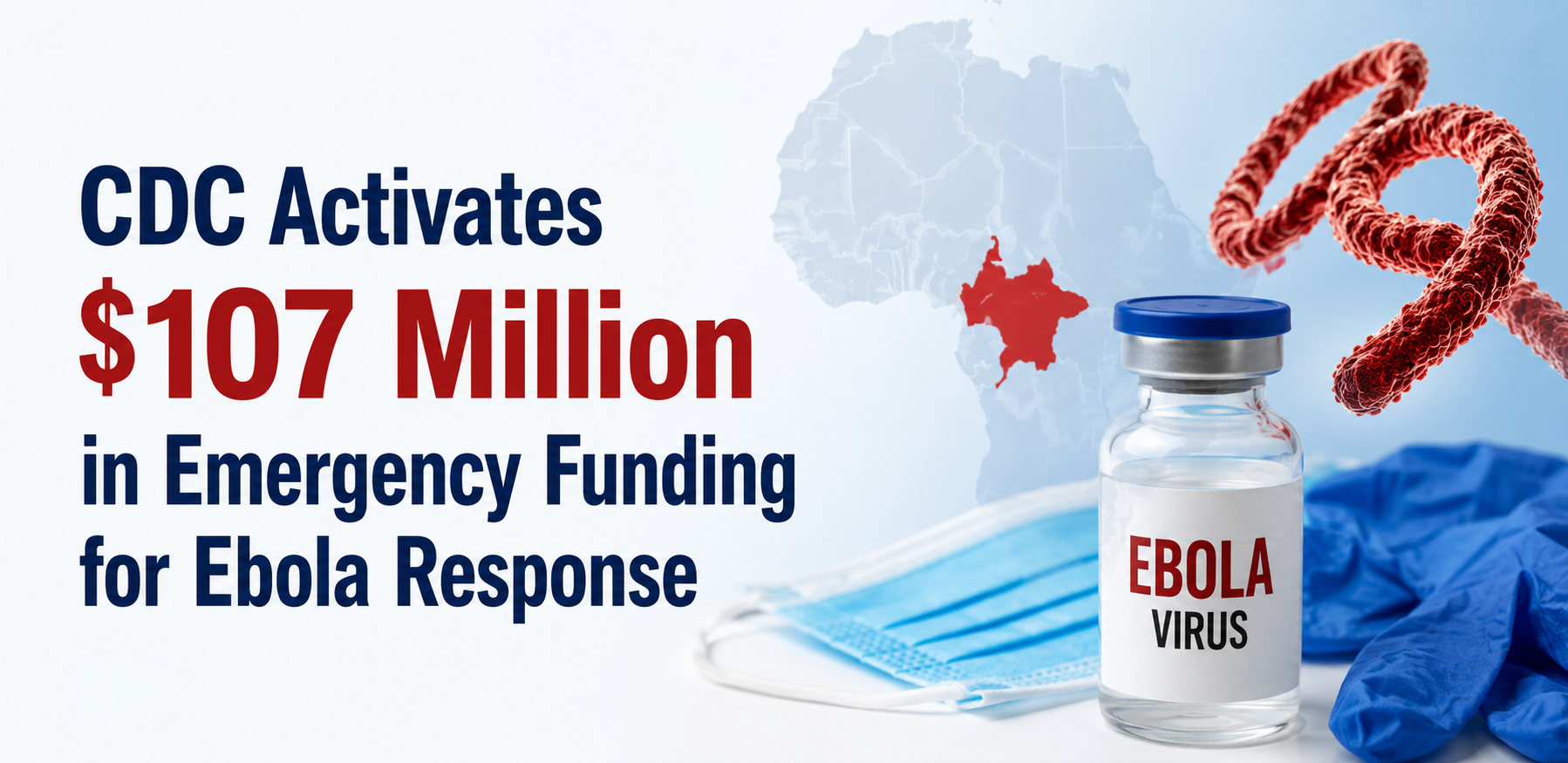
The Centers for Disease Control and Prevention (CDC) activated approximately $107 million in emergency funding to strengthen the United States' response to the ongoing Ebola outbreak in Central Africa.
The funding will support a broad range of preparedness and response activities, including disease surveillance, laboratory testing, travel monitoring, public-health coordination, emergency response planning, and support for international containment efforts.
The announcement follows several weeks of escalating U.S. activity related to Ebola, including expanded airport screening, travel restrictions, additional federal funding commitments, enhanced monitoring of travelers, and preparations by specialized treatment centers.
Federal health officials continue emphasizing that the immediate risk to the American public remains low. However, they argue that investing in containment efforts early is the most effective way to prevent a larger public-health crisis from developing.
The decision reflects growing concern about the outbreak's potential impact if transmission expands further within affected regions.
Why the United States Is Investing So Heavily
At first glance, some people may wonder why the U.S. government is spending hundreds of millions of dollars on an outbreak occurring thousands of miles away. The answer is rooted in modern public health. In today's interconnected world, infectious diseases can cross borders rapidly through international travel and global trade networks. Public-health officials generally follow a simple principle: The best way to protect Americans is often to stop dangerous outbreaks before they spread internationally.
This strategy became especially clear during:
- The 2014 West Africa Ebola outbreak
- COVID-19
- Zika virus outbreaks
- Mpox outbreaks
- Various influenza emergencies
Health agencies have increasingly concluded that prevention and containment are usually far less costly than responding to widespread transmission after a disease has already spread.
What the Funding Will Support
The emergency funding is expected to support several key areas.
- Disease Surveillance: Health agencies continue monitoring Ebola activity both internationally and domestically. Surveillance systems help identify potential cases quickly and provide early warning if conditions begin changing.
- Laboratory Capacity: Accurate testing remains one of the most important tools in outbreak response. Funding helps ensure laboratories can process samples rapidly and accurately.
- Travel Monitoring: The United States has already expanded screening and monitoring efforts involving travelers arriving from affected regions. Additional resources help support these operations.
- Public Health Coordination: Federal, state, and local agencies must work together during infectious-disease emergencies. Funding supports communication systems, planning activities, and response coordination.
- International Containment Efforts: Many resources are directed toward helping health officials control the outbreak near its source. This includes support for treatment centers, surveillance programs, and healthcare infrastructure.
Why Ebola Continues to Concern Health Officials
Ebola is not easily transmitted compared with respiratory diseases such as influenza or COVID-19. The virus generally spreads through direct contact with bodily fluids from infected individuals who are already showing symptoms. This makes casual transmission relatively uncommon.
However, Ebola remains a serious concern because:
- It can cause severe illness.
- Mortality rates can be high.
- Healthcare workers face elevated risks.
- Outbreaks can grow rapidly if containment fails.
- Healthcare systems can become overwhelmed in affected regions.
Public-health agencies therefore tend to treat Ebola outbreaks aggressively even when the probability of international spread appears limited. The goal is to prevent small outbreaks from becoming much larger crises.
How the Current Response Differs From 2014
The current outbreak is frequently compared with the 2014 Ebola crisis in West Africa. That outbreak ultimately infected tens of thousands of people and exposed weaknesses in global preparedness systems. Since then, significant improvements have been made. Health agencies have invested heavily in:
- Early-warning systems
- Emergency-response planning
- Healthcare worker training
- Laboratory infrastructure
- Disease surveillance technology
Many experts believe the global response system is substantially stronger today than it was a decade ago. The rapid activation of funding demonstrates how quickly governments can now mobilize resources when serious outbreaks emerge.
Why Preparedness Is a Healthcare Investment
Outbreak response funding is often viewed as an expense, but many public-health experts see it as a long-term investment. Preparedness programs strengthen capabilities that can be used across multiple emergencies. Investments in testing infrastructure, emergency coordination, disease surveillance, public-health communications, and healthcare workforce readiness often provide benefits beyond a single outbreak. The same systems used for Ebola may later support responses involving influenza, emerging infectious diseases, foodborne outbreaks, or other public-health threats. This is one reason governments continue investing in preparedness even during periods when no immediate crisis exists.
Industry Impact
- Hospitals and Health Systems: Healthcare organizations continue reviewing infectious-disease response protocols and preparedness plans.
- Public Health Agencies: Federal and state agencies are receiving additional resources to strengthen monitoring and response activities.
- Diagnostic Companies: Testing providers may experience increased demand for outbreak-related laboratory services.
- Healthcare Technology Vendors: Organizations supporting surveillance, analytics, and emergency-response systems may benefit from increased investment.
Why This Matters
The funding announcement reflects a broader shift in public-health strategy. Rather than waiting for diseases to spread internationally, governments increasingly focus on early intervention and prevention. The decision also highlights how seriously health officials are treating the current Ebola outbreak despite repeatedly emphasizing that the risk to Americans remains low.
Preparedness efforts can sometimes appear excessive when outbreaks remain contained. However, public-health leaders often measure success by crises that never occur rather than emergencies that become visible. The activation of emergency funding signals that federal agencies intend to remain proactive as the situation continues evolving.
Key Takeaways
- The CDC activated $107 million in emergency Ebola-response funding.
- Resources will support surveillance, testing, travel monitoring, preparedness, and international response efforts.
- Officials continue emphasizing that the immediate risk to Americans remains low.
- The strategy focuses on containing outbreaks before they spread internationally.
- The funding reflects lessons learned from previous global public-health emergencies.
What This Means for Healthcare Marketers
This announcement serves as a strong indicator of where public-health attention and funding are currently being directed. For healthcare marketers, emergency funding often creates downstream demand for technologies, services, analytics platforms, diagnostics, workforce solutions, and preparedness programs. Organizations involved in public health, infectious diseases, surveillance, laboratory services, and emergency-response infrastructure may see increased activity as agencies deploy resources.
The story also highlights the importance of monitoring government funding announcements as demand signals. Federal investments frequently influence purchasing decisions months before procurement activity becomes publicly visible.
For healthcare intelligence teams, tracking preparedness spending can provide early visibility into emerging opportunities involving public health, diagnostics, healthcare technology, population health, and disease surveillance. Funding decisions often reveal strategic priorities long before broader market trends become apparent.
More broadly, the activation of emergency resources demonstrates how preparedness has become a permanent part of modern healthcare strategy rather than a temporary response to isolated crises.