What's Happening
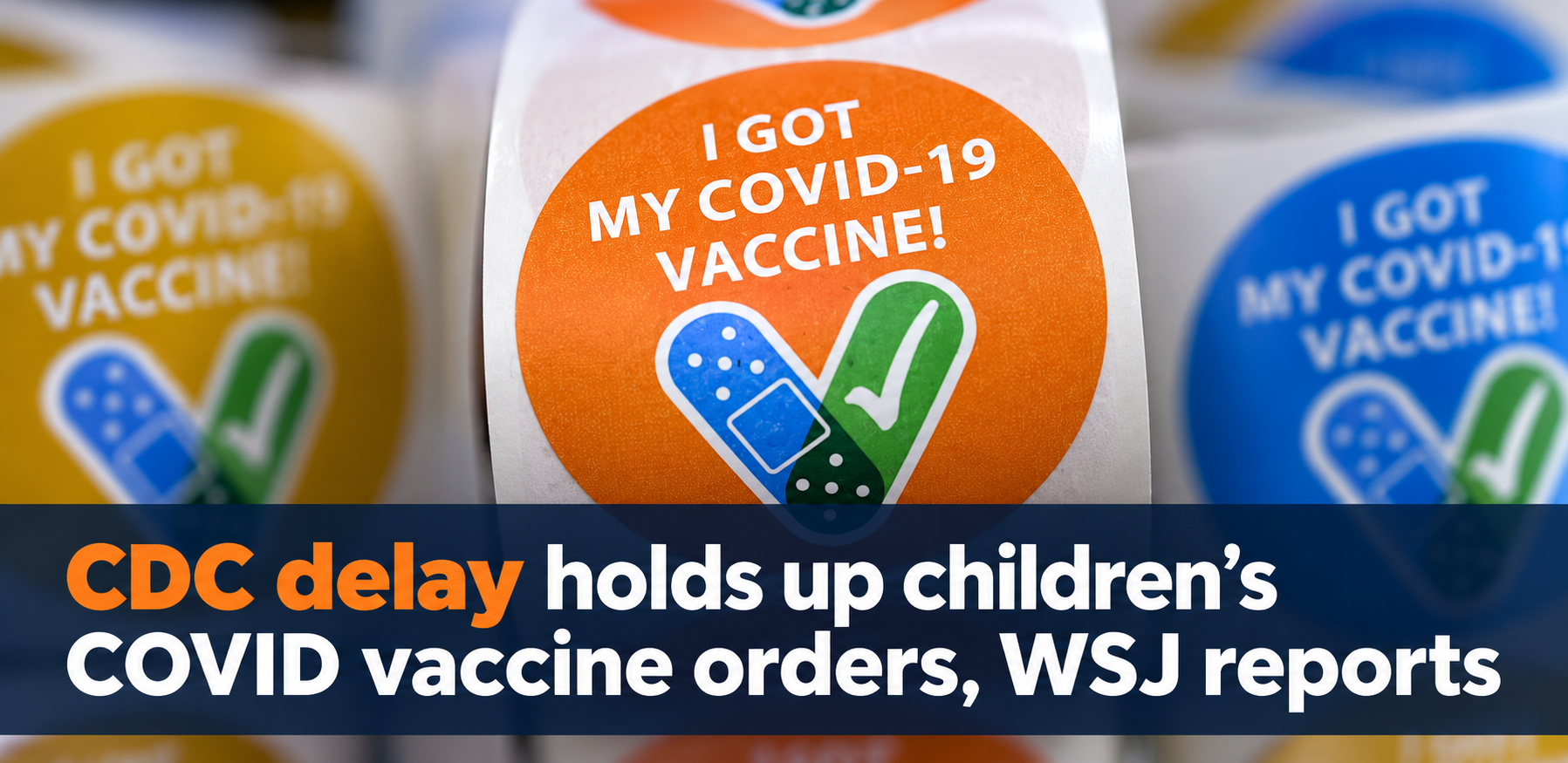
U.S. states are facing delays in ordering updated COVID-19 vaccines for children through the federal Vaccines for Children (VFC) program, according to a Wall Street Journal report cited by Reuters.
The Centers for Disease Control and Prevention (CDC) has not yet begun accepting state orders for the updated COVID-19 vaccines through the program, while a separate federal program for uninsured and underinsured adults is similarly affected. (reuters.com)
What Is the Vaccines for Children Program?
Major federal initiative supplies immunizations for over 40 million children
Serving roughly half of U.S. children across pediatric practices, hospitals, and health departments, the VFC program provides vaccines at no cost to eligible youth, making procurement timing critical for provider inventory. (cdc.gov)
Why the COVID Vaccine Orders Are Delayed
Finalizing federal procurement decisions interrupts traditional ordering timetables
While orders typically occur within two weeks of commercial availability, HHS officials argue that COVID-19's lack of predictable seasonal patterns means September should not serve as a rigid procurement deadline. (reuters.com)
The Vaccines Are Already Available Commercially
Manufacturing is unhindered while federal procurement serves as the primary bottleneck
Commercially insured patients can access updated doses immediately at pharmacies, and manufacturers like Pfizer—which began shipping pediatric doses on September 7—report no broad production or transportation shortages. (reuters.com)
Who Could Be Affected
Public program beneficiaries face temporary access hurdles compared to private channels
Families depending on federally supplied inventory may encounter fewer immediate vaccination alternatives than those with commercial insurance, depending on local stock and state-level buffers.
A Separate Program for Uninsured Adults
Federal purchasing holdups extend impact to Section 317 adult immunization networks
Procurement delays also constrain the Section 317 program, which supports vaccination for uninsured and underinsured adults who rely heavily on publicly supported healthcare access. (reuters.com)
COVID Vaccination Recommendations Have Changed
Updated framework shifts focus toward shared clinical decision-making
The CDC's current guidance relies on individual or shared clinical consultation rather than universal pediatric recommendations, framing procurement decisions within a modified policy landscape. (cdc.gov)
Pediatric Demand Has Already Fallen
Historically low uptake complicates federal inventory forecasting
With CDC data showing fewer than 10% of U.S. children ages 6 months through 17 years receiving a COVID vaccine last year, officials must balance access maintenance against the risk of over-purchasing. (reuters.com)
The Federal Vaccine Policy Debate
Broader shifts and legal challenges create regulatory uncertainty
The ordering bottleneck unfolds amid ongoing administration shifts in vaccine recommendations and prior legal blocks on narrower childhood schedules. (reuters.com)
The Difference Between Recommendation and Access
Clinical appropriateness relies heavily on physical vaccine stock
Even when providers determine vaccination is appropriate under current guidelines, they remain dependent on federal inventory distribution channels to execute care.
Why Timing Matters to Pediatric Providers
Fall respiratory planning disrupted by staggered inventory arrival
Delays complicate routine back-to-school appointment scheduling, co-administration workflows with influenza shots, and patient communication regarding vaccine availability.
The Access and Equity Question
Procurement bottlenecks threaten safety-net equity goals
While not halting all vaccinations, disparities in access channels highlight how federal procurement timing directly affects healthcare equity for vulnerable populations.
What Manufacturers Are Saying
Suppliers navigate shifts in public sector demand predictability
With commercial supply chains active, manufacturers face complex demand forecasting as federal procurement practices and guidelines evolve. (reuters.com)
The Commercial Vaccine Market Is Changing
Post-pandemic transition moves toward targeted annual markets
The shift toward routine, risk-based vaccination models requires manufacturers and public programs to operate within smaller, less predictable market volumes.
Why This Matters
The CDC ordering delay underscores how federal procurement hurdles can restrict access even when commercial manufacturing is fully operational, heavily impacting populations relying on public programs. (reuters.com)
Looking Ahead
Monitoring order openings and market adaptation
Future focus will center on when the CDC opens ordering channels, how providers manage fall inventory, and how long-term procurement evolution impacts vulnerable patient access.
Key Takeaways
- States face delays ordering updated COVID-19 vaccines through the federal VFC program. (reuters.com)
- The CDC has not yet opened state ordering channels for updated VFC doses. (reuters.com)
- Procurement delays also impact the Section 317 program for uninsured and underinsured adults. (reuters.com)
- The VFC program serves over 40 million children, covering roughly half of U.S. youth. (cdc.gov)
- Commercial supply is active, with Pfizer beginning pediatric shipments on September 7. (reuters.com)
- The issue stems from federal procurement decisions rather than a manufacturing shortage. (reuters.com)
- CDC guidelines for children now emphasize individual or shared clinical decision-making. (cdc.gov)
- Fewer than 10% of U.S. children received a COVID vaccine last year. (reuters.com)
- Delays occur amid broader federal policy and recommendation shifts. (reuters.com)
What This Means for Healthcare Marketers
This situation shows why healthcare marketers need to distinguish between product availability, recommendation, access and actual uptake.
A vaccine can be on pharmacy shelves while still being unavailable to a specific population through its normal healthcare channel.
For vaccine manufacturers and healthcare organizations, relevant signals include federal procurement decisions, provider inventory, insurance coverage, vaccination recommendations, appointment demand and actual vaccine uptake.
For healthcare intelligence teams, these signals can help identify access gaps earlier and distinguish a genuine supply shortage from a procurement or distribution issue.