CDC Expands Largest Known Cyclospora Outbreak to 15 States
What's Happening
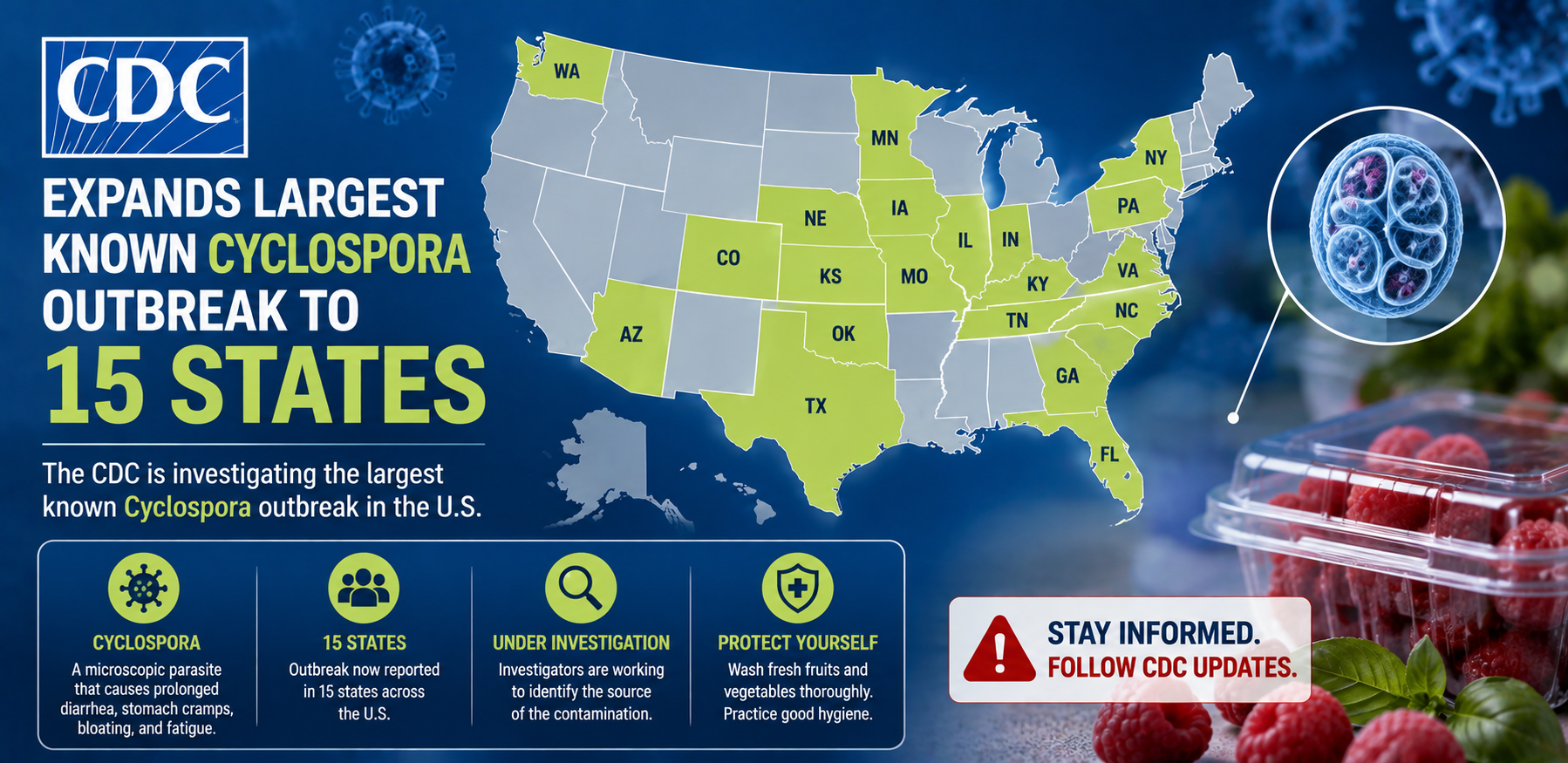
The U.S. Centers for Disease Control and Prevention (CDC) has expanded its investigation into the nation's largest known Cyclospora outbreak, confirming cases across 15 states.
Public health officials are working with state health departments and the U.S. Food and Drug Administration (FDA) to identify the contaminated food source responsible for the outbreak. The investigation has grown as additional infections have been confirmed, making it the largest documented Cyclospora outbreak in U.S. history.
Health authorities continue urging healthcare providers to report suspected cases promptly and encourage individuals experiencing prolonged gastrointestinal illness to seek medical evaluation.
Understanding Cyclospora
Cyclospora is an intestinal parasite (Cyclospora cayetanensis) that causes cyclosporiasis, a foodborne illness typically spread through contaminated fresh produce or water.
Foods commonly associated with Cyclospora outbreaks include:
- Leafy greens.
- Fresh herbs.
- Berries.
- Salad mixes.
- Fresh vegetables.
- Other uncooked produce.
Unlike many bacterial foodborne illnesses, Cyclospora is generally not transmitted directly from one person to another because the parasite must first mature in the environment before becoming infectious.
Symptoms and Diagnosis
Symptoms usually develop about one week after exposure and may include:
- Persistent watery diarrhea.
- Stomach cramps.
- Nausea.
- Fatigue.
- Loss of appetite.
- Weight loss.
- Bloating.
- Low-grade fever.
Without treatment, symptoms can last for several weeks or recur after temporarily improving.
Diagnosis typically requires specialized laboratory testing because routine stool examinations may not always detect the parasite.
Public Health Response
The CDC, FDA, and state health departments are conducting an extensive outbreak investigation to identify the contaminated food source.
Investigators are:
- Interviewing affected patients.
- Tracing food purchases and supply chains.
- Performing laboratory testing.
- Coordinating surveillance across multiple states.
- Working with food producers and distributors to identify potential sources of contamination.
The investigation may lead to product recalls or additional public health recommendations if a specific food source is confirmed.
Industry Impact
- Public Health Agencies: The expanding outbreak requires significant coordination between federal and state agencies to strengthen surveillance, laboratory testing, and outbreak response efforts.
- Food Industry: Food growers, distributors, and retailers may face increased inspections, traceability reviews, and food safety investigations as officials search for the contamination source.
- Healthcare Providers: Clinicians are being encouraged to consider cyclosporiasis when evaluating patients with persistent diarrhea and to report suspected infections promptly.
- Consumers: The outbreak highlights the importance of proper food handling, thoroughly washing fresh produce, and seeking medical care when symptoms persist.
Looking Ahead
Health officials will continue investigating until the contaminated food source is identified and appropriate control measures are implemented.
Additional cases may be reported as laboratory testing continues, and federal agencies could issue recalls or consumer advisories if investigators identify a common source.
The findings are also expected to inform future food safety practices designed to reduce the risk of similar outbreaks.
Why This Matters
The expansion of the outbreak across 15 states demonstrates how quickly foodborne illnesses can spread through modern food distribution networks.
The investigation underscores the importance of rapid disease surveillance, laboratory diagnostics, food traceability, and coordinated public health action to protect consumers and limit additional infections.
It also reinforces the need for continued investment in food safety systems and outbreak detection capabilities.
Key Takeaways
- The CDC has expanded the nation's largest known Cyclospora outbreak investigation to 15 states.
- Federal and state health officials are working to identify the contaminated food source.
- Cyclospora is a foodborne parasite commonly linked to contaminated fresh produce.
- Healthcare providers are encouraged to report suspected cases promptly.
- The outbreak highlights the importance of food safety, disease surveillance, and coordinated public health response.
What This Means for Healthcare Marketers
The expanding outbreak highlights continued investment in infectious disease surveillance, public health infrastructure, laboratory diagnostics, and food safety monitoring. Public health agencies, diagnostic laboratories, healthcare providers, and health technology companies play an essential role in detecting, tracking, and managing foodborne disease outbreaks. For healthcare marketers, organizations supporting epidemiology, laboratory testing, disease surveillance, and public health analytics represent high-intent opportunities for provider education, partnership development, and healthcare innovation.