CDC Links Four Additional States to Growing Cyclospora Outbreak Investigation
What's Happening
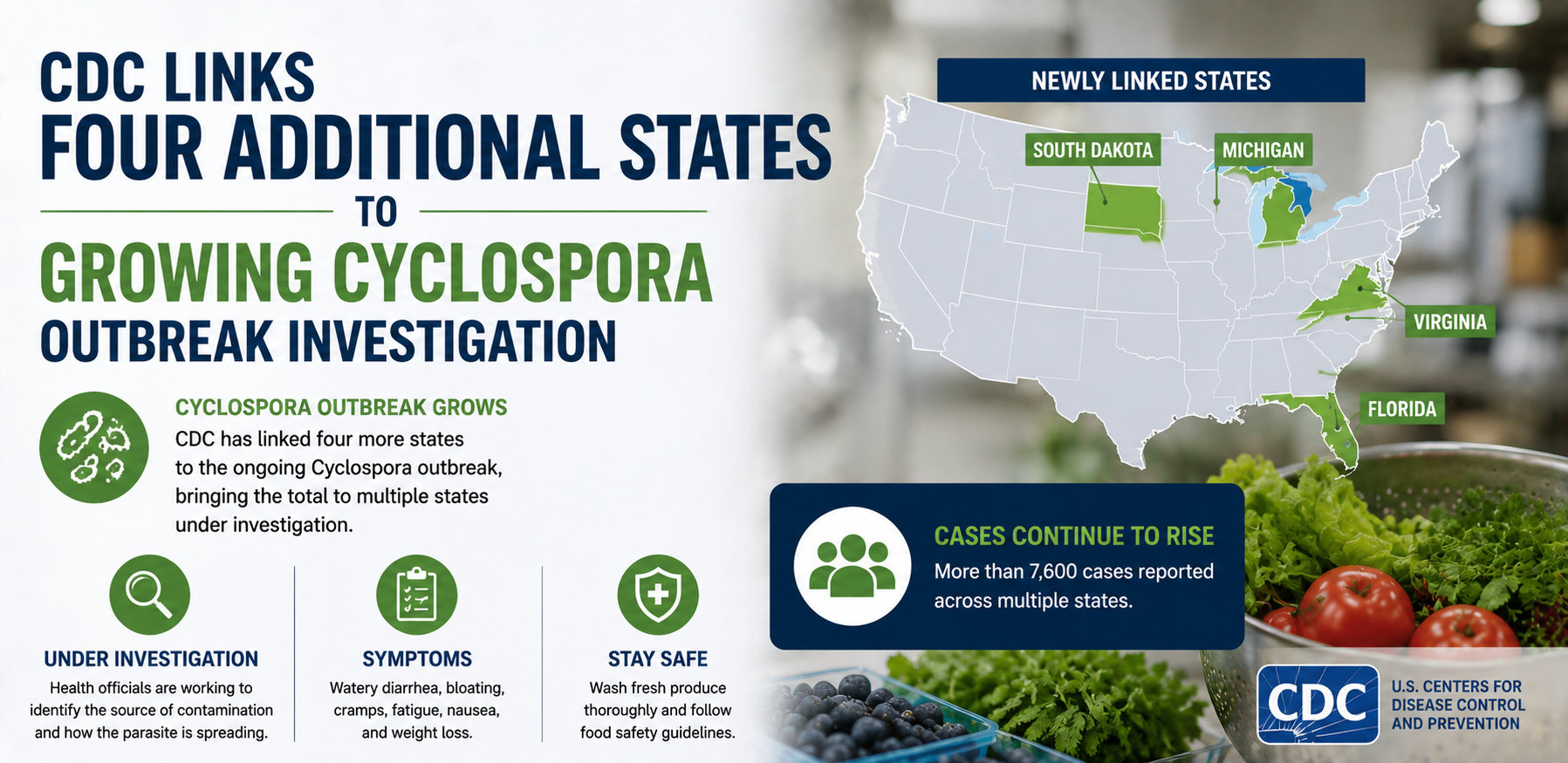
The U.S. Centers for Disease Control and Prevention (CDC) has expanded its investigation into a multistate Cyclospora outbreak, identifying four additional states with confirmed illnesses linked to the ongoing outbreak.
The latest update increases the geographic scope of the investigation as federal and state health officials continue working to identify the source of the infections. While investigators have connected many of the reported illnesses to the same outbreak, the contaminated food responsible for the cases has not yet been definitively identified. Public health officials are continuing to trace food distribution networks and collect samples to determine where contamination occurred.
Cyclospora outbreaks are frequently associated with fresh produce, particularly fruits and vegetables that are consumed raw. Because these foods often pass through complex domestic and international supply chains before reaching consumers, identifying the exact source can take weeks or even months.
The CDC is working alongside state health departments and the U.S. Food and Drug Administration (FDA) to determine the origin of the outbreak and prevent additional illnesses.
What Is Cyclospora?
Cyclospora is a microscopic parasite that causes an intestinal illness known as cyclosporiasis. People become infected after consuming food or water contaminated with the parasite. Unlike many foodborne bacteria, Cyclospora generally requires time outside the human body before becoming infectious, meaning the illness is usually linked to contaminated produce rather than direct person-to-person transmission.
Common symptoms include:
- Frequent watery diarrhoea.
- Loss of appetite.
- Weight loss.
- Stomach cramps.
- Bloating.
- Nausea.
- Fatigue.
- Low-grade fever.
Symptoms typically begin about one week after exposure and can last for several weeks if left untreated. Some patients experience recurring symptoms that improve and then return over time. Although most healthy individuals recover fully with appropriate treatment, the illness can be more severe for older adults, young children, and people with weakened immune systems.
Why Fresh Produce Is Often Involved
Cyclospora has been linked to numerous foodborne outbreaks over the past two decades. Unlike many pathogens that multiply after food reaches consumers, Cyclospora contamination typically occurs much earlier in the agricultural supply chain.
Potential points of contamination include:
- Irrigation water.
- Agricultural growing environments.
- Produce harvesting.
- Processing facilities.
- Food handling during packaging.
Fresh produce presents a particular challenge because many items are eaten without cooking, eliminating an important step that normally destroys many harmful microorganisms. Foods previously associated with Cyclospora outbreaks have included leafy greens, bagged salads, cilantro, basil, raspberries, blackberries, and snow peas.
How Public Health Officials Investigate Outbreaks
Foodborne outbreak investigations involve several stages. The process typically begins when healthcare providers diagnose patients with similar illnesses and report confirmed cases to local or state public health agencies.
Investigators then interview patients about foods they recently consumed, compare purchasing histories, identify common restaurants or grocery stores, trace food distribution networks, collect laboratory samples from suspected products, and compare genetic and epidemiological evidence.
In many cases, multiple agencies participate in the investigation, including the CDC, the FDA, state health departments, local public health authorities, and food producers and distributors. The addition of four more states suggests investigators are continuing to uncover related illnesses as surveillance expands.
Why Identifying the Source Can Take Time
Finding the exact source of a Cyclospora outbreak is often more difficult than identifying bacterial foodborne illnesses due to several key factors:
- Short Shelf Life: Fresh produce is often consumed or discarded before investigators recognise an outbreak, leaving few samples available for testing.
- Complex Supply Chains: A single packaged salad may contain ingredients sourced from multiple farms, regions, or even countries, making traceback investigations highly complex.
- Delayed Diagnosis: Cyclospora requires specialised laboratory testing that may not be performed immediately when patients first seek medical care.
- Wide Distribution: Produce may be distributed nationally within days, causing illnesses to appear simultaneously across multiple states.
For these reasons, public health investigations frequently continue long after the first illnesses are reported.
Industry Impact
- Food Producers: Growers and produce suppliers may experience increased regulatory scrutiny while investigators determine the source of contamination. Companies linked to outbreaks often conduct internal reviews of agricultural practices, water quality, and food safety protocols.
- Retailers: Supermarkets and food distributors may be asked to remove products from shelves if contaminated items are identified. Retailers also play a key role in communicating recalls and food safety information to consumers.
- Healthcare Providers: Clinicians should consider Cyclospora infection when evaluating patients with prolonged diarrhoea, particularly during the summer months when fresh produce consumption is highest. Early diagnosis helps ensure appropriate treatment and supports outbreak surveillance.
- Public Health Agencies: State and federal agencies continue coordinating surveillance, laboratory testing, epidemiological investigations, and public communication efforts to limit further spread and identify the contaminated food source.
Looking Ahead
The investigation remains active, and additional cases may be identified as more laboratory results become available. Public health officials are expected to continue interviewing newly diagnosed patients, analysing food purchase data, conducting traceback investigations, testing suspected produce, and working with growers and distributors to identify potential contamination points.
If investigators identify a specific food product or supplier, public health agencies may issue recalls or additional consumer guidance to reduce the risk of further infections. Until then, healthcare providers are encouraged to remain alert for suspected Cyclospora infections, particularly among patients with persistent gastrointestinal symptoms.
Why This Matters
Foodborne illness investigations demonstrate the importance of coordinated surveillance across healthcare providers, laboratories, regulatory agencies, and the food industry. As food supply chains become increasingly global, rapidly identifying contaminated products is essential for protecting public health and maintaining consumer confidence.
The expanding Cyclospora investigation also highlights the importance of strong food safety systems, routine disease surveillance, and collaboration between federal and state agencies. Continued investment in laboratory diagnostics, traceability technologies, and outbreak detection will remain critical for responding quickly to future foodborne disease events.
Key Takeaways
- The CDC has linked four additional states to an ongoing multistate Cyclospora outbreak investigation.
- Investigators have not yet identified the specific contaminated food responsible for the illnesses.
- Cyclospora is a foodborne parasite commonly associated with contaminated fresh produce.
- Federal and state health officials are continuing traceback investigations and laboratory testing to determine the outbreak's source.
- Additional cases may be identified as the investigation progresses.
What This Means for Healthcare Marketers
Growing foodborne illness investigations often lead to increased activity across public health agencies, diagnostic laboratories, food safety companies, healthcare providers, and produce supply chains. Organisations involved in laboratory testing, disease surveillance, food traceability, public health technology, and infection prevention may see heightened demand for their products and services during outbreak investigations. For healthcare marketers, monitoring these events can help identify organisations investing in food safety, diagnostics, regulatory compliance, and public health preparedness as they respond to evolving disease surveillance efforts.