CDC Reports U.S. Cyclosporiasis Cases Surpass 1,600, Expects Total to Continue Rising
What's Happening
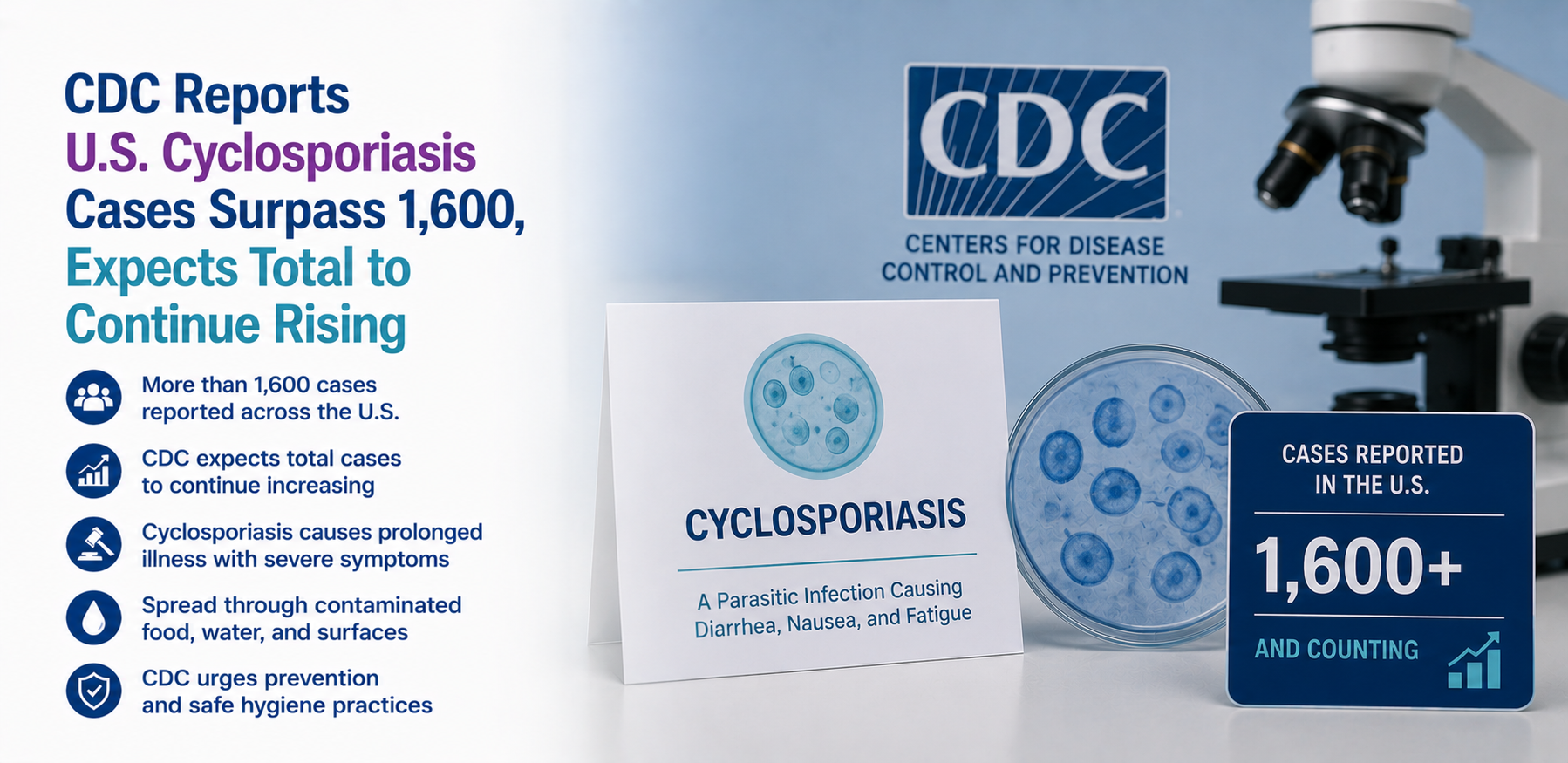
The U.S. Centers for Disease Control and Prevention (CDC) says the number of laboratory-confirmed cyclosporiasis cases reported across the United States has surpassed 1,600, with health officials expecting the total to continue increasing as more infections are identified.
The CDC is working with state and local health departments to investigate the outbreak, identify potential sources of contamination, and determine whether the illnesses are linked to one or more food products. Because cases are often reported weeks after symptoms begin, officials expect additional infections to be confirmed over the coming weeks.
The outbreak highlights the importance of nationwide disease surveillance and rapid public health investigations to prevent further spread.
What Is Cyclosporiasis?
Cyclosporiasis is an intestinal illness caused by the parasite Cyclospora cayetanensis. People usually become infected after consuming food or water contaminated with the parasite.
Unlike many infectious diseases, Cyclospora is not typically spread directly from person to person because the parasite must first mature outside the human body before it becomes infectious. Outbreaks are frequently associated with fresh produce that is eaten raw. Foods linked to previous outbreaks have included:
- Leafy greens.
- Cilantro.
- Basil.
- Salad mixes.
- Snow peas.
- Certain berries.
Because fresh produce is often distributed across multiple states, a single contaminated source can affect large numbers of people.
What Are the Symptoms?
Symptoms usually appear about one week after exposure. Common symptoms include:
- Frequent watery diarrhea.
- Stomach cramps.
- Nausea.
- Fatigue.
- Loss of appetite.
- Weight loss.
- Bloating.
- Low-grade fever.
Without treatment, symptoms can persist for several weeks and may temporarily improve before returning. People with weakened immune systems may experience more severe illness.
How the CDC Investigates Outbreaks
When multiple cases are reported, the CDC works with state health departments to determine whether they are connected. Investigators typically:
- Interview infected individuals.
- Compare foods consumed before illness.
- Analyze laboratory data.
- Trace food supply chains.
- Coordinate with the FDA and state agriculture agencies.
- Monitor for additional cases.
Because cases are reported over time, confirmed case numbers often continue increasing even after the contaminated food is no longer available.
Why Officials Expect More Cases
Health officials expect additional infections to be reported because:
- Some patients have not yet sought medical care.
- Laboratory testing takes time.
- Reporting from healthcare providers occurs gradually.
- Public health investigations continue identifying related cases.
As surveillance continues, confirmed case counts often rise before eventually stabilizing once the outbreak source is identified and exposure ends.
Preventing Cyclosporiasis
Consumers can reduce their risk by:
- Washing fresh produce before eating.
- Practicing proper hand hygiene.
- Following food recall notices and public health advisories.
- Seeking medical care if prolonged diarrhea develops.
However, washing alone may not completely remove Cyclospora from contaminated produce. Preventing contamination during growing, harvesting, processing, and distribution remains the most effective way to reduce outbreaks.
Industry Impact
- Public Health Agencies: The CDC and state health departments continue monitoring cases while working to identify the outbreak source.
- Food Industry: Growers, distributors, and retailers may face additional inspections and traceability reviews as investigators examine the food supply chain.
- Healthcare Providers: Clinicians are encouraged to consider cyclosporiasis in patients experiencing prolonged diarrhea, particularly during seasonal outbreaks.
- Consumers: Public awareness and timely medical evaluation can help reduce complications while supporting public health investigations.
Why This Matters
The growing number of cyclosporiasis cases demonstrates how foodborne illnesses can spread across multiple states before investigators identify the source. The outbreak also highlights the importance of strong disease surveillance, laboratory testing, and collaboration among healthcare providers, public health agencies, and food safety officials.
As the investigation continues, identifying the contamination source will be essential for preventing additional illnesses and strengthening food safety practices across the supply chain.
Key Takeaways
- The CDC reported more than 1,600 laboratory-confirmed cyclosporiasis cases across the United States.
- Officials expect the total number of cases to continue increasing as additional infections are identified.
- The illness is caused by the parasite Cyclospora cayetanensis and is commonly linked to contaminated fresh produce.
- Public health agencies are working to identify the outbreak source through laboratory testing and food traceability investigations.
- The outbreak underscores the importance of nationwide disease surveillance and coordinated public health response.
What This Means for Healthcare Marketers
The CDC's latest update demonstrates the importance of continuous disease surveillance during nationwide foodborne outbreaks. As laboratory-confirmed cases continue to rise, healthcare organizations, public health agencies, and diagnostic laboratories rely on coordinated reporting systems to monitor disease trends, identify contamination sources, and protect public health. Timely surveillance enables faster investigations and more effective outbreak response.
For healthcare marketers, the outbreak highlights growing demand for solutions that strengthen public health infrastructure, laboratory diagnostics, food safety monitoring, and disease surveillance. Organizations supporting epidemiology, laboratory testing, and healthcare analytics can demonstrate how their technologies help detect outbreaks earlier, improve data sharing, and accelerate public health decision-making.
For healthcare intelligence teams, updates from the CDC provide valuable insight into evolving infectious disease trends and food safety risks. Monitoring surveillance data, laboratory-confirmed case counts, regulatory actions, and outbreak investigations can help organizations anticipate emerging public health priorities while supporting innovation in disease detection, prevention, and population health management.