Centene Raises 2026 Profit Forecast as Better Medical Cost Control Strengthens Performance
What's Happening
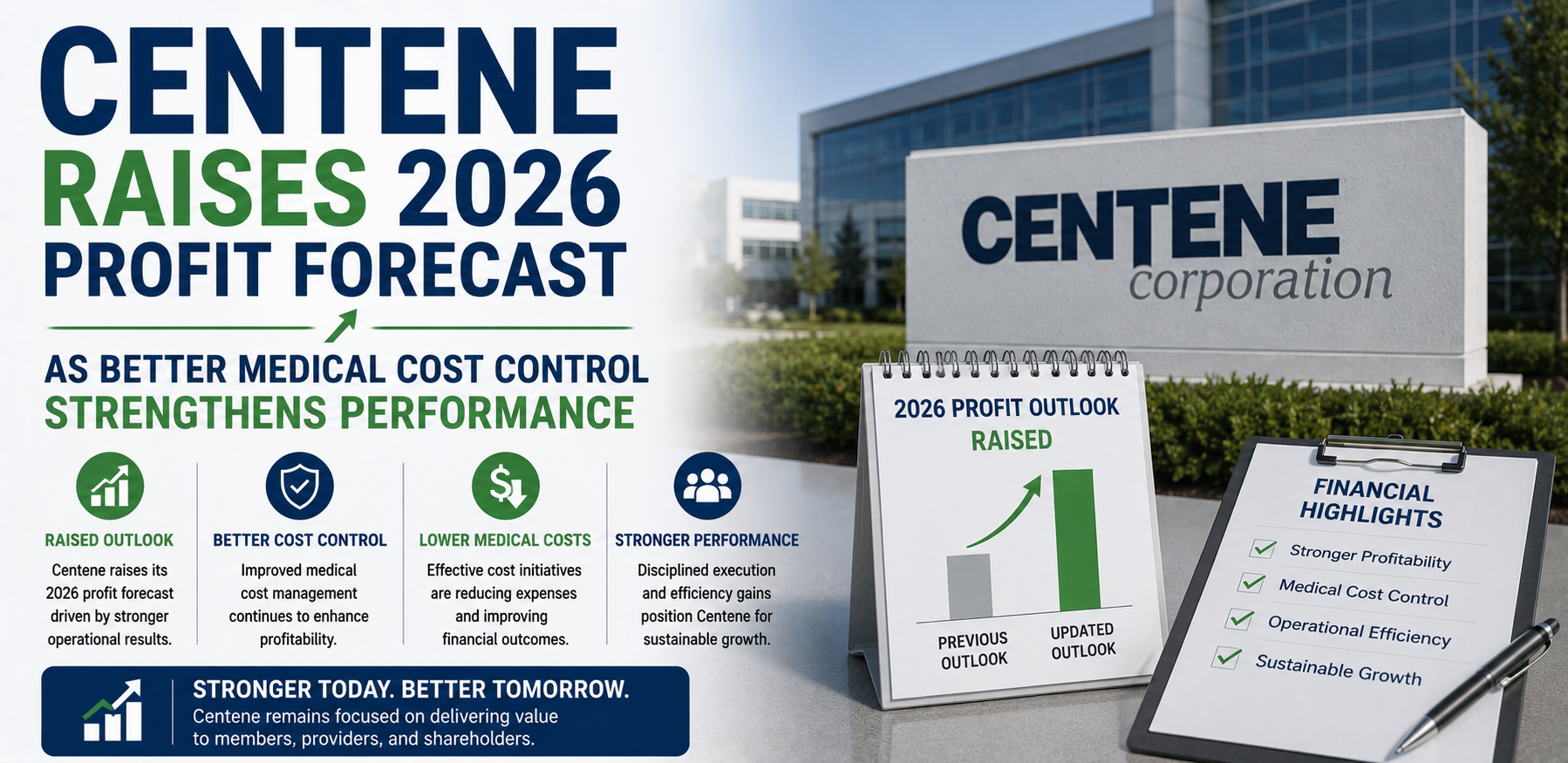
Centene has raised its full-year 2026 profit forecast after reporting stronger-than-expected financial results, driven by improved control over medical costs across its health insurance business.
The health insurer said lower-than-anticipated medical expenses and continued enrollment across its government-sponsored health plans helped support stronger earnings during the quarter. The results eased investor concerns about rising healthcare costs that have weighed on the managed care industry over the past year.
The updated outlook suggests that Centene's cost management strategies are beginning to deliver measurable financial benefits while maintaining coverage for millions of members.
Understanding Medical Cost Control
Health insurers generate revenue by collecting premiums and using those funds to pay for members' healthcare services.
Profitability depends largely on how effectively insurers manage medical expenses while ensuring members receive appropriate care.
Medical cost management can include:
- Encouraging preventive care to reduce expensive hospital admissions.
- Improving care coordination for patients with chronic conditions.
- Negotiating reimbursement rates with healthcare providers.
- Expanding value-based care programmes.
- Using data analytics to identify unnecessary or avoidable healthcare spending.
Effective cost management allows insurers to maintain financial stability while continuing to invest in member services and healthcare programmes.
Why This Matters for Managed Care
Centene is one of the largest providers of government-sponsored health insurance in the United States, serving members through Medicaid, Medicare and Affordable Care Act Marketplace plans.
Because a significant portion of its business depends on public healthcare programmes, its financial performance is closely watched as an indicator of broader trends in the managed care industry.
The improved outlook suggests that healthcare utilisation has become more predictable and that the company has successfully managed rising medical costs through operational improvements and better care management.
Industry Impact
- Health Insurers: Centene's results may provide reassurance that insurers can improve profitability through disciplined cost management despite ongoing inflationary pressures and higher demand for healthcare services.
- Healthcare Providers: Hospitals, physician groups and other providers may continue to see insurers place greater emphasis on value-based care, care coordination and cost-effective treatment strategies as part of broader efforts to manage healthcare spending.
- Investors: The stronger outlook could improve confidence in the managed care sector, particularly if other insurers report similar trends in medical costs and profitability.
- Government Healthcare Programmes: As one of the largest Medicaid managed care organisations, Centene's performance offers insight into the financial sustainability of government-sponsored health insurance programmes and the evolving relationship between public payers and private insurers.
Looking Ahead
Managing healthcare costs remains one of the biggest challenges facing the U.S. healthcare system. Insurers must balance affordability for members with rising demand for healthcare services and increasing treatment costs.
Centene's improved outlook suggests that investments in care management, analytics and operational efficiency can help health plans navigate these pressures while maintaining financial performance. The results may also influence how other insurers approach cost management and value-based care initiatives in the coming years.
Key Takeaways
- Centene has raised its 2026 profit forecast after reporting better-than-expected control over medical costs.
- Lower medical expenses helped strengthen the company's financial performance.
- The results indicate improving stability across the managed care sector.
- Effective care management and operational efficiency continue to play an important role in controlling healthcare spending.
- The company's performance provides insight into broader trends affecting Medicaid, Medicare and Marketplace health plans.
What This Means for Healthcare Marketers
Health insurers are increasingly focused on solutions that improve outcomes while reducing the overall cost of care. For healthcare marketers, this creates growing opportunities to position products and services around value, efficiency and measurable clinical impact. Organisations offering digital health platforms, care management tools, analytics, population health solutions or value-based care technologies should emphasise how their offerings help payers control costs, improve member outcomes and support sustainable healthcare delivery.