Centene Offers Staff Buyouts After Obamacare Membership Losses
What's Happening
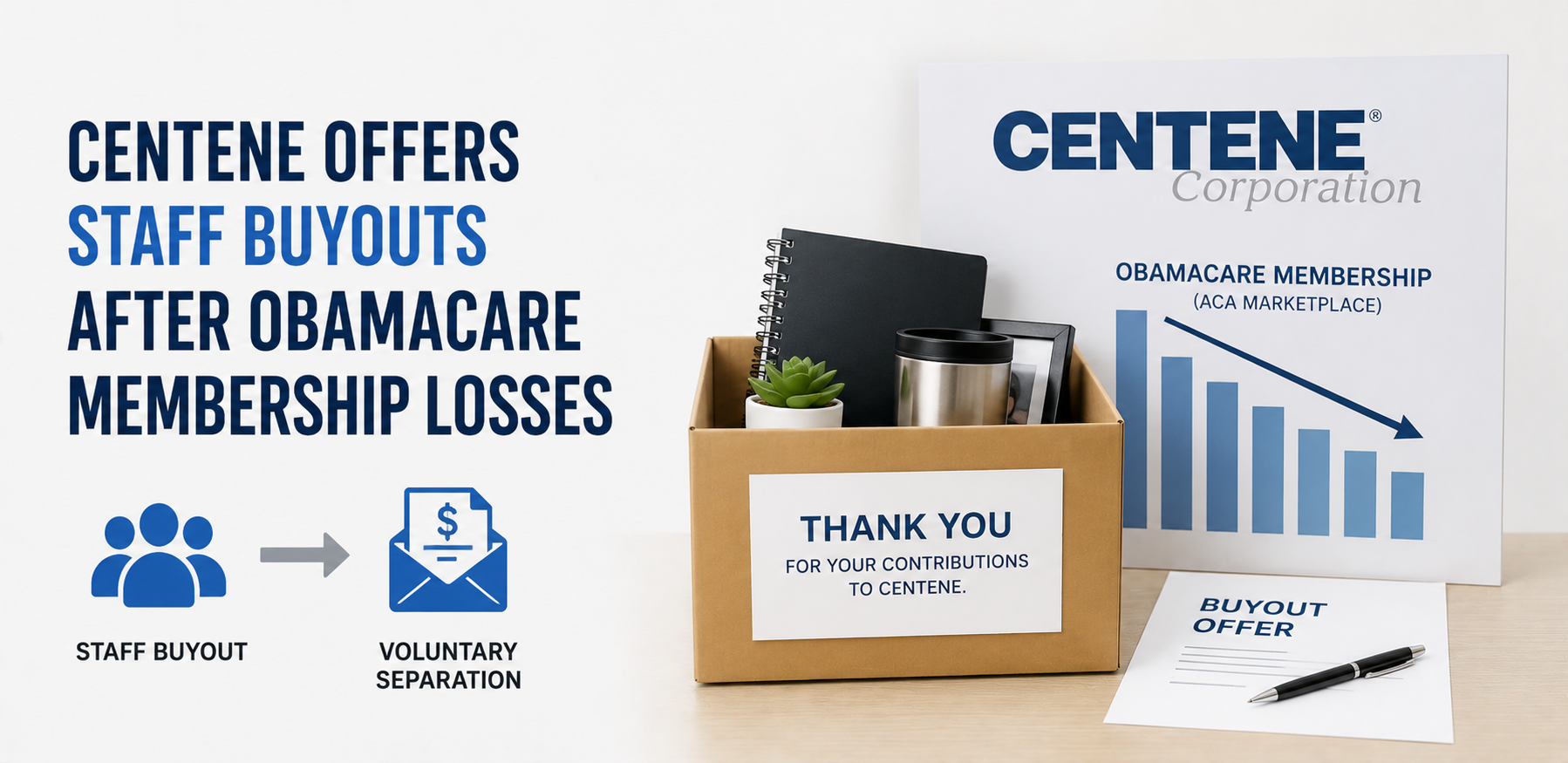
Health insurer Centene is offering buyouts to most of its employees after losing a significant number of members enrolled through Affordable Care Act (ACA) health plans, according to a report published by Bloomberg News.
The move comes as the company faces growing pressure from declining enrollment in individual marketplace plans, often referred to as Obamacare plans. Centene has historically been one of the largest participants in government-sponsored healthcare programs, including Medicaid and ACA exchange plans, making membership growth a key driver of revenue and profitability.
Employee buyouts are typically offered when companies want to reduce costs without immediately resorting to large-scale layoffs. Workers are given financial incentives to voluntarily leave the organization, helping the company lower expenses while avoiding some of the disruption associated with traditional workforce reductions.
For Centene, the decision reflects broader changes occurring across the health insurance market as insurers adapt to shifting enrollment patterns, regulatory changes, and economic pressures.
Understanding Centene's Business
Centene is one of the largest health insurers in the United States. Unlike some insurers that focus heavily on employer-sponsored coverage, Centene built much of its business around government-funded healthcare programs.
Its major business segments include:
- Medicaid
- Medicare Advantage
- Affordable Care Act marketplace plans
- Specialty healthcare services
The company's ACA marketplace business became particularly important after the Affordable Care Act expanded access to health insurance for millions of Americans.
Marketplace plans allow individuals who do not receive insurance through an employer to purchase coverage, often with government subsidies that reduce monthly premiums.
For years, this market represented a significant growth opportunity for insurers like Centene.
Why Membership Losses Matter
Health insurance is largely a scale business.
Insurers collect premiums from members and use those funds to pay medical claims, administrative costs, and operating expenses.
When membership declines, several challenges emerge:
First, premium revenue falls.
Second, fixed operating costs become harder to spread across a large member base.
Third, insurers may lose negotiating leverage with healthcare providers.
Finally, investors often view declining enrollment as a warning sign that future earnings growth could slow.
While a single quarter of enrollment declines may not be alarming, sustained losses can force companies to rethink staffing levels, business priorities, and growth strategies.
This helps explain why Centene is looking for ways to reduce costs.
The Bigger Picture: Changes in the ACA Market
Centene's challenges are not occurring in isolation.
The ACA marketplace has experienced several changes over the past few years.
Enhanced federal subsidies introduced during the pandemic helped drive enrollment to record levels. Millions of Americans were able to obtain coverage at lower monthly costs, leading to substantial growth across the marketplace.
However, uncertainty has increased as policymakers debate the future of these subsidies and insurers face questions about long-term profitability.
In addition, insurers are dealing with:
- Rising healthcare utilization
- Increasing prescription drug costs
- Higher labor expenses
- Greater competition in certain markets
These pressures can make marketplace plans less profitable even when enrollment remains relatively strong.
For insurers, profitability is not determined solely by how many people enroll. It also depends on how expensive those members are to cover.
Why Buyouts Instead of Layoffs?
Many companies prefer buyout programs because they offer a more controlled way to reduce expenses.
Employees who are already considering retirement or career changes may choose to accept the package, reducing headcount voluntarily.
Buyouts can also help preserve morale among remaining employees compared with abrupt layoffs.
From a financial perspective, the company may incur short-term costs to fund the buyout packages, but leadership often expects long-term savings through lower payroll expenses.
The strategy has been used across multiple industries when organizations anticipate slower growth or need to improve efficiency.
What This Signals About the Health Insurance Industry
The healthcare insurance market is entering a period of adjustment.
Over the last several years, insurers experienced unusually strong enrollment growth in many government-funded programs.
Now, companies are focusing more closely on profitability and operational efficiency.
This does not necessarily mean the ACA marketplace is collapsing or that insurers are abandoning it.
Instead, it suggests insurers are becoming more selective about where they invest resources and how they manage costs.
Other health plans may face similar decisions if enrollment growth slows or medical costs continue rising faster than expected.
For investors and industry observers, workforce reductions often serve as an early indicator that leadership expects a more challenging business environment ahead.
Industry Impact
Health Insurers: Other insurers operating ACA marketplace plans may closely monitor Centene's actions and evaluate their own staffing and cost structures.
Healthcare Providers: Hospitals and physician groups depend heavily on insured patients. Changes in insurer enrollment can influence reimbursement patterns and network strategies.
Patients: Current Centene members are unlikely to see immediate changes to coverage, but cost-cutting efforts sometimes lead insurers to reexamine provider networks, operational priorities, or customer-service investments.
Investors: Investors often view workforce reductions as a sign that management is taking steps to protect profitability. At the same time, membership losses can raise concerns about future growth prospects.
Key Takeaways
- Centene is offering buyouts to most employees as it responds to membership losses in ACA marketplace plans.
- The move is part of a broader effort to reduce costs and improve efficiency.
- Declining enrollment can significantly affect insurer revenue and profitability.
- Rising healthcare costs and changing market conditions are creating new challenges for insurers.
- The decision reflects broader shifts occurring across the U.S. health insurance industry.
What This Means for Healthcare Marketers
For healthcare marketers, this story is less about workforce reductions and more about changing priorities inside health plans.
When insurers face membership pressure, marketing budgets often come under greater scrutiny. Leadership teams become more focused on member acquisition efficiency, retention programs, and demonstrating measurable return on investment.
Vendors selling to health plans may encounter longer purchasing cycles as organizations become more cautious about spending decisions.
At the same time, competition for ACA marketplace members may intensify. Health insurers looking to offset enrollment losses could invest more heavily in targeted outreach, member engagement, and retention initiatives designed to keep existing members from switching plans.
For companies selling technology, analytics, member-engagement platforms, or healthcare intelligence solutions, the key question becomes: which insurers are actively trying to grow, and which are focused primarily on cost containment?
Centene's move suggests that operational efficiency is becoming a larger priority, making cost-saving and productivity-focused solutions more attractive than purely growth-oriented messaging.