More U.S. Children Under 12 Are Being Prescribed Weight-Loss Drugs, Study Finds
What's Happening
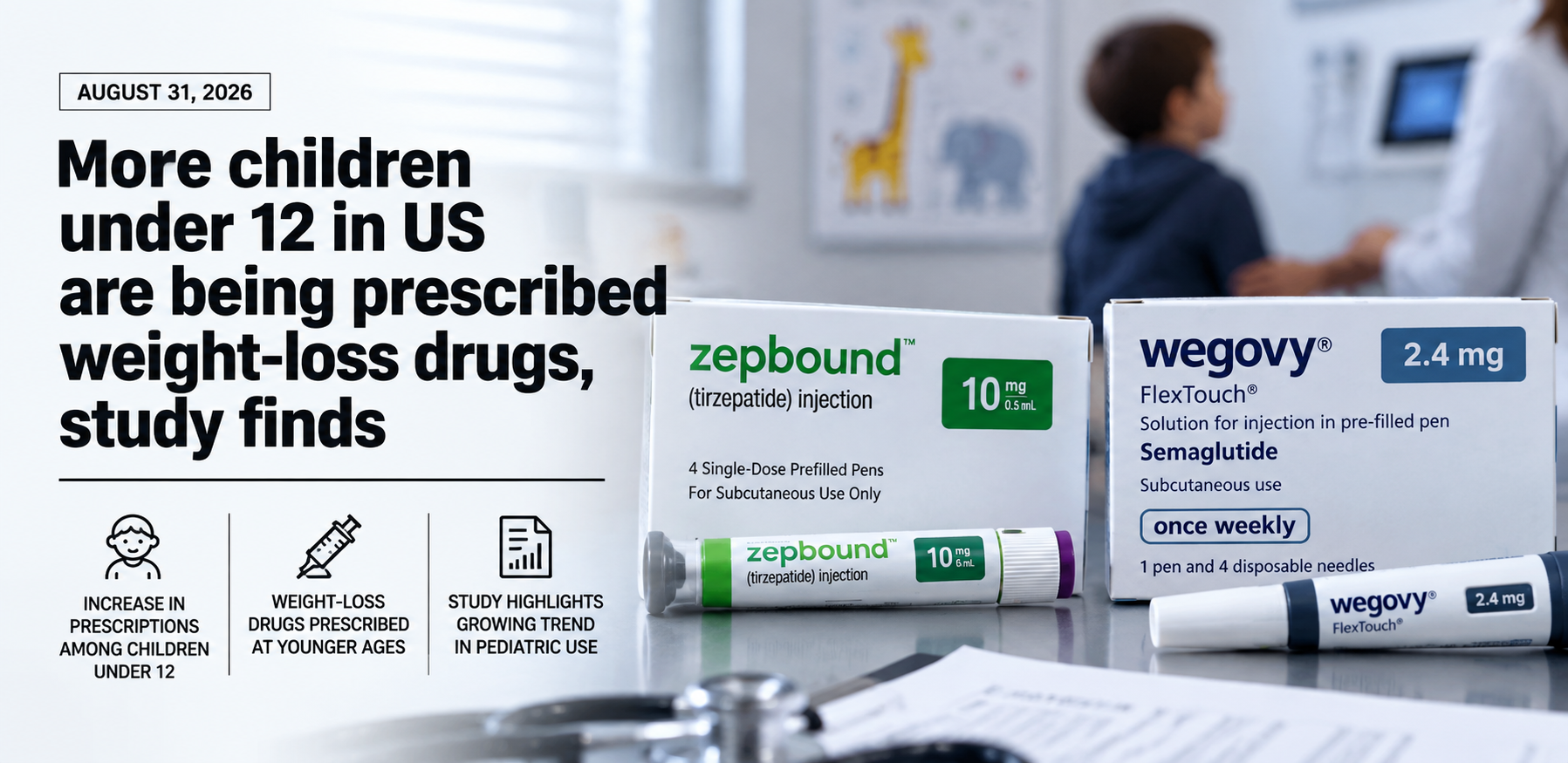
The use of GLP-1 weight-loss medications among children under 12 in the United States has increased more than 300-fold since 2019, according to a new study published in the journal Pediatrics.
Researchers examined electronic health records for more than 3.5 million children ages 8 to 11 with obesity but without diabetes. The share receiving GLP-1 medications rose from just 0.03% in 2019 to 9.3% by June 2026. (Reuters)
The medications are not formally FDA-approved for obesity in children under 12, but clinical guidelines allow their use in certain circumstances for children as young as eight.
The study found that the children receiving these medications generally had more severe obesity and related health problems, suggesting physicians are primarily using GLP-1s for children facing substantial obesity-related health risks. (Reuters)
GLP-1 Use Is Accelerating Among Younger Children
Prescriptions have increased dramatically
The scale of the increase is striking.
In 2019, only 0.03% of eligible children in the study were prescribed a GLP-1 drug. By June 2026, the figure had reached 9.3%. (Reuters)
That represents an increase of more than 300 times over the study period.
Researchers emphasized that the absolute number of children receiving the drugs remains relatively small compared with the total pediatric population. However, the rapid growth indicates that physicians are increasingly considering these medications as a treatment option for younger children with obesity. (Reuters)
More Than 20,000 Children Received GLP-1 Drugs
The study identified 20,282 pediatric patients
Across the study period, researchers identified 20,282 children who received GLP-1 medications. (Reuters)
The most commonly prescribed medicine was Novo Nordisk's Wegovy.
Doctors also prescribed:
- Saxenda, from Novo Nordisk
- Zepbound, from Eli Lilly (Reuters)
These drugs belong to a rapidly expanding class of medicines that have transformed obesity treatment in adults and older adolescents.
Their growing use among younger children indicates that the obesity-drug market is beginning to extend into a much earlier age group.
These Children Generally Had Severe Obesity
Most had significant weight-related health risks
The study found that 94% of children receiving GLP-1 medications had severe obesity. (Reuters)
In addition, around 65% had at least one obesity-related medical condition.
These included conditions such as:
- High cholesterol
- High blood pressure
- Sleep apnea (Reuters)
That finding is important because it suggests doctors are not broadly prescribing GLP-1 drugs to healthy-weight children or using them simply for cosmetic weight loss.
Instead, the medications appear to be concentrated among children facing more serious obesity-related health problems.
The Drugs Are Not FDA-Approved for Children Under 12
Clinical guidelines create a pathway for some patients
Although the medications are not formally approved by the FDA for obesity treatment in children under 12, clinical guidelines allow GLP-1 medications to be considered for children as young as eight in certain cases. (Reuters)
This creates an important distinction between FDA labeling and clinical practice.
Physicians can sometimes prescribe an approved medication outside its specific FDA-approved indication when they believe doing so is medically appropriate. This is generally referred to as off-label use.
The growing number of pediatric prescriptions therefore does not mean the FDA has broadly authorized these drugs for all children under 12.
Instead, doctors are increasingly making individualized decisions for children with significant obesity.
Why Doctors Are Turning to GLP-1s
Pediatric obesity can lead to serious disease
Childhood obesity is associated with a range of health problems that can persist into adulthood.
These can include high blood pressure, abnormal cholesterol levels, sleep apnea and metabolic disease.
The researchers said the accelerating use of GLP-1 drugs reflects the search for effective treatment options for younger patients with obesity. (Reuters)
For children with severe obesity who have not achieved adequate results through lifestyle changes alone, physicians may see newer medications as another tool in managing the condition.
Long-Term Safety Remains an Important Question
Children may take these medications for years
One of the biggest issues raised by researchers is long-term safety.
Dr. Babak Orandi, the study's lead investigator and an obesity-medicine specialist at NYU Langone Health, said ongoing monitoring is needed to ensure the medications remain safe and effective for children. (Reuters)
That concern is particularly important in younger children because obesity treatment may involve years of care.
Researchers have extensive experience with GLP-1 drugs in adults, but children who begin treatment at eight, nine or ten years old could potentially remain exposed for a very long period.
Questions around long-term effects, growth, development and sustained outcomes therefore become especially important.
The Market Is Expanding Into Pediatric Obesity
Pharmaceutical companies are gaining access to a younger population
The rapid increase in prescriptions gives manufacturers a signal that physicians are increasingly comfortable considering GLP-1 therapies in younger patients, even though formal FDA approvals remain more limited.
For companies such as Novo Nordisk and Eli Lilly, pediatric obesity could eventually become an important area of market development.
However, expanding into younger populations also creates additional regulatory, safety and evidence requirements.
Clinical trials involving children require particularly careful consideration because pediatric patients are still physically and developmentally maturing.
Access Is Unequal
Higher-income communities are more likely to receive treatment
The study found a significant socioeconomic difference in access.
Children living in higher-income communities were 55% more likely to be prescribed GLP-1 medications than children in lower-income communities. (Reuters)
Researchers said the disparity suggests that access to these medications may be influenced by factors beyond medical need.
Because GLP-1 drugs can be expensive and insurance coverage varies, families with greater financial resources may have an easier time obtaining treatment.
Access to pediatric obesity specialists can also differ depending on where a family lives and the availability of specialized healthcare.
Insurance Coverage Is Part of the Access Problem
Cost can determine who receives treatment
The affordability challenge is particularly relevant for children.
A family may need access to a pediatric obesity specialist, insurance coverage for the medication and the ability to absorb copays or other out-of-pocket costs.
The researchers said policymakers and physicians have a responsibility to ensure that effective but sometimes expensive treatments do not become concentrated only among families who have strong insurance coverage and can easily access pediatric specialty care. (Reuters)
That turns the expansion of GLP-1 treatment into not only a medical question, but also an issue of healthcare equity.
The Data Came From a Very Large Health Record System
Researchers used Epic Cosmos
The researchers analyzed data from Epic Cosmos, a large national electronic health-record database containing information on more than 300 million U.S. patients. (Reuters)
The study focused specifically on more than 3.5 million children between ages eight and 11 who had obesity but did not have diabetes.
Using such a large database allowed researchers to identify trends that would be difficult to observe through individual hospitals or small pediatric practices.
Epic did not participate in the study itself.
Why This Study Matters for Pediatric Healthcare
Prescribing patterns can change before regulations do
The findings show that clinical practice is evolving rapidly.
Physicians are increasingly using GLP-1 medications among younger children even though FDA approval for obesity treatment in this age group has not broadly followed the same pace.
That can create a period in which clinical demand grows faster than regulatory labeling, insurance policies and healthcare infrastructure adapt.
Pediatric obesity is becoming a larger treatment market
As more children receive medication-based obesity treatment, the healthcare system will need more pediatric specialists, monitoring, follow-up and family education.
The shift also creates new questions about how obesity should be treated across different stages of childhood and how medication fits alongside nutrition, physical activity and behavioral interventions.
The Broader GLP-1 Expansion
GLP-1 drugs have already transformed obesity treatment among adults.
Their use has expanded rapidly because of their effectiveness in helping many patients lose substantial amounts of weight and improve certain metabolic measures.
The movement into younger pediatric populations represents another potential phase of that expansion.
But the clinical bar is different for children.
For pediatric patients, physicians and regulators need to consider not only weight reduction but also normal growth, development, long-term safety and sustained health outcomes.
Why This Matters
The dramatic rise in GLP-1 prescriptions among children under 12 shows that obesity medicine is moving into younger age groups much faster than many people may realize.
The trend could eventually reshape the pediatric obesity-treatment market, but it also raises difficult questions.
How long should children remain on these medications?
What are the consequences of starting treatment at a very young age?
Which patients benefit most?
And how can healthcare systems ensure access isn't determined primarily by family income?
The study does not answer all of those questions. What it does show is that clinicians are already increasingly using these drugs in real-world pediatric care. (Reuters)
Looking Ahead
The next major issue will be the development of stronger long-term evidence on the safety and effectiveness of GLP-1 treatment in younger children.
As prescriptions rise, researchers will have a larger real-world population to study, potentially generating more information about outcomes over several years.
Pharmaceutical companies may also pursue additional pediatric trials and regulatory approvals as demand develops.
At the same time, policymakers and insurers will need to confront the access question. If the medications continue gaining popularity but remain expensive, the gap between children who can access treatment and those who cannot could widen.
The trajectory of pediatric obesity treatment will therefore depend on clinical evidence, FDA decisions, insurance coverage, affordability and physician adoption.
Key Takeaways
- GLP-1 weight-loss prescriptions among U.S. children ages 8 to 11 with obesity rose more than 300-fold from 2019 to June 2026. (Reuters)
- The share prescribed a GLP-1 drug rose from 0.03% in 2019 to 9.3% in June 2026. (Reuters)
- The study included more than 3.5 million children with obesity but without diabetes. (Reuters)
- 20,282 children received GLP-1 treatment during the study period.
- 94% of treated children had severe obesity.
- Around 65% had at least one related medical condition such as high cholesterol, high blood pressure or sleep apnea. (Reuters)
- The most commonly prescribed medication was Wegovy, followed by other drugs including Saxenda and Zepbound. (Reuters)
- These medications are not FDA-approved for obesity treatment in children under 12, although clinical guidelines allow their use in certain cases for children as young as eight. (Reuters)
- Children in higher-income communities were 55% more likely to receive GLP-1 treatment. (Reuters)
- Researchers emphasized the need for long-term safety monitoring.
- The study highlights both the rapid expansion of pediatric obesity treatment and emerging concerns about healthcare access and affordability.
What This Means for Healthcare Marketers
This is a major early demand signal for the pediatric obesity market.
The important development is not simply that prescriptions are increasing. It is that physicians are beginning to use GLP-1 therapies among a much younger population, creating potential demand across pediatric obesity specialists, endocrinologists, pharmacies, diagnostics, monitoring services and family-focused healthcare platforms.
At the same time, the 55% access gap tied to community income is an important market signal. Prescription growth alone does not tell you how broadly a therapy is penetrating the population. Insurance coverage, household affordability, specialist availability and geography can determine where adoption actually occurs.
For healthcare marketers, this means tracking not just prescription volume, but who is getting treated, where adoption is occurring, which providers are prescribing and where access barriers are limiting demand.