China Is Closing the Gap, but the U.S. Still Leads in Biotech Innovation, Survey Finds
What's Happening
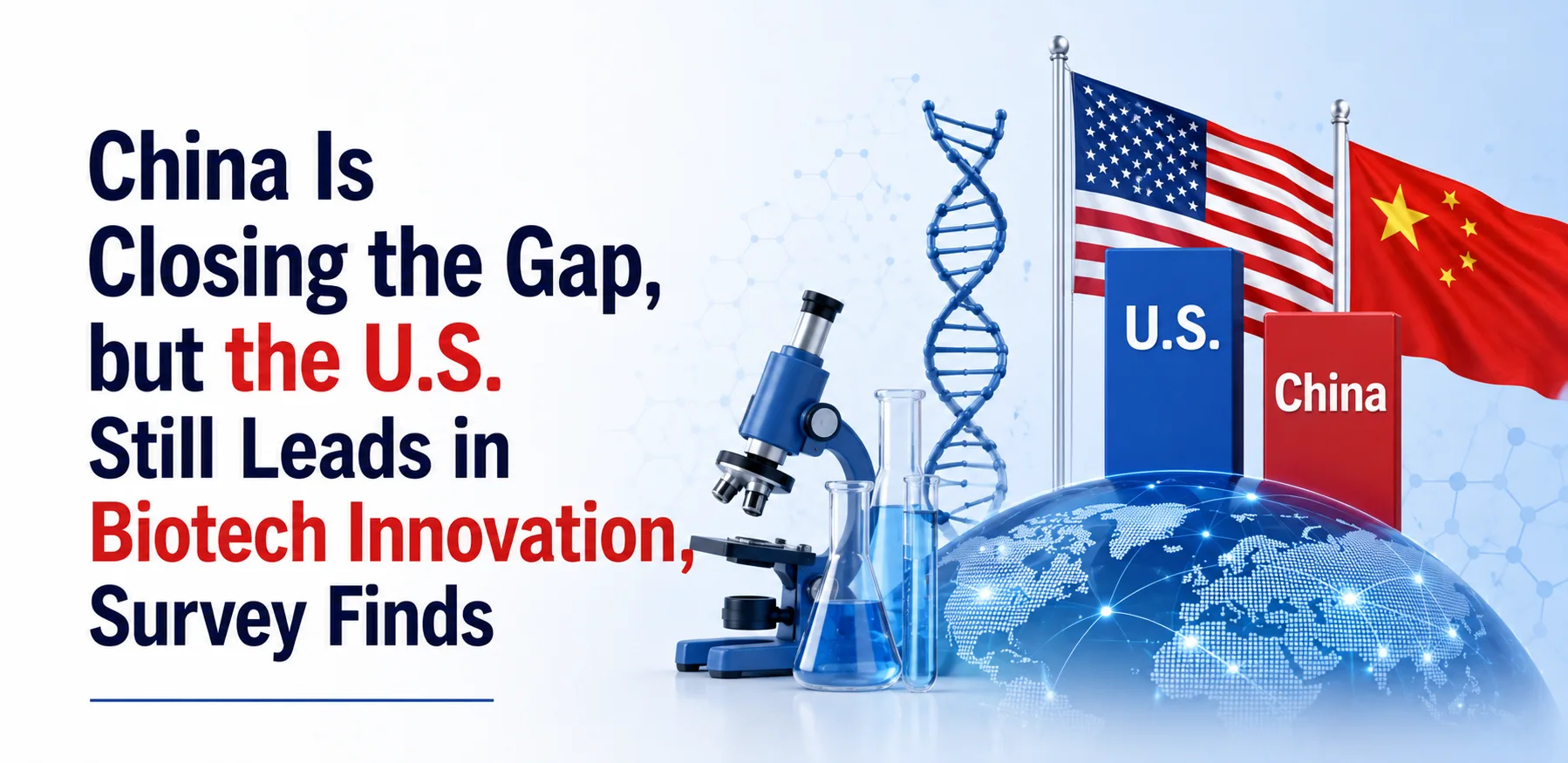
A new industry survey found that the United States remains the global leader in biotechnology innovation, but China is rapidly narrowing the gap as it continues investing heavily in research, drug development, manufacturing, and scientific talent.
The survey, conducted by the Cure Innovation Index and released in June 2026, gathered perspectives from senior biotechnology executives, investors, and academic leaders. While the U.S. retains its edge in technology transfer, capital, and commercialization, China has surged ahead in clinical development and supply chain capabilities.
Industry participants noted that China's progress over the past decade has been significant enough to reshape the competitive landscape, with China now matching the U.S. in discovery-related capabilities.
The findings highlight an ongoing global race for leadership, with 85% of survey respondents predicting the U.S. lead will last 10 years or less if current trends continue.
Why Biotechnology Matters So Much
Biotechnology sits at the center of modern healthcare innovation.
Many of today's most advanced treatments originate from biotech research, including:
- Gene therapies
- Cancer immunotherapies
- Cell therapies
- mRNA vaccines
- Precision medicines
- Rare disease treatments
Unlike traditional pharmaceutical development, biotechnology often involves manipulating biological systems to create highly targeted treatments. The industry is responsible for many of the breakthrough therapies that reach patients each year, driving high-paying jobs, research investment, and advanced manufacturing growth.
Why the United States Still Leads
Despite growing competition, the United States continues to maintain several important advantages:
- World-Class Research Institutions: American universities remain global hubs for groundbreaking scientific discoveries.
- Venture Capital Ecosystem: An extensive network of investors supports high-risk, high-reward scientific innovation.
- Startup Formation: A constant pipeline of new ideas and technologies continues to drive the sector.
- Regulatory Experience: The FDA remains one of the world's most influential regulatory agencies, supporting global commercialization efforts.
How China Has Changed the Competitive Landscape
China's biotechnology sector looks very different today than it did a decade ago. Data from 2026 indicates that China now conducts more clinical drug trials annually than the U.S.
The country has invested heavily in:
- Clinical Development: China offers faster trial timelines and cost efficiencies, capturing 32% of global clinical trial starts.
- Supply Chain & Manufacturing: China leads in CDMO capacity, raw materials, and manufacturing scale.
- AI Drug Discovery: Chinese biotechs account for nearly 70% of global AI-driven drug discovery patent filings.
Global pharmaceutical companies are increasingly licensing drug candidates from Chinese firms, reflecting growing confidence in China’s research capabilities. Licensing deal values involving Chinese biotechs have surged, shifting the country from an "import" market to a key source of novel assets.
Challenges Facing Both Countries
United States: The sector faces challenges including declining federal research funding, regulatory complexity, and the migration of clinical development and manufacturing abroad.
China: The country still deals with questions regarding intellectual property protections, global regulatory acceptance, and the impact of geopolitical tensions and potential U.S. legislative restrictions on cross-border investments.
Key Takeaways
- The U.S. remains the global leader in commercialization and frontier science, but the "translation gap" is widening as clinical development migrates to China.
- China now dominates in clinical trial volume and manufacturing scale, effectively closing the discovery gap with elite U.S. institutions.
- The global competitive landscape is shifting toward a model where cross-border collaboration is common, despite increasing geopolitical scrutiny.
- Legislation like the proposed Biotech Investment National Security Act (BINSA) signals that the U.S. is intensifying its focus on domestic competitiveness and supply chain security.
What This Means for Healthcare Marketers
This story highlights a shift in where healthcare innovation originates. Biotechnology innovation is no longer concentrated exclusively in traditional U.S. and European hubs; Chinese companies are increasingly becoming sources of scientific breakthroughs and strategic licensing deals.
For healthcare intelligence teams, this shift serves as a signal for future investment flows and partnership activity. Companies that monitor these global ecosystems, particularly in high-growth modalities like ADCs and bispecific antibodies, may identify partnership opportunities earlier than competitors focused solely on established markets.
While the U.S. leads today, the future of healthcare innovation is increasingly global, complex, and collaborative. Understanding the strengths of both ecosystems is essential for organizations looking to navigate the next decade of pharmaceutical and biotech development.