Chipotle Raises Annual Sales Forecast as Consumer Demand Remains Strong
What's Happening
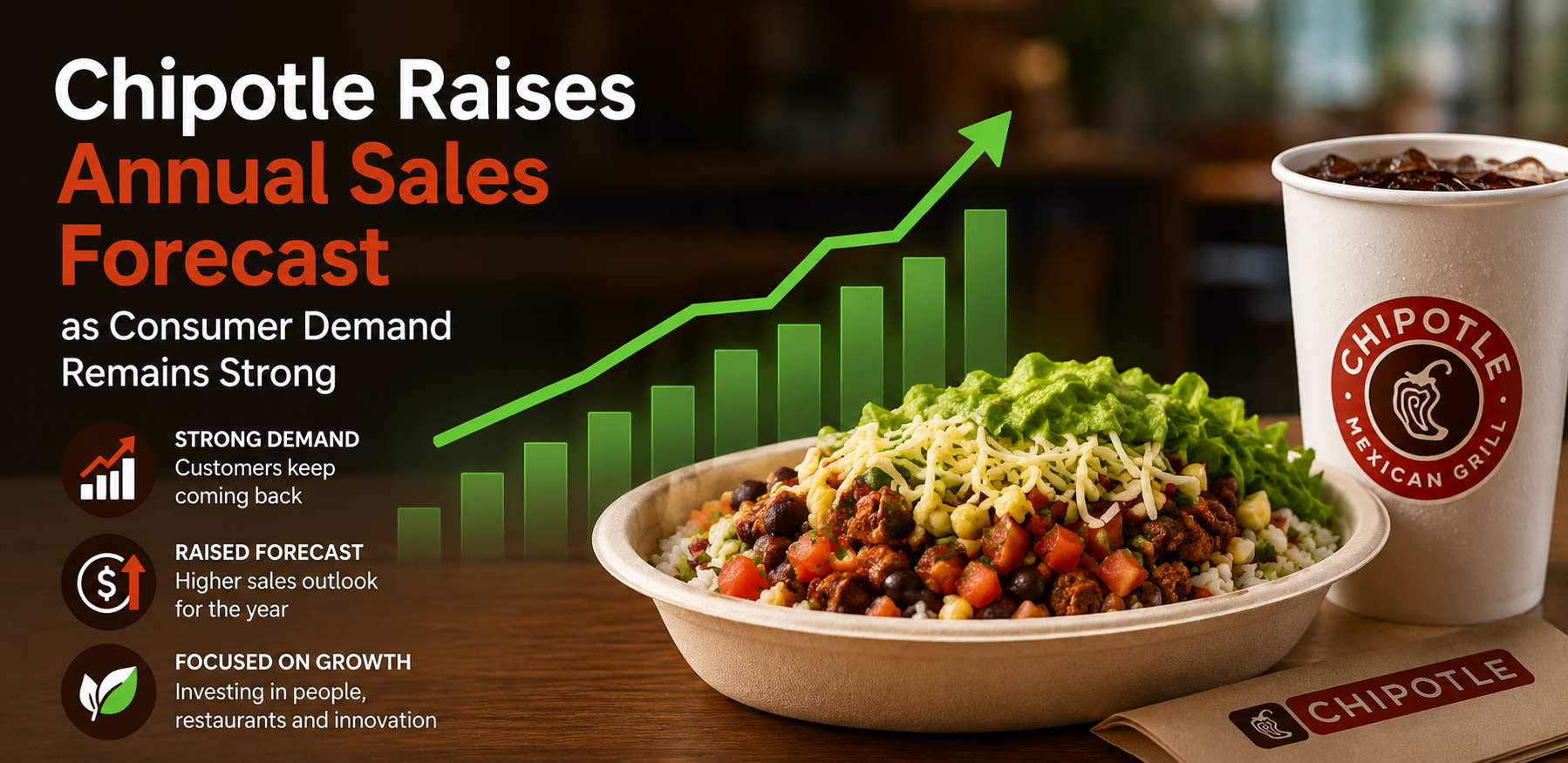
Chipotle Mexican Grill has raised its full-year sales forecast after reporting stronger-than-expected customer demand, signalling that consumers continue to spend on restaurant meals despite ongoing economic uncertainty.
The restaurant chain said higher customer traffic and continued growth in digital ordering helped drive quarterly sales. The improved outlook reflects management's confidence that demand will remain resilient through the rest of the year.
Chipotle's performance stands out at a time when many restaurant operators are facing cautious consumer spending, inflationary pressures, and higher operating costs. The company's ability to attract customers while maintaining sales growth suggests that its brand, menu strategy, and digital investments continue to resonate with consumers.
Although Chipotle is primarily a restaurant company, its performance offers valuable insights into broader consumer behaviour, nutrition trends, and public health-related food choices.
Why Restaurant Performance Matters
Restaurant sales are often viewed as an indicator of consumer confidence.
When consumers feel financially secure, they are generally more willing to spend on meals away from home.
Restaurant performance can therefore provide insight into:
- Consumer spending habits.
- Economic confidence.
- Food inflation.
- Changing dietary preferences.
- Demand for convenience.
- Digital ordering trends.
Healthcare companies and public health experts also monitor food industry trends because eating habits play an important role in long-term health outcomes, including obesity, diabetes, and cardiovascular disease.
How Chipotle Has Positioned Itself
Chipotle has built its brand around several key principles:
- Freshly prepared ingredients.
- Customisable meals.
- Transparent ingredient sourcing.
- Digital ordering convenience.
- Speed of service.
Unlike many traditional fast-food restaurants, Chipotle allows customers to personalise meals by selecting proteins, vegetables, grains, and other ingredients.
This flexibility appeals to consumers following a variety of dietary patterns, including:
- High-protein diets.
- Vegetarian diets.
- Lower-carbohydrate eating plans.
- Gluten-conscious meal choices.
Although restaurant meals should still be consumed as part of a balanced diet, increased customisation allows customers greater control over nutritional choices than many traditional quick-service restaurants.
The Growing Importance of Digital Ordering
One of the biggest drivers of restaurant industry growth has been digital transformation.
Chipotle has invested heavily in:
- Mobile ordering.
- Online payments.
- Loyalty programmes.
- Delivery partnerships.
- Digital kitchen operations.
- Customer analytics.
Digital ordering provides several advantages.
For customers:
- Faster ordering.
- Greater convenience.
- Easier meal customisation.
- Reward programme benefits.
For restaurants:
- Improved operational efficiency.
- Better demand forecasting.
- Personalised marketing.
- Stronger customer retention.
- Valuable consumer insights.
The continued expansion of digital ordering has become a major competitive advantage across the restaurant industry.
Consumer Health Trends Continue to Influence Menus
Consumers are increasingly interested in foods that align with healthier lifestyles.
Restaurants are responding by offering:
- Lean protein options.
- Fresh vegetables.
- Whole-food ingredients.
- Portion flexibility.
- Nutritional transparency.
While restaurant meals vary considerably in nutritional content, greater transparency allows consumers to make more informed decisions based on individual health goals.
Many restaurant chains now publish nutritional information online and provide detailed ingredient lists to help customers manage dietary requirements.
This reflects growing awareness of nutrition as an important component of preventive health.
Industry Impact
- Restaurant Industry: Chipotle's stronger sales demonstrate that consumers continue spending on restaurant dining despite economic uncertainty. Competitors may continue investing in menu innovation, loyalty programmes, and digital platforms to maintain customer engagement.
- Food Suppliers: Higher restaurant demand supports suppliers providing fresh produce, meats, dairy products, packaging materials, and food distribution services. Stable demand also encourages continued investment throughout the agricultural and food manufacturing supply chain.
- Digital Technology Providers: Technology companies supporting restaurant operations through mobile applications, digital payments, artificial intelligence, and customer relationship management systems continue benefiting from the industry's ongoing digital transformation.
- Public Health and Nutrition: Restaurants increasingly play an important role in promoting nutritional transparency by providing calorie information, ingredient details, and greater meal customisation that supports informed consumer choices.
Looking Ahead
Chipotle is expected to continue focusing on several strategic priorities throughout the remainder of the year.
These include:
- Expanding restaurant locations.
- Enhancing digital ordering capabilities.
- Improving operational efficiency.
- Introducing menu innovations.
- Strengthening customer loyalty programmes.
- Investing in technology and automation.
The broader restaurant industry will also continue monitoring food inflation, labour availability, consumer spending patterns, and changing dietary preferences as companies compete for market share.
Key Takeaways
- Chipotle raised its full-year sales forecast after reporting stronger-than-expected customer demand.
- Digital ordering and customer traffic remained key drivers of sales growth.
- Restaurant performance provides insight into broader consumer spending and food consumption trends.
- Restaurants continue expanding nutritional transparency and meal customisation to meet changing consumer preferences.
- Continued investment in technology and digital engagement remains central to restaurant industry growth.
What This Means for Healthcare Marketers
Chipotle's performance reflects broader consumer interest in convenient, customisable, and transparent food experiences. Companies operating in nutrition, preventive health, digital wellness, food technology, and consumer health are increasingly investing in personalised engagement, loyalty programmes, and digital experiences that encourage healthier lifestyle choices. For healthcare marketers, organisations working at the intersection of nutrition, digital health, behavioural health, and consumer engagement represent valuable opportunities as demand grows for solutions supporting healthier everyday decisions.