Chipotle Removes Jalapeños Linked to Minnesota Salmonella Outbreak
What's Happening
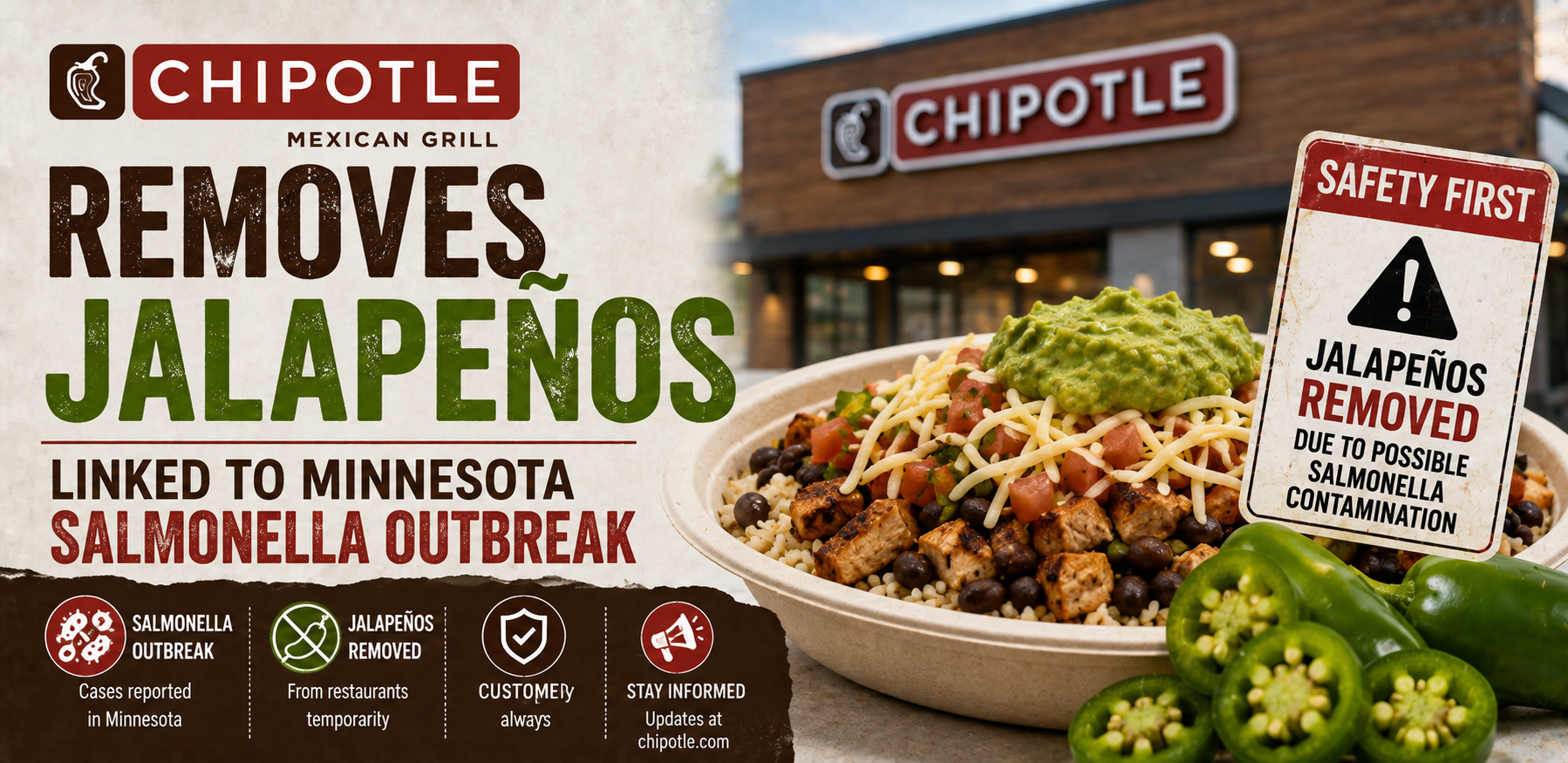
Chipotle Mexican Grill has removed fresh jalapeños from restaurants after health officials linked the ingredient to a salmonella outbreak in Minnesota.
The company voluntarily pulled the affected jalapeños from its restaurants while public health investigators work to determine the source of the contamination. Several people became ill after eating at Chipotle locations, prompting an investigation by state health officials.
Chipotle said it acted quickly to remove the ingredient as a precaution while cooperating with public health authorities during the ongoing investigation.
Understanding Salmonella
Salmonella is one of the most common causes of foodborne illness and is caused by bacteria that can contaminate food during growing, harvesting, processing, or preparation.
Common sources include:
- Fresh produce.
- Poultry.
- Eggs.
- Meat.
- Dairy products.
- Contaminated water.
The bacteria can spread when contaminated food is consumed or when food is handled improperly.
Symptoms and Treatment
Symptoms usually begin within six hours to six days after exposure and may include:
- Diarrhea.
- Fever.
- Stomach cramps.
- Nausea.
- Vomiting.
- Headache.
Most people recover within a week without specific treatment, but young children, older adults, and individuals with weakened immune systems may develop severe illness requiring hospitalization.
Public Health Response
Minnesota health officials are investigating the outbreak to identify how the contamination occurred and whether additional food products are involved.
Investigators are:
- Interviewing affected individuals.
- Tracing food ingredients.
- Testing food samples.
- Working with Chipotle and suppliers.
- Monitoring for additional cases.
Removing the suspected ingredient helps reduce the risk of further illnesses while the investigation continues.
Industry Impact
- Restaurants: The incident highlights the importance of food safety programs, supplier oversight, and rapid response when contamination is suspected.
- Food Suppliers: Produce suppliers may face increased inspections and traceability reviews as investigators identify the source of contamination.
- Public Health Agencies: Health departments continue monitoring foodborne illness outbreaks to quickly identify contaminated products and protect consumers.
- Consumers: The outbreak reinforces the importance of food safety throughout the supply chain and demonstrates how rapid public health action can help prevent additional illnesses.
Looking Ahead
The investigation will continue until officials identify the exact source of the salmonella contamination.
If additional contaminated products are identified, health authorities may issue further public advisories or recalls.
The findings may also lead to improvements in produce safety practices and supply chain monitoring.
Why This Matters
Foodborne illness outbreaks can spread quickly through restaurant supply chains, making early detection and rapid response essential.
Chipotle's decision to remove the suspected ingredient demonstrates how restaurants and public health agencies work together to reduce the risk of additional infections while investigations are underway.
The incident also highlights the importance of strong food safety systems and supply chain traceability.
Key Takeaways
- Chipotle removed fresh jalapeños linked to a salmonella outbreak in Minnesota.
- Health officials are investigating the source of the contamination.
- Salmonella is a common foodborne illness that can cause severe gastrointestinal symptoms.
- The company voluntarily removed the ingredient while the investigation continues.
- The outbreak highlights the importance of food safety, ingredient traceability, and rapid public health response.
What This Means for Healthcare Marketers
The outbreak highlights continued investment in food safety, infectious disease surveillance, laboratory diagnostics, and public health response. Public health agencies, diagnostic laboratories, food safety organizations, and healthcare technology companies continue strengthening outbreak detection and supply chain monitoring capabilities. For healthcare marketers, organizations involved in food safety analytics, laboratory testing, epidemiology, and public health infrastructure represent high-intent opportunities for provider education, partnership development, and healthcare innovation.