Chipotle Says 2026 Outlook Excludes Financial Impact of Minnesota Salmonella Outbreak
What's Happening
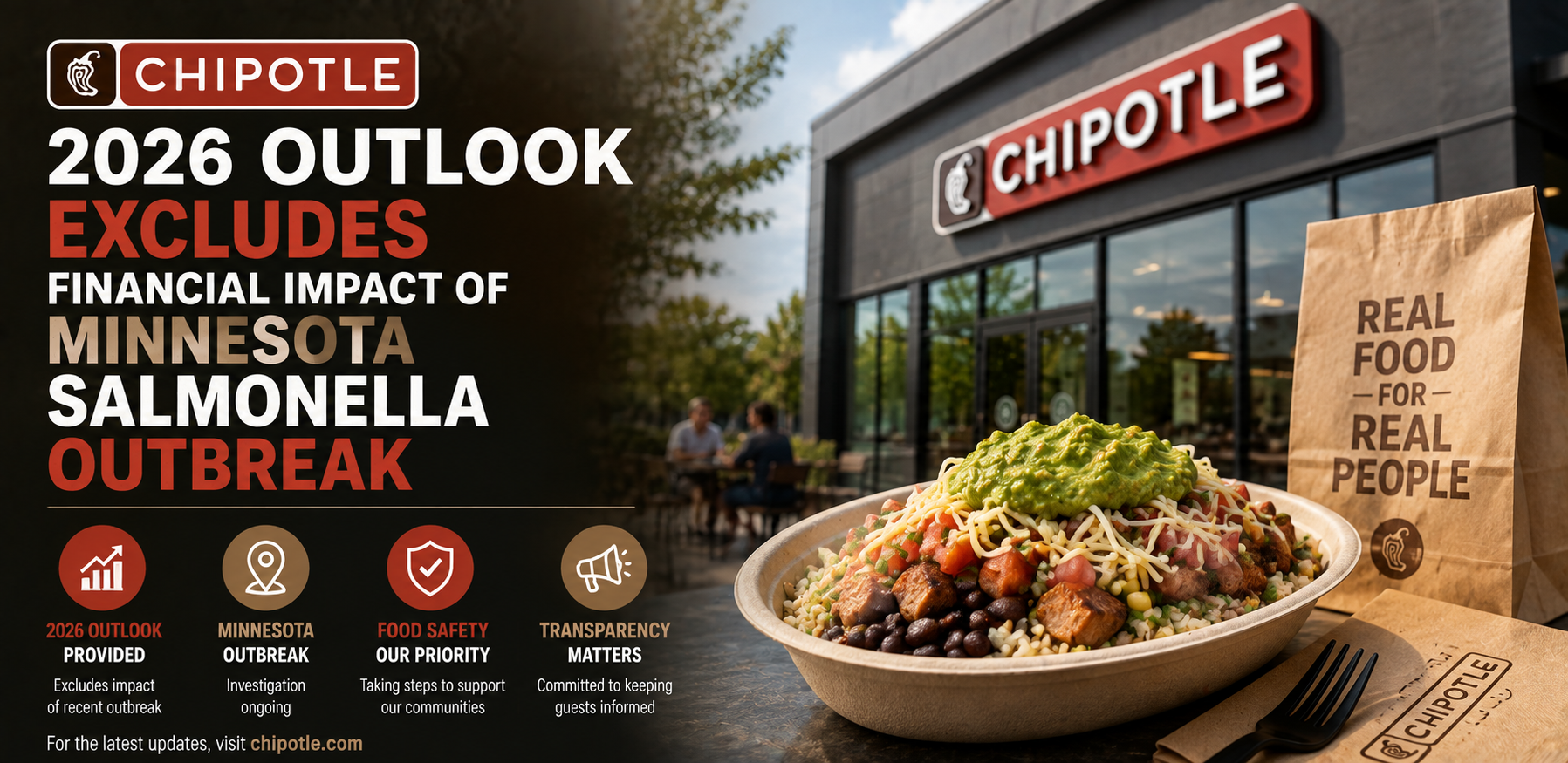
Chipotle Mexican Grill said its financial outlook for 2026 does not include any potential impact from the ongoing salmonella outbreak linked to jalapeño peppers in Minnesota, as the company continues cooperating with public health officials investigating the incident.
The restaurant chain previously removed fresh jalapeños from affected locations after health authorities linked the ingredient to a multistate outbreak. While Chipotle has maintained its annual financial targets, the company acknowledged that it is too early to determine whether the outbreak will have a material impact on sales or operating performance.
The investigation remains ongoing as federal and state agencies work to identify the source of the contaminated peppers.
Background on the Outbreak
The salmonella outbreak has sickened hundreds of people across multiple states and has been linked to contaminated jalapeño peppers served at certain Chipotle restaurants.
Public health officials continue investigating by:
- Interviewing affected individuals.
- Tracing food distribution networks.
- Testing food samples.
- Identifying suppliers.
- Monitoring additional reported cases.
Chipotle voluntarily removed the suspected ingredient while the investigation continues.
Why This Matters for Chipotle
Food safety incidents can affect restaurant companies in several ways, including:
- Lower customer traffic.
- Increased food safety costs.
- Supply chain disruptions.
- Legal expenses.
- Reputational damage.
Although Chipotle has retained its annual financial guidance, the company said it has not yet incorporated any potential financial effects from the outbreak because the investigation is still underway.
Industry Impact
- Restaurant Industry: The incident highlights the importance of strong food safety programs, supplier oversight, and rapid response when contamination is suspected.
- Food Suppliers: Produce growers and distributors may face increased inspections and traceability reviews as investigators identify the contamination source.
- Public Health Agencies: Federal and state health officials continue coordinating outbreak investigations to prevent additional illnesses and protect consumers.
- Investors: Investors will closely monitor whether the outbreak affects customer demand or financial performance in future quarters.
Looking Ahead
Public health officials will continue investigating the source of the contaminated jalapeños while monitoring for additional illnesses.
Chipotle is expected to continue cooperating with investigators and may update its financial outlook if the outbreak has a measurable business impact.
The findings could also lead to improvements in produce sourcing, supply chain monitoring, and food safety practices across the restaurant industry.
Why This Matters
Foodborne illness outbreaks can create significant operational and financial challenges for restaurants while also posing serious public health risks.
Chipotle's decision to maintain its financial guidance while excluding potential outbreak-related effects reflects the uncertainty that often accompanies ongoing public health investigations.
The incident also reinforces the importance of strong food safety systems, rapid outbreak response, and supply chain transparency.
Key Takeaways
- Chipotle said its 2026 financial outlook does not include any potential impact from the Minnesota salmonella outbreak.
- The company previously removed jalapeño peppers linked to the outbreak from affected restaurants.
- Public health officials continue investigating the source of the contamination.
- The outbreak highlights the financial and operational risks associated with food safety incidents.
- Restaurants continue strengthening food safety and supply chain monitoring to reduce future risks.
What This Means for Healthcare Marketers
The ongoing outbreak highlights continued investment in food safety, infectious disease surveillance, laboratory diagnostics, and public health response. Public health agencies, diagnostic laboratories, food safety organizations, healthcare providers, and health technology companies continue strengthening outbreak detection, traceability, and response capabilities. For healthcare marketers, organizations involved in food safety analytics, epidemiology, laboratory testing, and public health infrastructure represent high-intent opportunities for provider education, partnership development, and healthcare innovation.