Clover Health Investigates Cybersecurity Incident After Employee Accounts Are Compromised
What's Happening
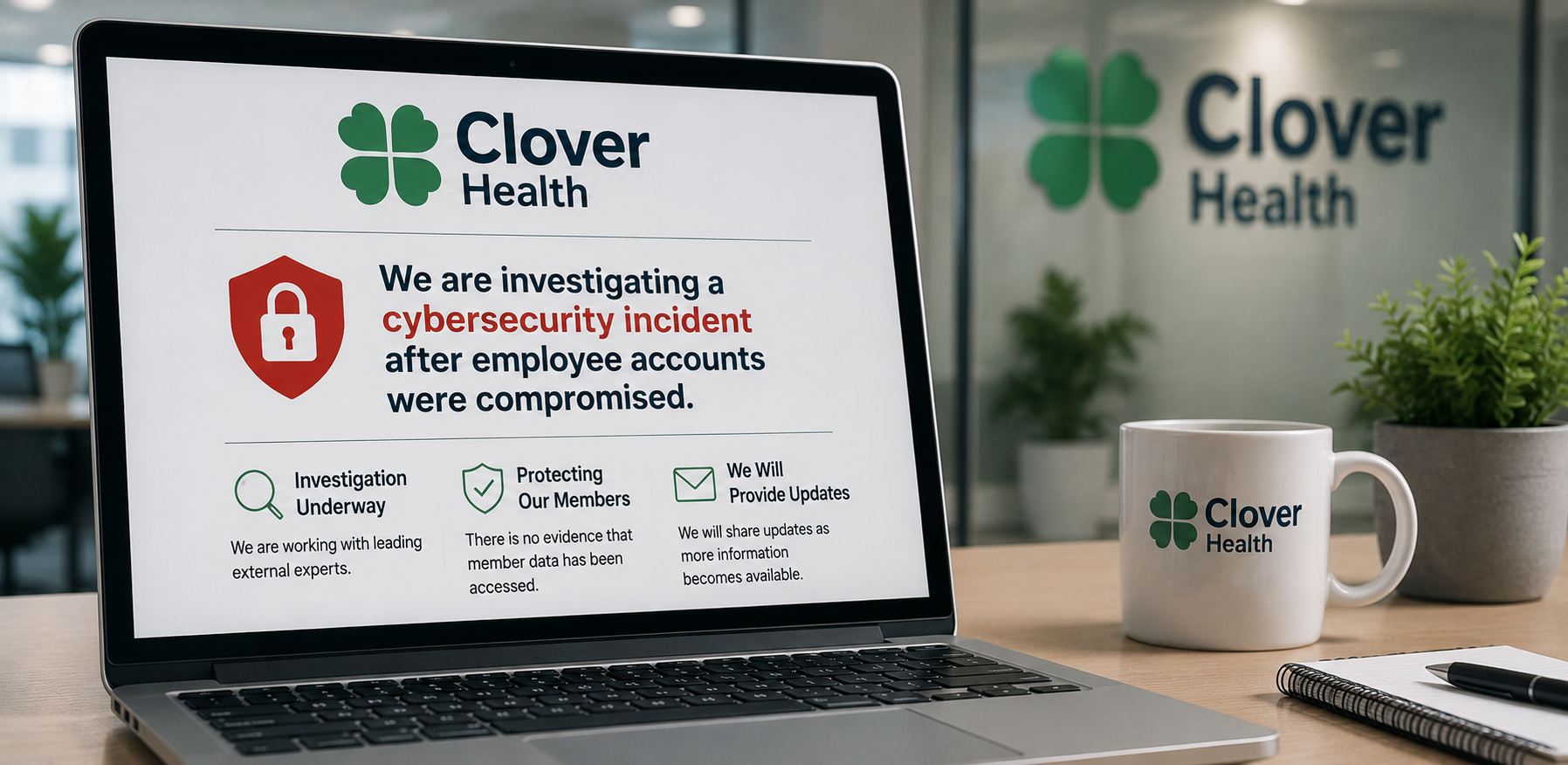
Clover Health has disclosed a cybersecurity incident after discovering that a hacker gained unauthorized access to three employee accounts through a social engineering attack. The company detected unusual login activity on July 4 and immediately launched an investigation with the assistance of external cybersecurity experts.
According to the health insurer, the compromised accounts belonged to non-managerial employees responsible for member visit scheduling and broker-facing sales activities. While these accounts had access to certain personally identifiable information (PII) and protected health information (PHI), they did not have access to Clover's corporate financial systems or insurance claims systems.
Clover stated that it has contained the incident, notified law enforcement, and is continuing to investigate the scope of the breach. At this time, the company does not believe the incident will have a material impact on its business, financial condition, or financial results.
What Happened?
The incident began with a social engineering attack, a cybercrime technique in which attackers manipulate employees into revealing credentials or granting unauthorized access.
Unlike attacks that exploit software vulnerabilities, social engineering targets people rather than technology.
Examples include:
- Phishing emails.
- Fake login pages.
- Fraudulent phone calls.
- Impersonation of trusted individuals.
- Fake IT support requests.
In Clover's case, the attacker successfully gained access to three employee accounts through these tactics before the activity was detected.
What Information Could Have Been Accessed?
According to Clover Health, the affected employee accounts could access:
- Certain personal information.
- Protected health information (PHI).
- Member scheduling information.
- Broker-facing sales information.
However, the company emphasized that the compromised accounts did not have access to:
- Corporate financial systems.
- Claims processing systems.
- Core business infrastructure.
The investigation remains ongoing, and Clover is still determining exactly what information, if any, may have been viewed or taken. The company also said it will notify affected members if required under applicable legal and regulatory requirements.
Understanding Protected Health Information (PHI)
Protected Health Information (PHI) refers to medical or personal information that can identify an individual and is protected under U.S. healthcare privacy laws.
Examples include:
- Patient names.
- Medical record numbers.
- Health insurance information.
- Appointment details.
- Medical diagnoses.
- Treatment history.
Healthcare organizations are required to implement administrative, technical, and physical safeguards to protect this information from unauthorized access.
When incidents occur, organizations must evaluate whether notification to affected individuals and regulators is required under federal and state privacy laws.
Why Healthcare Is a Frequent Target
Healthcare organizations are among the most frequently targeted sectors for cyberattacks because they manage large volumes of sensitive information while operating complex digital systems.
Cybercriminals may target:
- Electronic health records.
- Insurance databases.
- Billing systems.
- Provider networks.
- Patient portals.
- Employee credentials.
Social engineering remains one of the most common attack methods because even organizations with strong technical defenses can be compromised if attackers successfully deceive employees.
As healthcare organizations continue expanding digital services, employee cybersecurity awareness has become just as important as technological security controls.
Clover's Response
Following the discovery of the incident, Clover Health said it:
- Activated its incident response procedures.
- Engaged third-party cybersecurity experts.
- Contained the unauthorized access.
- Notified law enforcement.
- Began reviewing potentially affected information.
- Started evaluating legal and regulatory notification requirements.
The company believes its response successfully stopped the unauthorized activity and continues to strengthen its information security environment while the investigation proceeds.
Industry Impact
- Health Insurers: The incident highlights the growing cybersecurity challenges facing insurers that manage sensitive medical and personal information while relying on digital platforms to support member services.
- Healthcare Organizations: Health systems and insurers continue increasing investments in identity management, employee training, phishing prevention, and multi-factor authentication to reduce the risk of credential-based attacks.
- Regulators: Cybersecurity incidents involving protected health information remain an area of close regulatory attention, with organizations expected to investigate breaches promptly and notify affected individuals when required.
- Patients: Although the full scope of the incident is still being investigated, the event serves as a reminder that healthcare organizations must continuously strengthen safeguards protecting patient information.
Why This Matters
The Clover Health incident demonstrates that human-focused attacks remain one of the biggest cybersecurity risks facing healthcare organizations.
Even when sophisticated security technologies are in place, attackers often attempt to bypass them by targeting employees through phishing and other social engineering techniques. This makes continuous staff education, strong identity verification, and rapid incident response essential components of modern healthcare cybersecurity.
The company's swift response and its statement that core financial and claims systems were not affected may help limit operational disruption. However, the incident reinforces that protecting patient information requires ongoing investment in both technology and employee awareness as cyber threats continue evolving.
Key Takeaways
- Clover Health disclosed a cybersecurity incident involving unauthorized access to three employee accounts through a social engineering attack.
- The affected accounts could access certain personal and protected health information but not corporate financial or claims systems.
- The company has contained the incident, engaged cybersecurity experts, and notified law enforcement.
- The investigation is ongoing to determine what information may have been accessed.
- Clover does not currently expect the incident to have a material impact on its business or financial performance.
What This Means for Healthcare Marketers
The Clover Health incident reinforces that cybersecurity has become a core component of healthcare trust. Health insurers and healthcare organizations are increasingly evaluated not only on the quality of care they provide but also on their ability to safeguard sensitive patient information. Demonstrating strong security practices, transparent communication, and effective incident response can play an important role in maintaining confidence among members, providers, and business partners.
For healthcare marketers, cybersecurity messaging is becoming a differentiator rather than simply a compliance requirement. Organizations that invest in secure digital experiences, employee training, identity protection, and resilient IT infrastructure can strengthen their reputation in an increasingly connected healthcare environment.
For healthcare intelligence teams, incidents like this provide valuable insight into emerging cyber risks affecting payers and providers. Monitoring attack methods, regulatory disclosures, third-party risks, and organizational responses can help identify evolving security trends while informing future investments in healthcare technology and risk management.