Court-Appointed Monitor Finds Serious Deficiencies in Medical Care at California's Largest ICE Detention Facility
What's Happening
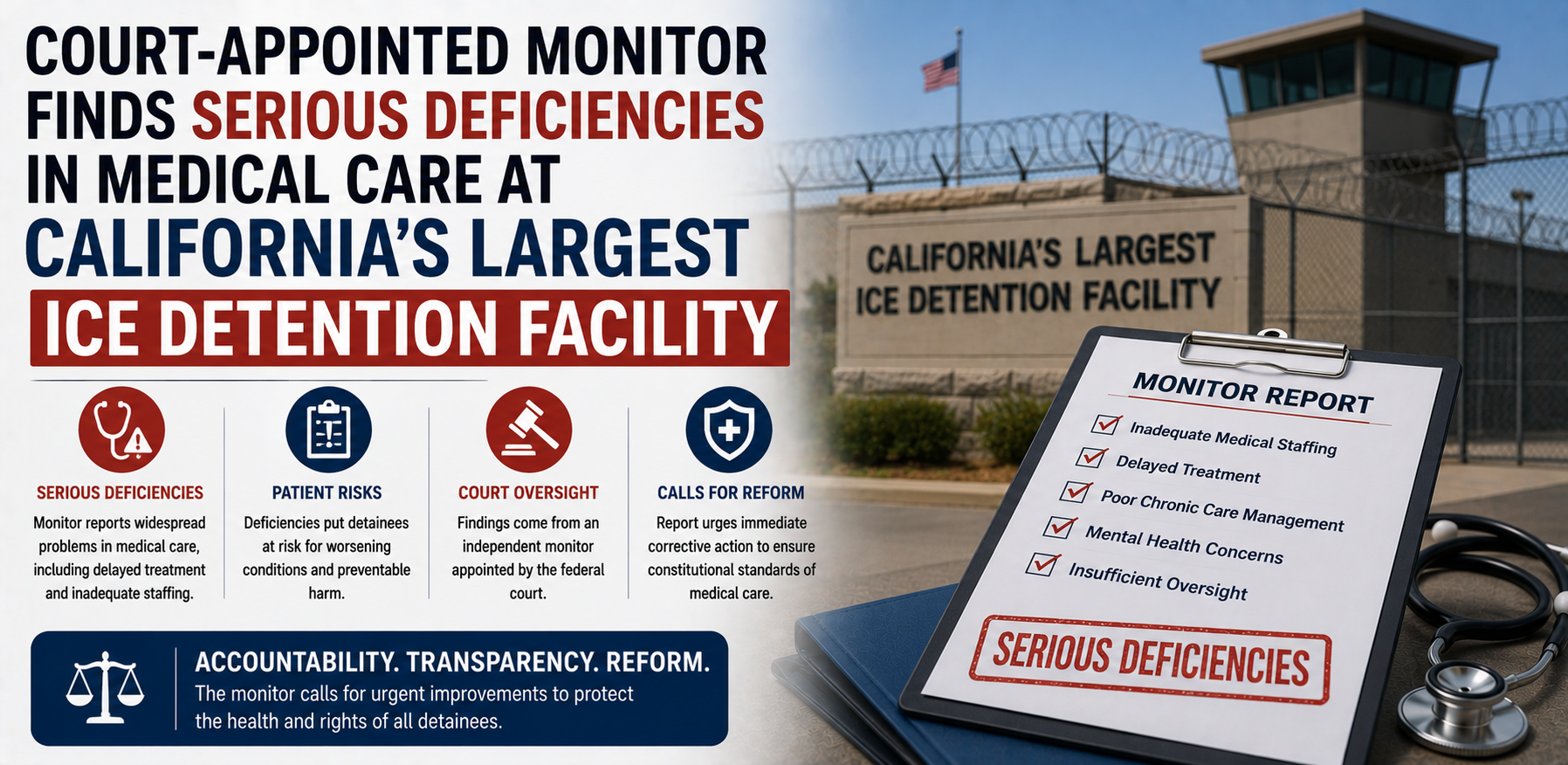
A court-appointed independent monitor has found that California's largest Immigration and Customs Enforcement (ICE) detention facility is failing to provide adequate medical care to detainees, identifying widespread deficiencies that place individuals at risk of immediate and long-term harm.
The findings come after an independent inspection of the California City detention facility, where the monitor reviewed medical records, interviewed staff and detainees, and assessed healthcare operations. According to the report, the facility failed to meet key healthcare standards that had previously been ordered by a federal court.
The report is expected to increase scrutiny of healthcare services provided within immigration detention facilities and could prompt further legal and operational reforms.
What the Investigation Found
The monitor concluded that the problems were systemic rather than isolated incidents.
Key findings included:
- Delays in providing prescribed medications.
- Inadequate emergency medical response.
- Delayed referrals to specialist care.
- Insufficient healthcare staffing.
- Poor coordination of patient care.
- Weak medical record management.
- Delays in diagnosing and treating serious medical conditions.
The report concluded that these deficiencies significantly increased the risk of preventable harm for detainees who rely entirely on the facility for their healthcare needs.
Why Healthcare Standards Matter in Detention Facilities
People held in immigration detention cannot independently access medical care and depend entirely on facility healthcare services.
To protect patient safety, detention facilities are expected to provide:
- Timely medical evaluations.
- Access to prescription medications.
- Management of chronic illnesses.
- Mental health services.
- Emergency medical care.
- Infection prevention and disease surveillance.
- Appropriate referrals to specialists when necessary.
When these systems fail, delays in treatment can worsen existing illnesses, increase preventable complications and place vulnerable individuals at greater risk.
Industry Impact
- Correctional Healthcare: The findings place renewed attention on the quality of healthcare delivered in detention and correctional settings. Healthcare providers operating these facilities may face increased oversight, compliance requirements and quality improvement initiatives.
- Public Health: Maintaining adequate healthcare in institutional settings is essential for controlling communicable diseases, managing chronic conditions and ensuring timely medical intervention. Weak healthcare systems within detention facilities can create broader public health concerns.
- Government Oversight: The report is likely to strengthen calls for greater accountability, independent monitoring and stricter enforcement of healthcare standards across immigration detention facilities.
- Healthcare Operations: The findings reinforce the importance of sufficient staffing, effective care coordination and accurate medical documentation in ensuring safe and consistent healthcare delivery.
Looking Ahead
Access to timely, high-quality healthcare is essential in any setting where individuals depend entirely on institutional care. The report highlights how gaps in staffing, coordination and clinical processes can directly affect patient outcomes.
It also underscores the growing role of independent oversight in evaluating healthcare quality and ensuring that facilities responsible for vulnerable populations meet established standards of care.
Key Takeaways
- A court-appointed monitor found significant deficiencies in medical care at California's largest ICE detention facility.
- The review identified problems involving medication access, emergency care, specialist referrals, staffing and care coordination.
- The findings indicate that detainees face increased risks of preventable medical harm because of systemic healthcare failures.
- The report is expected to increase oversight of healthcare services within immigration detention facilities.
- The case highlights the importance of maintaining consistent healthcare quality and patient safety standards in institutional settings.
What This Means for Healthcare Marketers
The findings highlight the growing importance of healthcare quality, compliance and operational excellence across institutional care settings. Organisations providing electronic health records, care coordination platforms, telehealth solutions, workforce management systems and clinical quality improvement technologies have an opportunity to support facilities in strengthening healthcare delivery. As regulators place greater emphasis on accountability and patient safety, healthcare organisations will increasingly seek solutions that improve care coordination, documentation and clinical outcomes.