CVS Health Raises 2026 Profit Forecast on Strong Pharmacy Performance
What's Happening
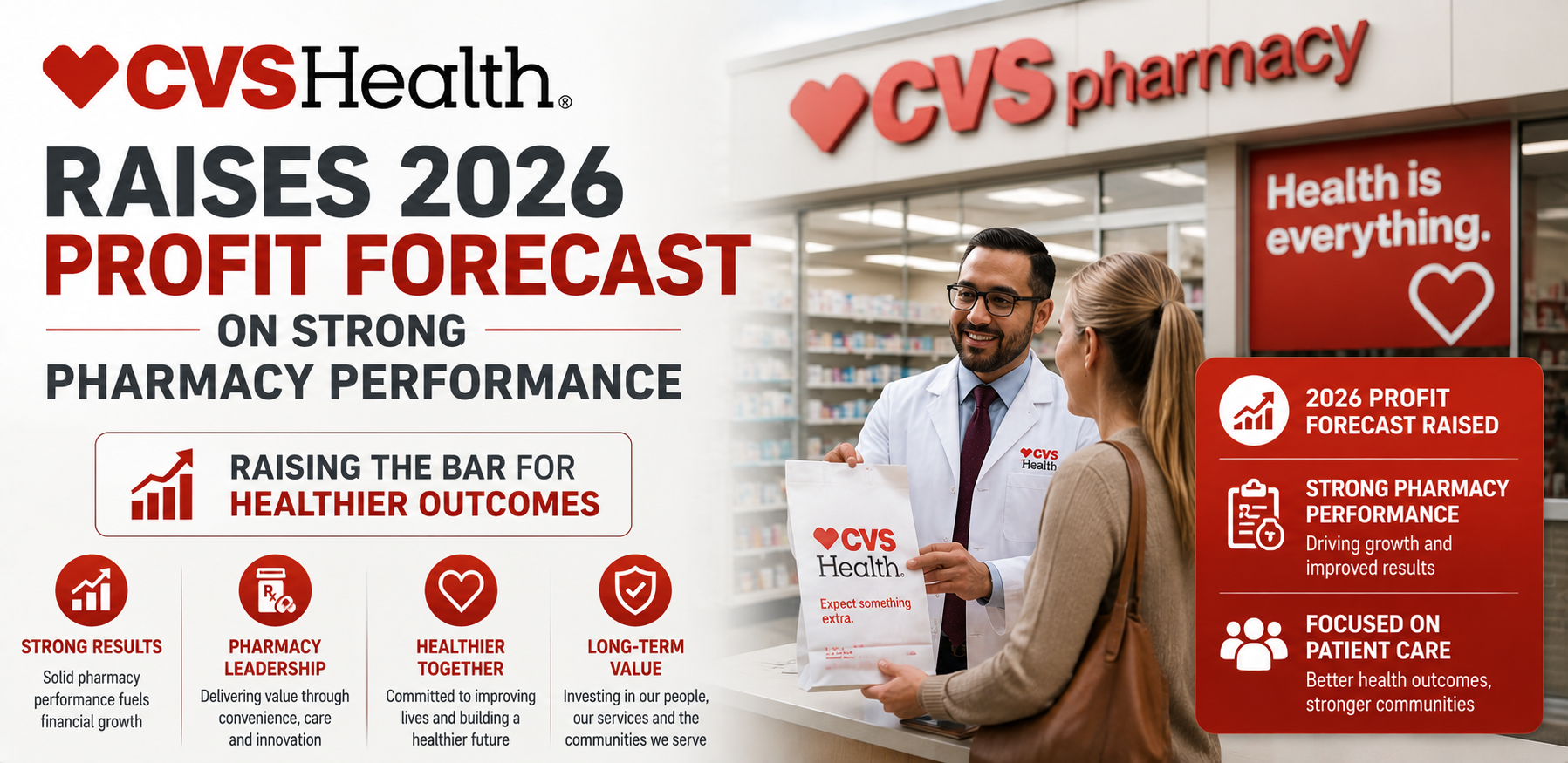
CVS Health has raised its full-year 2026 profit forecast after reporting stronger-than-expected second-quarter results, driven by improved prescription drug revenues and continued growth across its pharmacy operations.
The healthcare company benefited from higher demand for prescription medications and solid performance within its pharmacy benefit management (PBM) business, helping offset ongoing challenges in other parts of its healthcare operations. The stronger results reflect CVS Health's ability to capitalize on rising prescription volumes while continuing to expand its integrated healthcare model.
The updated outlook reinforces confidence in the company's financial performance despite a rapidly evolving healthcare landscape.
What's Driving the Growth
CVS Health's improved performance was supported by several factors.
Key contributors included:
- Higher prescription drug revenues.
- Continued strength in pharmacy benefit management services.
- Increased prescription volumes.
- Stable retail pharmacy demand.
- Operational improvements across the business.
The company's diversified business model, which combines retail pharmacies, pharmacy benefit management, and health insurance services, continues to provide multiple sources of revenue growth.
Understanding CVS Health's Business
CVS Health is one of the largest integrated healthcare companies in the United States.
Its businesses include:
- Retail pharmacies.
- Pharmacy benefit management (Caremark).
- Health insurance (Aetna).
- Specialty pharmacy.
- MinuteClinic healthcare services.
- Home healthcare services.
This integrated model allows CVS to manage patient care across multiple parts of the healthcare system, from insurance coverage to prescription fulfillment and primary care.
Industry Impact
- Retail Pharmacy: Strong prescription demand highlights the continued importance of community pharmacies in managing chronic diseases and improving medication access.
- Pharmacy Benefit Management: The results reinforce the growing role of PBMs in helping employers, insurers, and healthcare organizations manage prescription drug costs.
- Healthcare Providers: Integrated pharmacy and healthcare services continue improving care coordination, medication adherence, and patient access to treatment.
- Investors: The higher profit forecast demonstrates continued confidence in diversified healthcare companies that combine pharmacy, insurance, and care delivery services.
Looking Ahead
CVS Health plans to continue expanding its integrated healthcare strategy while investing in pharmacy services, specialty care, home healthcare, and digital health capabilities.
The company is also expected to focus on improving operational efficiency and strengthening patient engagement through coordinated care models.
Prescription drug demand and continued expansion of specialty pharmacy services are expected to remain important growth drivers.
Why This Matters
Integrated healthcare companies are playing an increasingly important role in improving access to care while helping manage healthcare costs.
CVS Health's stronger financial outlook reflects continued demand for pharmacy services and demonstrates the value of combining insurance, pharmacy benefit management, and healthcare delivery within a single organization.
The results also highlight the growing importance of specialty pharmacy and coordinated care in the evolving U.S. healthcare system.
Key Takeaways
- CVS Health raised its full-year 2026 profit forecast after stronger-than-expected quarterly results.
- Higher prescription drug revenues and strong pharmacy operations drove the company's performance.
- Pharmacy benefit management and integrated healthcare services continue supporting long-term growth.
- CVS plans to continue investing in pharmacy, specialty care, and coordinated healthcare delivery.
- The results reinforce the strength of integrated healthcare business models.
What This Means for Healthcare Marketers
CVS Health's strong performance highlights continued investment in retail pharmacy, specialty pharmacy, pharmacy benefit management, and integrated healthcare services. Pharmacies, health insurers, healthcare providers, pharmaceutical manufacturers, and digital health companies continue expanding coordinated care models that improve patient access and medication adherence. For healthcare marketers, organizations involved in pharmacy services, specialty medicines, care coordination, and value-based healthcare represent high-intent opportunities for provider engagement, patient education, partnership development, and commercial growth.