CVS Reaches FTC Settlement to Count TrumpRx Drug Purchases Toward Insurance Deductibles
What's Happening
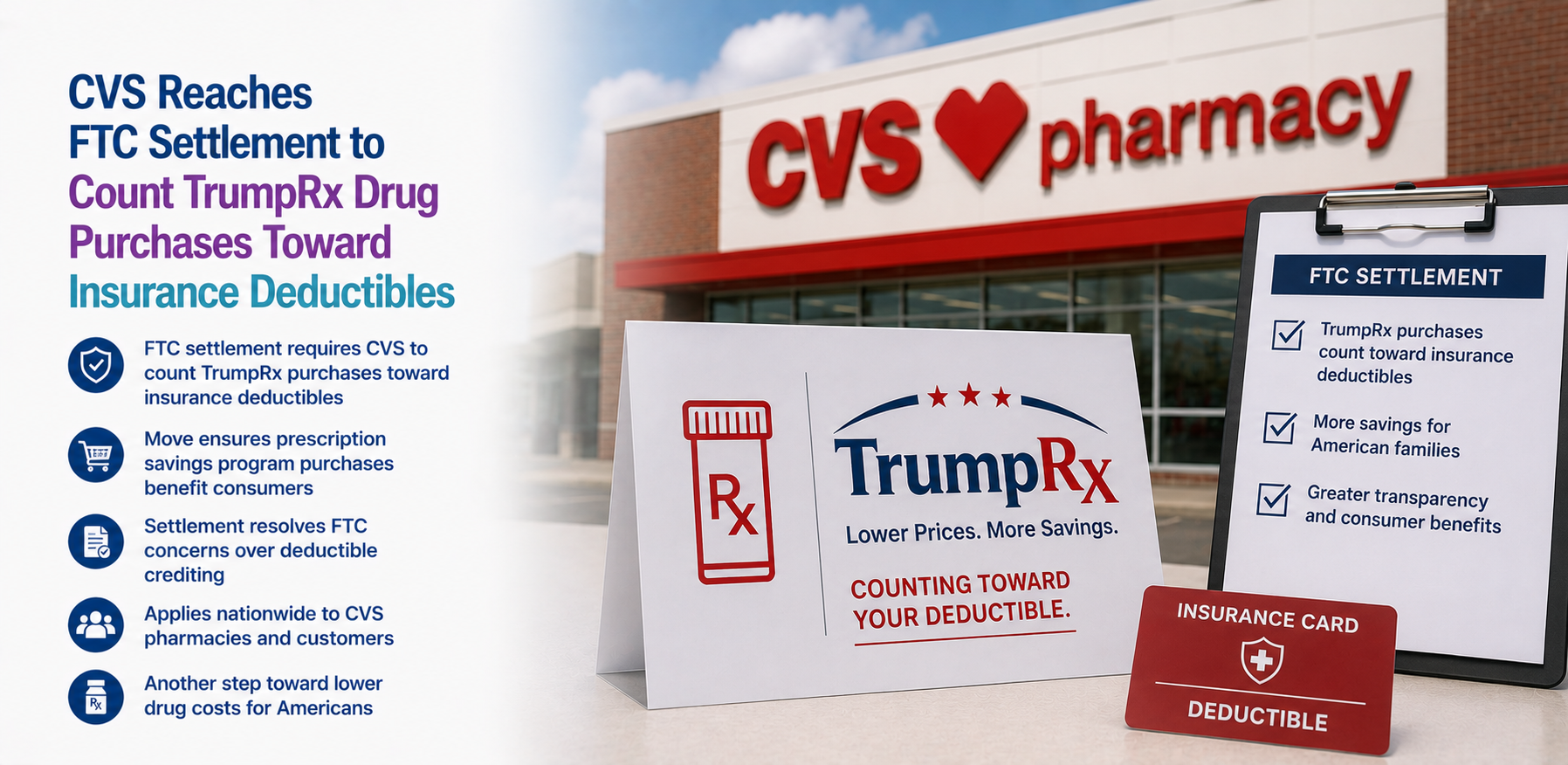
CVS Caremark has reached a landmark settlement with the U.S. Federal Trade Commission (FTC), resolving long-standing investigations into pharmacy benefit management (PBM) practices. As part of this comprehensive agreement, CVS has committed to counting eligible prescription purchases made through the TrumpRx discount program toward members' insurance deductibles and out-of-pocket maximums, where allowed by law.
This settlement addresses critical concerns regarding rebate practices, pharmacy network contracting, and vertical integration. By aligning member cost-sharing more closely with the net cost of medications, the agreement aims to push more savings directly to consumers at the pharmacy counter.
The move represents a significant shift in PBM transparency, ensuring that cash-pay discounts—which were previously disconnected from insurance benefit structures—can now contribute to a patient's progress toward their annual health plan spending limits.
The Shift in Prescription Affordability
The TrumpRx program was launched to provide "most-favored-nation" pricing directly to consumers for specific brand-name medications. Previously, these transactions were strictly "cash-pay," meaning they operated outside of the traditional insurance ecosystem. Because these payments did not interface with health plans, they often failed to reduce a patient's remaining deductible, leaving consumers in a financial "blind spot."
Under the new FTC-mandated terms, this divide is being bridged. By integrating these discount purchases into insurance accounting, patients can now leverage the best available price without sacrificing the progress they make toward their out-of-pocket maximums.
Industry Impact
- Pharma & R&D: Manufacturers may face increased pressure to decouple list prices from rebates, as PBMs transition toward acquisition-based reimbursement models.
- Policy: This settlement sets a new regulatory precedent for how PBMs must handle discount programs, likely influencing future oversight of third-party medication savings platforms.
- Medicaid: Enhanced transparency requirements and the move away from "spread pricing" will likely change how state-run programs manage their PBM contracts to ensure lower net costs.
- Consumer Trends: Patients are increasingly demanding "point-of-sale" clarity, and this agreement standardizes a model where the net price of a drug is more visible and beneficial to the end user.
- Market Analysis: PBMs are moving away from complex rebate guarantees toward simplified, transparent pricing, fundamentally altering the competitive landscape for pharmaceutical benefit management.
Key Takeaways
- CVS Caremark's global settlement with the FTC resolves investigations into PBM rebate, contracting, and integration practices.
- Eligible TrumpRx purchases will now count toward insurance deductibles and out-of-pocket limits, enhancing the value of the discount program.
- The agreement mandates a transition toward acquisition-based reimbursement for independent pharmacies and promotes point-of-sale rebate passthroughs.
- CVS has committed to a $25/month insulin cap and increased transparency reporting for clients and members.
- The settlement is part of a broader regulatory effort to lower drug costs and simplify pricing structures across the U.S. healthcare system.
What This Means for Healthcare Marketers
For healthcare marketers, the CVS-FTC settlement signifies a pivot from "rebate-focused" messaging to "net-cost transparency." Organizations must now articulate how their programs provide immediate, transparent value rather than relying on complex, back-end savings that remain opaque to the patient.
Trust in the pharmacy benefit space is being redefined by accessibility. Marketers should focus on demonstrating how their solutions reduce the "administrative burden" of healthcare costs, making it easier for patients to navigate the intersection of discount cards and insurance coverage.