Cyclosporiasis Cases Surpass 10,000 as Foodborne Outbreak Continues to Grow
What's Happening
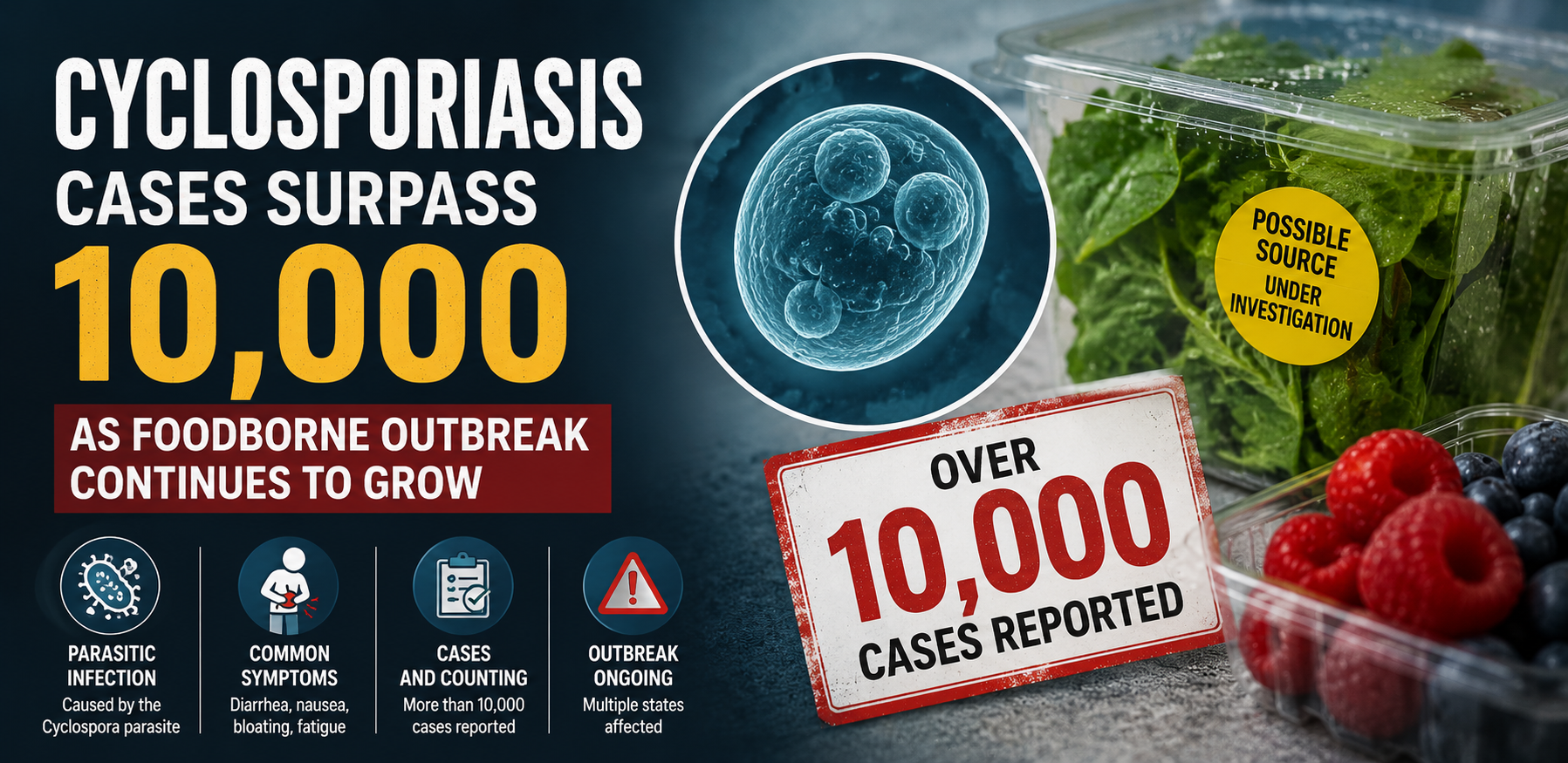
The number of reported cyclosporiasis cases linked to the ongoing U.S. foodborne illness outbreak has continued to rise, with Michigan reporting more than 10,000 cases, making it one of the largest outbreaks of the parasitic disease in recent years. Health officials are continuing to investigate the source of the outbreak while monitoring additional suspected cases across multiple states. (Reuters)
The outbreak has largely been linked to contaminated iceberg lettuce served at certain Taco Bell restaurants and sourced from operations in central Mexico. However, investigators believe there may be additional sources contributing to the unusually large number of infections, particularly as other states have identified different produce items during their investigations. (Reuters)
While no deaths have been reported, hundreds of people have required hospitalisation, and the growing number of cases has intensified attention on food safety, produce traceability, and outbreak response across the healthcare and food industries. (Reuters)
What Is Cyclosporiasis?
Cyclosporiasis is an intestinal illness caused by the parasite Cyclospora cayetanensis. People become infected after consuming food or water contaminated with the parasite, most commonly fresh fruits and vegetables.
Unlike many foodborne illnesses caused by bacteria, Cyclospora infections are caused by a microscopic parasite that requires specialised laboratory testing for confirmation. Because symptoms can resemble other gastrointestinal illnesses, diagnosis may sometimes be delayed.
Common symptoms include:
- Prolonged watery diarrhoea.
- Loss of appetite.
- Stomach cramps.
- Nausea.
- Fatigue.
- Bloating.
- Weight loss.
- Low-grade fever.
Without appropriate treatment, symptoms can persist for several weeks or even longer.
Why This Outbreak Is Significant
Foodborne illness outbreaks occur every year, but the scale of this outbreak has raised particular concern among public health officials.
Michigan alone has recorded more than 10,000 reported cases, while thousands of additional confirmed and suspected infections are being investigated across dozens of states. The continued increase suggests that exposure occurred over a broad geographic area and may involve multiple distribution channels. (Reuters)
The investigation has primarily focused on iceberg lettuce, but officials have not ruled out additional contaminated foods. In North Carolina, investigators have also identified parsley and cilantro among foods commonly consumed by infected individuals, suggesting that more than one source may be involved. (Reuters)
This complexity highlights how difficult modern foodborne outbreak investigations have become, particularly when fresh produce passes through multiple growers, distributors, processors, restaurants, and retailers before reaching consumers.
Challenges in Food Safety Investigations
Tracing foodborne illnesses is considerably more difficult than many people realise.
Fresh produce often moves rapidly through complex supply chains that involve farms, packing facilities, transportation companies, wholesalers, retailers, and restaurants across multiple states.
By the time patients begin experiencing symptoms, the contaminated products have often already been consumed or discarded.
Investigators must combine patient interviews, laboratory testing, purchasing records, distribution data, and supply chain information to identify the likely source.
When multiple foods are involved or when several suppliers distribute similar products, identifying the precise source becomes even more challenging.
These investigations often continue for weeks after the first illnesses are reported.
Public Health Response
State health departments, the Centers for Disease Control and Prevention, and the U.S. Food and Drug Administration continue coordinating efforts to identify the source of infections and prevent additional cases.
Their response includes:
- Monitoring newly reported illnesses.
- Conducting laboratory testing.
- Interviewing affected patients.
- Tracing food distribution networks.
- Working with growers and distributors.
- Issuing public health guidance when necessary.
Healthcare providers are also being encouraged to consider Cyclospora infection when evaluating patients with persistent diarrhoea, particularly if they recently consumed fresh produce or live in areas affected by the outbreak.
Industry Impact
The outbreak demonstrates how food safety incidents can quickly affect multiple industries beyond healthcare.
- Healthcare Providers: Hospitals, urgent care centres, and primary care practices continue evaluating patients with gastrointestinal symptoms while public health laboratories process increasing numbers of diagnostic tests.
- Food Manufacturers and Growers: Produce suppliers are facing increased scrutiny regarding agricultural practices, water quality, sanitation procedures, and supply chain monitoring.
- Restaurants and Food Service: Restaurant chains are reviewing sourcing practices, supplier relationships, and food safety protocols to minimise future risks and maintain consumer confidence.
- Retailers: Grocery retailers are working closely with suppliers and regulatory agencies to ensure affected products are removed quickly when recalls occur while maintaining transparency with customers.
Looking Ahead
As the investigation continues, several areas are likely to receive increased attention across the food industry.
Future efforts may include:
- Stronger produce traceability systems.
- Improved food safety surveillance.
- Faster outbreak detection.
- Enhanced laboratory testing capabilities.
- Better coordination between state and federal agencies.
- Expanded supplier monitoring.
- Greater investment in food supply chain transparency.
Healthcare organisations and public health agencies will also continue strengthening surveillance systems to identify outbreaks earlier and respond more effectively.
Why This Matters
Large foodborne illness outbreaks highlight the importance of strong public health surveillance and rapid collaboration across healthcare, agriculture, food production, and regulatory agencies.
The increasing complexity of modern food supply chains means that contamination occurring at a single point can affect consumers across numerous states within days.
Early detection, accurate diagnosis, effective communication, and coordinated investigations are essential for limiting the spread of illness and protecting public health.
The current outbreak also reinforces the growing need for advanced traceability technologies that allow contaminated products to be identified and removed from the market more quickly.
Key Takeaways
- Cyclosporiasis cases have surpassed 10,000 in Michigan as the outbreak continues to expand. (Reuters)
- The outbreak has primarily been linked to contaminated iceberg lettuce, although investigators continue evaluating additional potential sources. (Reuters)
- The illness is caused by the Cyclospora cayetanensis parasite and typically spreads through contaminated food or water.
- Healthcare providers, public health agencies, restaurants, growers, and retailers continue responding to the evolving outbreak.
- The incident highlights the importance of food safety surveillance, supply chain transparency, and rapid outbreak investigation.
What This Means for Healthcare Marketers
The expanding outbreak is increasing demand for food safety monitoring, infectious disease surveillance, laboratory diagnostics, public health analytics, and supply chain traceability solutions. State health departments, public health laboratories, hospital systems, diagnostic testing companies, food manufacturers, produce distributors, restaurant chains, and regulatory agencies are likely to continue investing in technologies that improve outbreak detection, laboratory capacity, food traceability, and population health surveillance. For healthcare marketers, organisations strengthening infectious disease preparedness, laboratory infrastructure, food safety programmes, and public health data systems represent high-intent opportunities for diagnostics, analytics platforms, surveillance technologies, healthcare IT, and population health solutions.