Cyclosporiasis Outbreak Begins Affecting Restaurant Sales as Consumer Confidence Declines
What's Happening
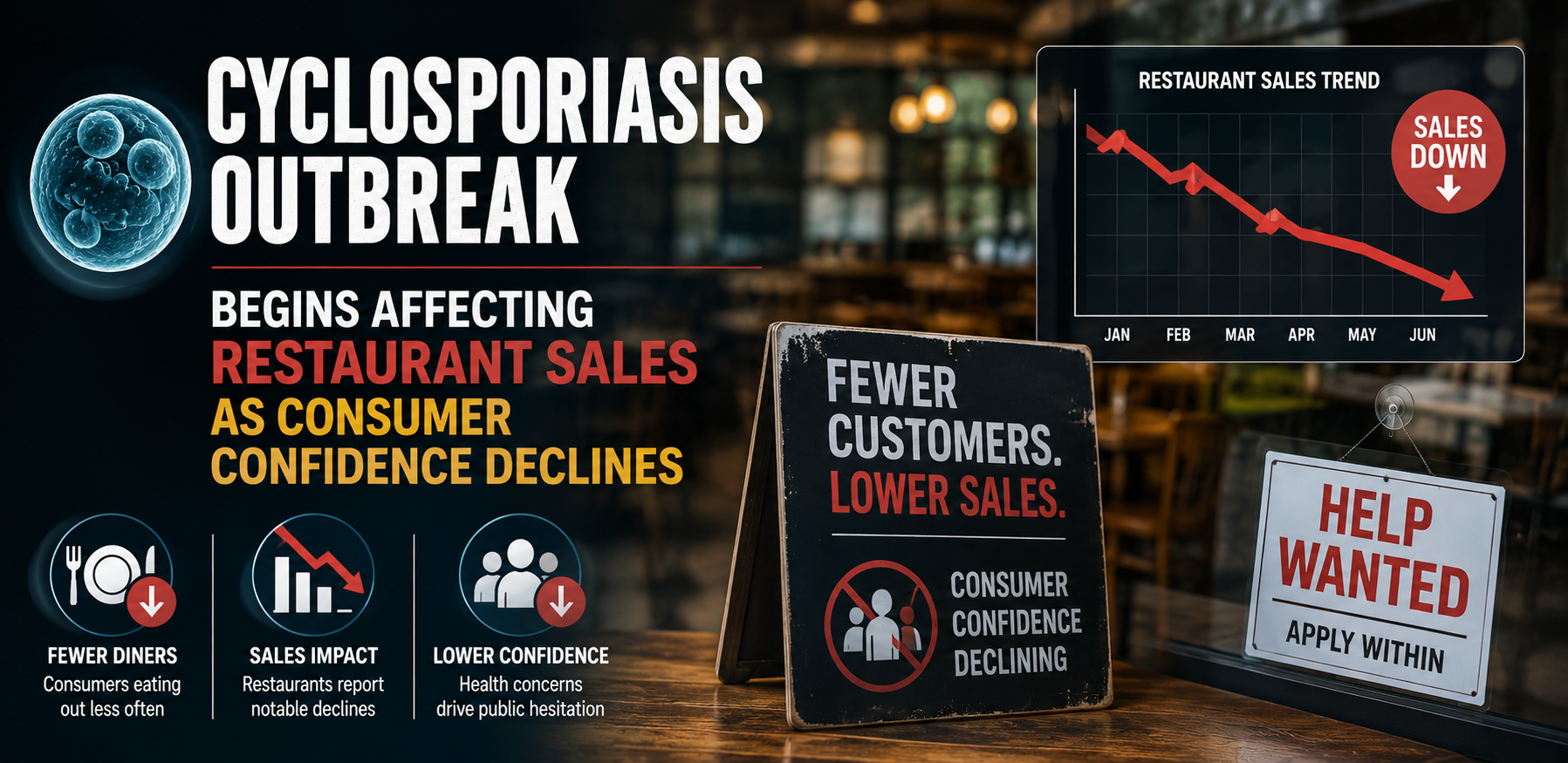
The ongoing cyclosporiasis outbreak is beginning to impact the restaurant industry, with many U.S. consumers reducing visits to restaurants after concerns about contaminated lettuce gained widespread attention.
Several restaurant operators have reported weaker lettuce sales and changing customer behaviour as public awareness of the outbreak has increased. Although the investigation continues, concerns surrounding fresh produce have prompted some consumers to avoid menu items containing leafy greens or dine out less frequently.
The situation demonstrates how public health events can quickly influence consumer purchasing decisions, creating operational and financial challenges for restaurants, food suppliers, distributors, and growers.
Why Foodborne Illness Outbreaks Affect Restaurants
Foodborne illness outbreaks often have consequences that extend well beyond the individuals who become sick.
Even when only certain restaurants or suppliers are linked to an outbreak, consumers frequently become more cautious about similar foods across the entire market.
Fresh produce is particularly vulnerable because:
- It is often consumed raw.
- It passes through complex supply chains.
- Multiple restaurants may use the same suppliers.
- Contamination is difficult to detect through appearance alone.
- Produce has a relatively short shelf life.
As media coverage increases, consumer confidence may decline until investigators identify the source and public health officials determine the outbreak has been contained.
The Financial Impact on the Food Industry
Changes in consumer behaviour can have significant economic consequences throughout the food supply chain.
When customers stop ordering products containing lettuce or other fresh vegetables, the effects extend beyond restaurants.
Businesses that may be affected include:
- Produce growers.
- Food distributors.
- Packaging companies.
- Logistics providers.
- Grocery retailers.
- Restaurant chains.
- Independent restaurants.
- Food service suppliers.
Reduced demand can lead to excess inventory, food waste, lower sales, and increased operating costs while businesses adjust purchasing decisions during the investigation.
The Importance of Consumer Trust
Food safety plays a central role in maintaining public confidence.
Consumers generally expect restaurants and food manufacturers to provide products that are safe to eat. When outbreaks occur, businesses must respond quickly through transparent communication, cooperation with public health agencies, and strengthened food safety practices.
Many restaurant operators also review supplier relationships, sourcing practices, and internal food safety procedures following major outbreaks to reduce future risks.
Maintaining trust often requires clear communication alongside visible actions that reassure customers about product safety.
How Public Health Agencies Respond
Foodborne illness investigations require close coordination between healthcare providers, laboratories, public health agencies, and the food industry.
Investigators work to:
- Identify affected patients.
- Confirm laboratory results.
- Trace contaminated food products.
- Review supplier records.
- Inspect production facilities.
- Issue recalls when necessary.
- Provide public guidance.
The faster investigators identify the source of contamination, the sooner businesses can remove affected products while allowing unaffected suppliers and restaurants to resume normal operations.
Industry Impact
- Restaurants: Restaurant operators may experience lower customer traffic and changing ordering patterns while the outbreak remains under investigation. Many businesses also strengthen food safety protocols and review supplier relationships to reassure customers.
- Produce Suppliers: Growers and distributors face increased scrutiny regarding agricultural practices, sanitation procedures, irrigation water quality, and supply chain traceability. Companies may also experience temporary reductions in demand until consumer confidence improves.
- Grocery Retailers: Retailers continue working with suppliers and public health authorities to ensure potentially affected products are removed quickly while communicating food safety information to customers.
- Healthcare and Public Health: Hospitals, laboratories, and public health agencies continue monitoring new cases, supporting outbreak investigations, and educating healthcare providers about recognising and treating cyclosporiasis.
Looking Ahead
As the investigation continues, both the food industry and healthcare organisations are expected to strengthen food safety efforts.
Future priorities may include:
- Improved produce traceability.
- Faster outbreak detection.
- Enhanced laboratory surveillance.
- Stronger supplier monitoring.
- Better food safety communication.
- Increased investment in supply chain transparency.
- More advanced public health surveillance systems.
These improvements aim to reduce both the health impact of future outbreaks and the economic disruption that often follows.
Why This Matters
Foodborne illness outbreaks affect far more than public health.
They influence consumer confidence, business performance, supply chain operations, and purchasing behaviour across the food industry.
The current outbreak highlights the growing importance of rapid outbreak investigation, transparent communication, and strong food safety systems that protect both public health and the broader food economy.
As supply chains become increasingly interconnected, preventing and responding to foodborne illnesses will remain a shared responsibility across healthcare, agriculture, food production, and regulatory agencies.
Key Takeaways
- The ongoing cyclosporiasis outbreak is beginning to reduce restaurant traffic and lettuce sales as consumer concerns grow.
- Foodborne illness outbreaks can affect the entire food supply chain, even beyond the businesses directly involved.
- Restaurants and suppliers are strengthening food safety measures while public health officials continue investigating the outbreak.
- Consumer trust remains essential for maintaining confidence in the food industry.
- Improved traceability and faster outbreak response are expected to remain major priorities following the investigation.
What This Means for Healthcare Marketers
The outbreak is driving renewed attention toward food safety, infectious disease surveillance, laboratory diagnostics, and supply chain transparency. Public health agencies, healthcare systems, food manufacturers, restaurant chains, diagnostic laboratories, produce suppliers, and regulatory organisations are likely to continue investing in technologies that improve outbreak detection, traceability, laboratory testing, and population health monitoring. For healthcare marketers, organisations strengthening food safety infrastructure, infectious disease preparedness, laboratory capabilities, and public health surveillance represent high-intent opportunities for diagnostics, healthcare analytics, data platforms, and disease monitoring solutions.