DaVita Reaffirms Annual Forecast Despite Lower Revenue Per Dialysis Treatment
What's Happening
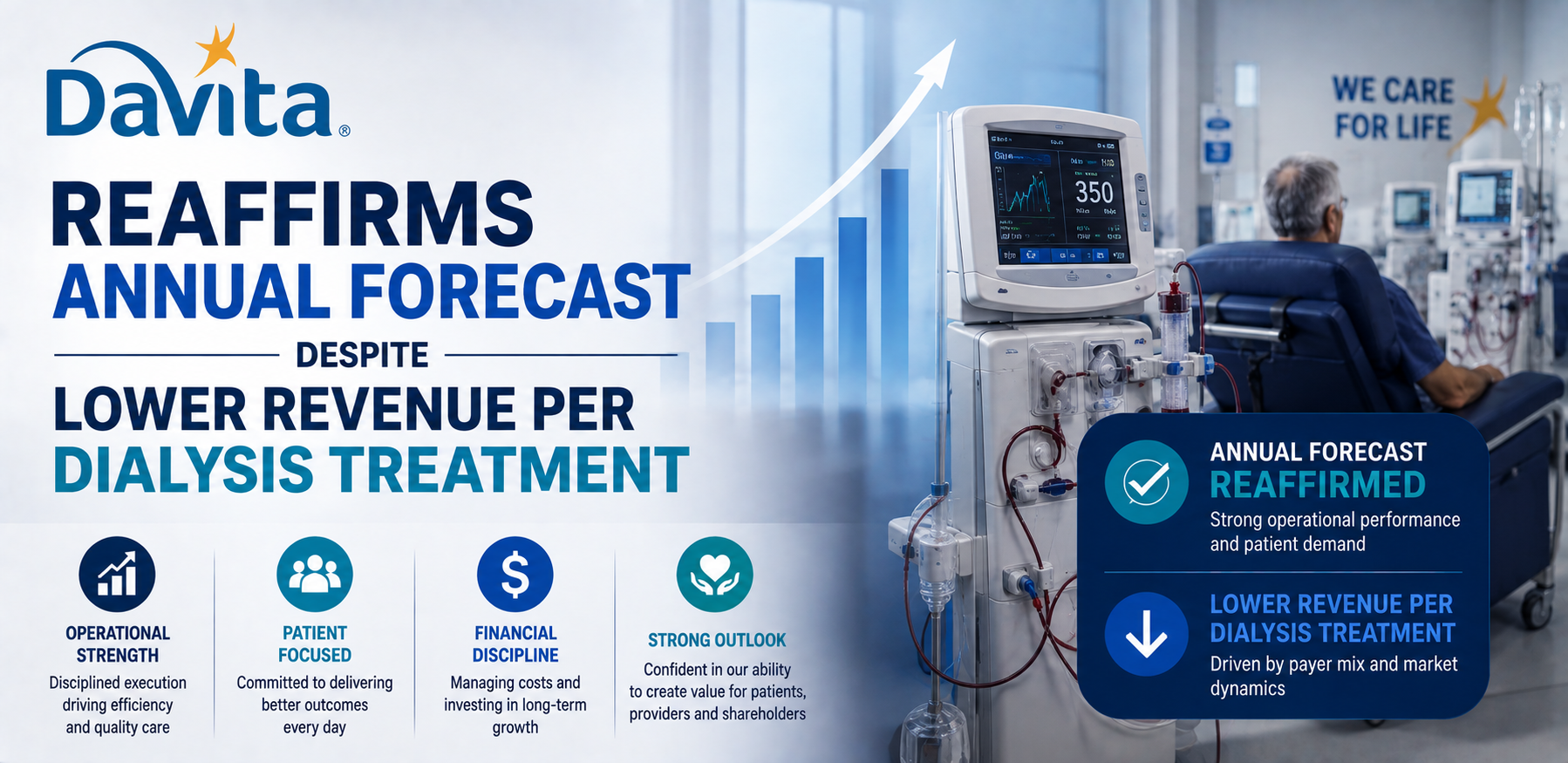
DaVita has reaffirmed its full-year 2026 financial forecast after reporting second-quarter results that exceeded profit expectations, even as revenue earned per dialysis treatment declined.
The kidney care provider said lower revenue per treatment was primarily driven by declining enrollment in Affordable Care Act (ACA) marketplace insurance plans following the expiration of enhanced pandemic-era subsidies. The company also reported lower revenue from phosphate binders, medications commonly used by dialysis patients to manage phosphorus levels. Despite these headwinds, DaVita maintained its annual earnings outlook, reflecting confidence in its overall business performance.
Understanding DaVita's Business
DaVita is one of the largest providers of kidney care services in the United States, treating patients with chronic kidney disease and end-stage kidney disease through a nationwide network of dialysis centers and home dialysis programs.
Its services include:
- In-center hemodialysis.
- Home dialysis.
- Kidney disease management.
- Integrated kidney care.
- Patient education and support.
Because dialysis patients require treatment several times each week, reimbursement levels and treatment volumes have a significant impact on the company's financial performance.
Why Revenue Per Treatment Declined
Revenue per treatment fell during the quarter due to changes in the mix of patients covered by different insurance plans.
The expiration of enhanced ACA marketplace subsidies led to fewer patients enrolling in commercial health plans, which typically reimburse dialysis providers at higher rates than government programs such as Medicare.
DaVita also experienced lower revenue from phosphate binders after changes affecting reimbursement for these medications.
While these factors reduced average revenue per treatment, overall treatment volumes and operational performance remained strong enough to support the company's full-year outlook.
Industry Impact
- Dialysis Providers: The results highlight how changes in health insurance enrollment and reimbursement policies can directly affect dialysis providers' financial performance.
- Healthcare Providers: Kidney care organizations continue adapting to shifts in payer mix while maintaining access to essential dialysis services for patients with chronic kidney disease.
- Health Insurers: Changes in ACA enrollment continue influencing reimbursement patterns across healthcare providers, particularly those serving patients with long-term chronic conditions.
- Investors: Although DaVita reported stronger-than-expected earnings, investors remain focused on reimbursement trends and future revenue growth within the dialysis industry.
Looking Ahead
DaVita expects to continue benefiting from stable dialysis demand while managing reimbursement pressures and evolving insurance enrollment trends.
The company also plans to continue investing in kidney care innovation, home dialysis, and integrated care programs designed to improve patient outcomes and operational efficiency.
Future government reimbursement decisions and commercial insurance enrollment trends will remain important factors influencing the company's financial performance.
Why This Matters
Dialysis providers operate in a highly regulated reimbursement environment where changes in insurance coverage can significantly affect revenue.
DaVita's results demonstrate that strong operational performance can help offset reimbursement challenges, but they also underscore the importance of healthcare policy in shaping the financial health of providers serving patients with chronic diseases.
The company's performance reflects broader trends affecting kidney care organizations across the United States.
Key Takeaways
- DaVita reaffirmed its 2026 financial outlook despite lower revenue per dialysis treatment.
- Lower revenue was primarily driven by reduced enrollment in ACA marketplace plans and lower phosphate binder revenue.
- The company still exceeded analyst expectations for quarterly profit.
- Stable dialysis demand and operational performance supported the company's full-year guidance.
- Healthcare reimbursement policies continue to play a significant role in the dialysis industry's financial performance.
What This Means for Healthcare Marketers
DaVita's results highlight the ongoing importance of kidney care, dialysis services, reimbursement strategy, and value-based care. Dialysis providers, nephrology practices, health systems, medical device companies, and digital health organizations continue investing in technologies and care models that improve patient outcomes while navigating reimbursement changes. For healthcare marketers, organizations involved in renal care, chronic disease management, home dialysis, and healthcare services represent high-intent opportunities for provider engagement, patient education, partnership development, and commercial growth.