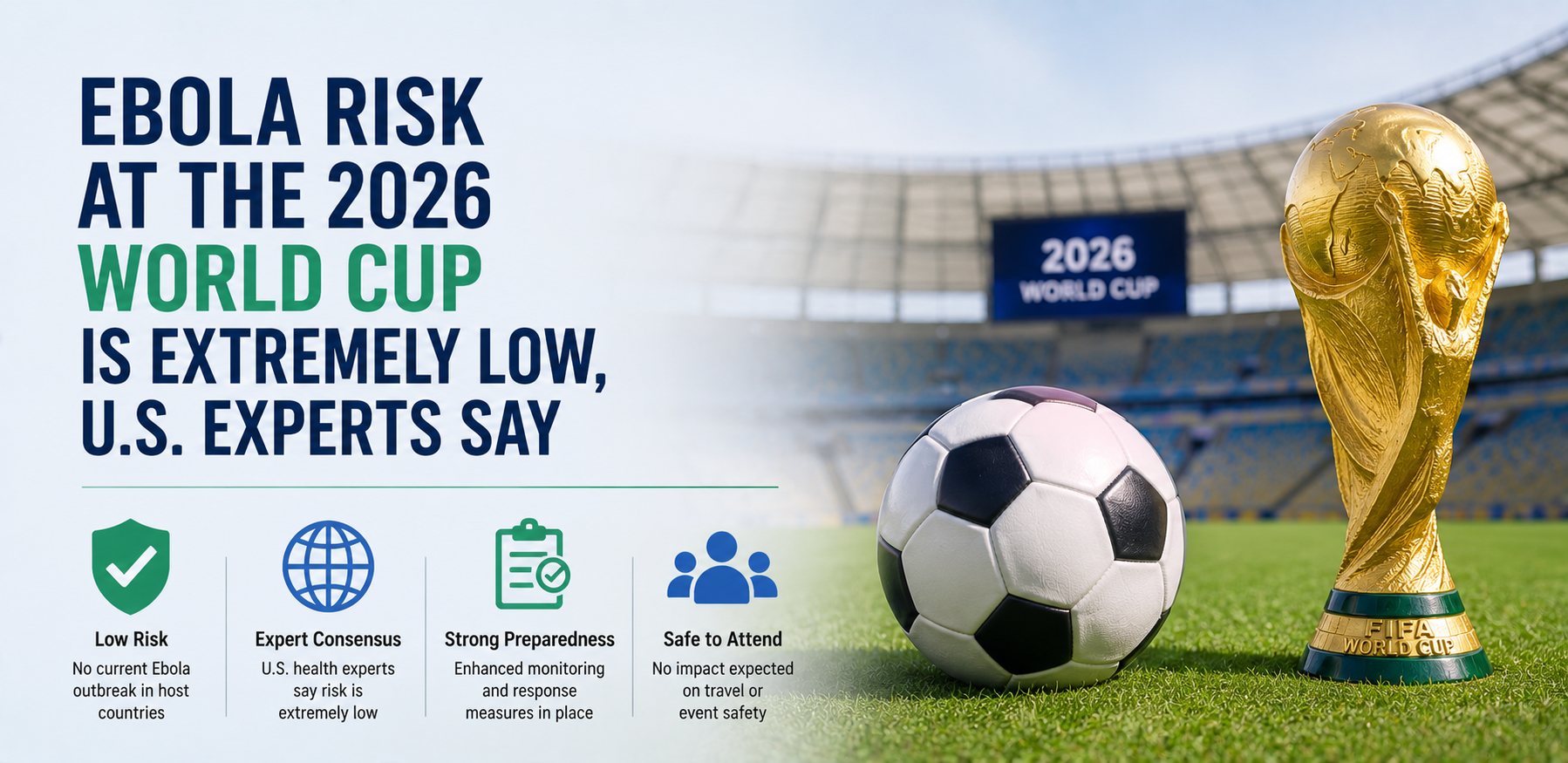
Ebola Risk at the 2026 World Cup Is Extremely Low, U.S. Experts Say
What's Happening
As preparations continue for the 2026 FIFA World Cup, public health experts are reassuring the public that the risk of Ebola spreading through the tournament remains extremely low.
The comments come amid ongoing concerns about the Ebola outbreak in Central Africa and recent travel restrictions, screening measures, and emergency-response planning announced by the United States and its international partners.
Health officials emphasized that while Ebola remains a serious disease, multiple layers of surveillance, screening, and preparedness measures are already in place to reduce the likelihood of infected individuals traveling undetected and spreading the virus during the tournament.
The 2026 FIFA World Cup is expected to attract millions of visitors from around the world, making it one of the largest international sporting events ever held in North America.
Why Are People Concerned?
The concern stems from the ongoing Ebola outbreak involving the Bundibugyo strain of the virus.
Unlike some previous Ebola outbreaks, this strain does not currently have a widely available approved vaccine, which has led health officials to take additional precautions.
Over the past several months, the United States has:
- Expanded airport screening programs
- Increased Ebola-related travel monitoring
- Added funding for outbreak response efforts
- Implemented travel restrictions for certain travelers
- Increased coordination with international health agencies
These actions have attracted media attention and naturally raised questions about whether large international gatherings such as the World Cup could increase the risk of transmission.
Why Experts Believe the Risk Is Low
Public health specialists point to several reasons why widespread transmission during the World Cup is unlikely.
First, Ebola is fundamentally different from respiratory diseases such as COVID-19 or influenza.
The virus does not spread through the air. Instead, transmission generally requires direct contact with the bodily fluids of an infected person who is already showing symptoms.
This makes Ebola significantly more difficult to spread in casual public settings.
Second, international travelers from affected regions are already subject to enhanced monitoring and screening procedures.
Individuals identified as having potential exposure risks are closely monitored before and after travel.
Third, healthcare systems in the United States, Canada, and Mexico have spent years strengthening their ability to identify and isolate infectious diseases quickly.
Many hospitals now maintain specialized response protocols that were developed following previous Ebola outbreaks and the COVID-19 pandemic.
How the United States Is Preparing
Health agencies have spent months preparing for the possibility that travelers exposed to Ebola could enter the country.
Preparedness efforts include:
- Enhanced airport screening
- Contact tracing programs
- Laboratory testing capabilities
- Specialized treatment centers
- Coordination between federal, state, and local health authorities
The United States also maintains a network of hospitals specifically equipped to handle highly infectious diseases.
These facilities have specialized staff, protective equipment, and isolation capabilities designed to safely treat patients while preventing transmission.
This infrastructure was significantly expanded following the 2014 West African Ebola outbreak.
Lessons From Previous Outbreaks
The 2014 Ebola outbreak in West Africa remains the largest outbreak ever recorded, causing more than 11,000 deaths.
That crisis exposed weaknesses in global disease surveillance and response systems.
Since then, governments and public health agencies have invested heavily in:
- Early-warning systems
- International disease monitoring
- Emergency response planning
- Healthcare worker training
- Laboratory capacity
Many experts argue that the world is far better prepared today than it was a decade ago.
The current outbreak is being monitored closely, and response efforts began much earlier than they did during the 2014 crisis.
Why Public Health Officials Still Take It Seriously
Although experts say the risk is low, they are not dismissing the threat.
Ebola remains a highly dangerous disease with a high mortality rate.
Public health officials generally operate on the principle that preparation is most effective before a crisis occurs rather than after transmission begins.
As a result, authorities continue investing in surveillance, travel monitoring, and outbreak response activities even when the immediate risk appears small.
The goal is not to create alarm but to ensure that systems are prepared if circumstances change.
Industry Impact
Hospitals and Health Systems: Healthcare organizations continue reviewing emergency-response plans and infectious-disease protocols ahead of the World Cup.
Public Health Agencies: Federal, state, and local agencies are coordinating surveillance efforts and preparedness activities.
Travel Industry: Airports and transportation hubs may continue implementing enhanced screening measures for travelers arriving from affected regions.
Event Organizers: World Cup organizers are working closely with health authorities to ensure contingency plans are in place while avoiding unnecessary disruption to visitors.
Key Takeaways
- Experts believe the risk of Ebola spreading during the 2026 World Cup is extremely low.
- Ebola requires direct contact with bodily fluids and does not spread like respiratory viruses.
- The United States has expanded screening, surveillance, and preparedness efforts.
- Specialized treatment centers and response systems are already in place.
- Officials remain vigilant despite the low overall risk.
What This Means for Healthcare Marketers
For healthcare marketers, this story highlights how public health preparedness has become a major focus area for healthcare organizations, government agencies, and healthcare technology vendors.
Healthcare marketers serving hospitals, public health agencies, diagnostics companies, laboratory providers, emergency preparedness organizations, and surveillance technology vendors may see increased interest in solutions related to outbreak monitoring, disease detection, and emergency-response planning.
The article also reinforces the growing importance of healthcare communication. During public health events, organizations must balance preparedness messaging with reassurance, ensuring that stakeholders understand both the risks and the safeguards in place.
For marketers focused on healthcare intelligence, disease surveillance, diagnostics, and population health, stories like this often create increased demand for timely data, risk monitoring, and decision-support tools that help organizations respond quickly to emerging threats.