
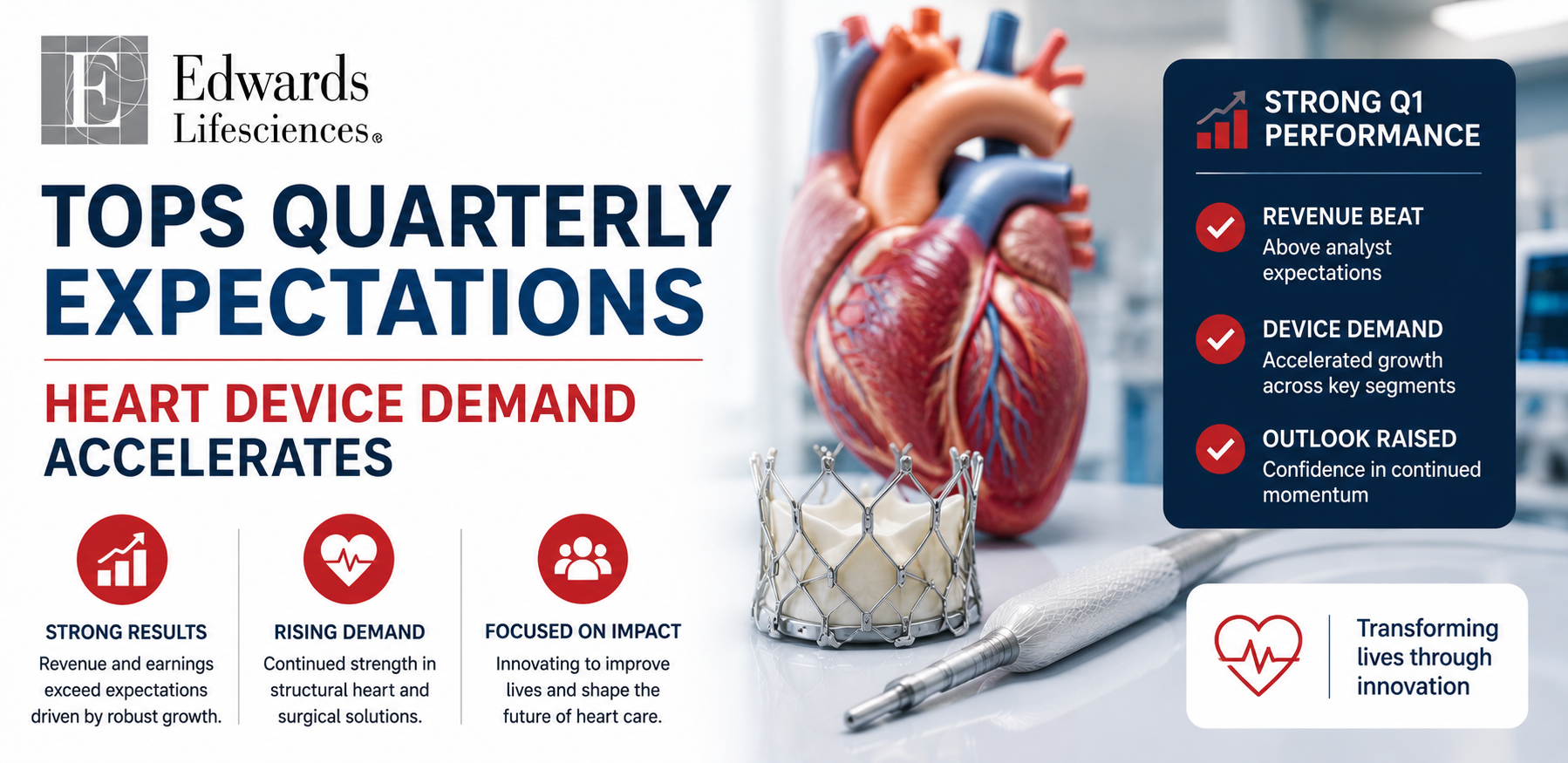
Edwards Lifesciences Tops Quarterly Expectations as Heart Device Demand Accelerates
What's Happening
Edwards Lifesciences reported stronger-than-expected second-quarter results, driven by continued demand for its heart valve technologies used to treat structural heart disease. The medical device maker exceeded Wall Street's expectations for both revenue and earnings, sending its shares higher after the results were announced.
The company's growth was fueled by strong adoption of its transcatheter aortic valve replacement (TAVR) devices, which are used to treat severe aortic stenosis without the need for open-heart surgery. Edwards also delivered robust growth across its newer transcatheter mitral and tricuspid therapies, reflecting increasing physician adoption of minimally invasive heart procedures.
Breaking Down the Results
Edwards reported:
- Revenue: $1.74 billion, exceeding analyst expectations of approximately $1.70 billion.
- Adjusted earnings per share: $0.78, above estimates of $0.74.
- TAVR sales: $1.26 billion, an increase of more than 11% year over year.
- Transcatheter mitral and tricuspid therapy (TMTT) sales: Nearly 48% growth compared with the previous year.
- Surgical heart valve sales: Continued steady growth as hospitals maintained strong procedural volumes.
Encouraged by the strong performance, Edwards raised the lower end of its full-year TAVR sales growth outlook while maintaining its annual earnings guidance.
What's Driving Growth?
Several factors continue to support demand for Edwards' cardiovascular portfolio.
- Aging Population: As the U.S. population ages, the number of patients diagnosed with structural heart diseases such as aortic stenosis continues to rise, increasing demand for advanced valve replacement procedures.
- Shift Toward Minimally Invasive Care: TAVR has become an increasingly preferred treatment option for many eligible patients because it offers shorter hospital stays, faster recovery times, and reduced procedural risk compared with traditional open-heart surgery.
- Earlier Diagnosis and Treatment: Greater awareness of valve disease and broader screening efforts are allowing more patients to receive treatment before symptoms become severe, expanding the addressable market for structural heart devices.
- Innovation Pipeline: Edwards continues investing heavily in next-generation technologies for aortic, mitral, and tricuspid valve disease, positioning itself for sustained growth across multiple structural heart segments.
Industry Impact
- Medical Device Manufacturers: The results reinforce the continued strength of the cardiovascular device market, particularly for companies focused on minimally invasive structural heart therapies.
- Hospitals and Health Systems: Growing demand for TAVR and related procedures is expected to increase investment in structural heart programs, specialized cardiac teams, and catheterization laboratories.
- Physicians: Interventional cardiologists and cardiac surgeons continue expanding the use of catheter-based therapies as clinical evidence supports treatment across broader patient populations.
- Investors: The earnings beat reflects continued confidence in the long-term growth of structural heart technologies, a segment that remains one of the fastest-growing areas within medical devices.
Why This Matters
Structural heart disease represents one of the largest opportunities in cardiovascular medicine. As technologies become less invasive and clinical outcomes continue to improve, more patients are becoming eligible for transcatheter procedures that can significantly improve quality of life while reducing recovery times.
Edwards' performance highlights how innovation, demographic trends, and increasing procedural volumes are driving sustained expansion across the cardiovascular device market.
Key Takeaways
- Edwards Lifesciences exceeded second-quarter revenue and earnings expectations.
- Strong demand for TAVR devices remained the primary growth driver.
- Sales of mitral and tricuspid therapies grew rapidly as adoption expanded.
- The company raised the lower end of its TAVR sales outlook while maintaining annual earnings guidance.
- Continued growth reflects rising demand for minimally invasive cardiovascular treatments.
What This Means for Healthcare Marketers
Edwards' results reinforce the growing momentum behind structural heart care and minimally invasive cardiovascular procedures. Healthcare organizations serving cardiology, cardiac surgery, imaging, and medical technology should expect continued investment in this space as patient volumes increase. For healthcare marketers, identifying providers expanding structural heart programs, promoting evidence-backed clinical outcomes, and engaging physicians involved in cardiovascular innovation will become increasingly valuable as competition intensifies across the heart device market.