Elevance Health Raises Annual Profit Forecast on Improved Medical Cost Management
What's Happening
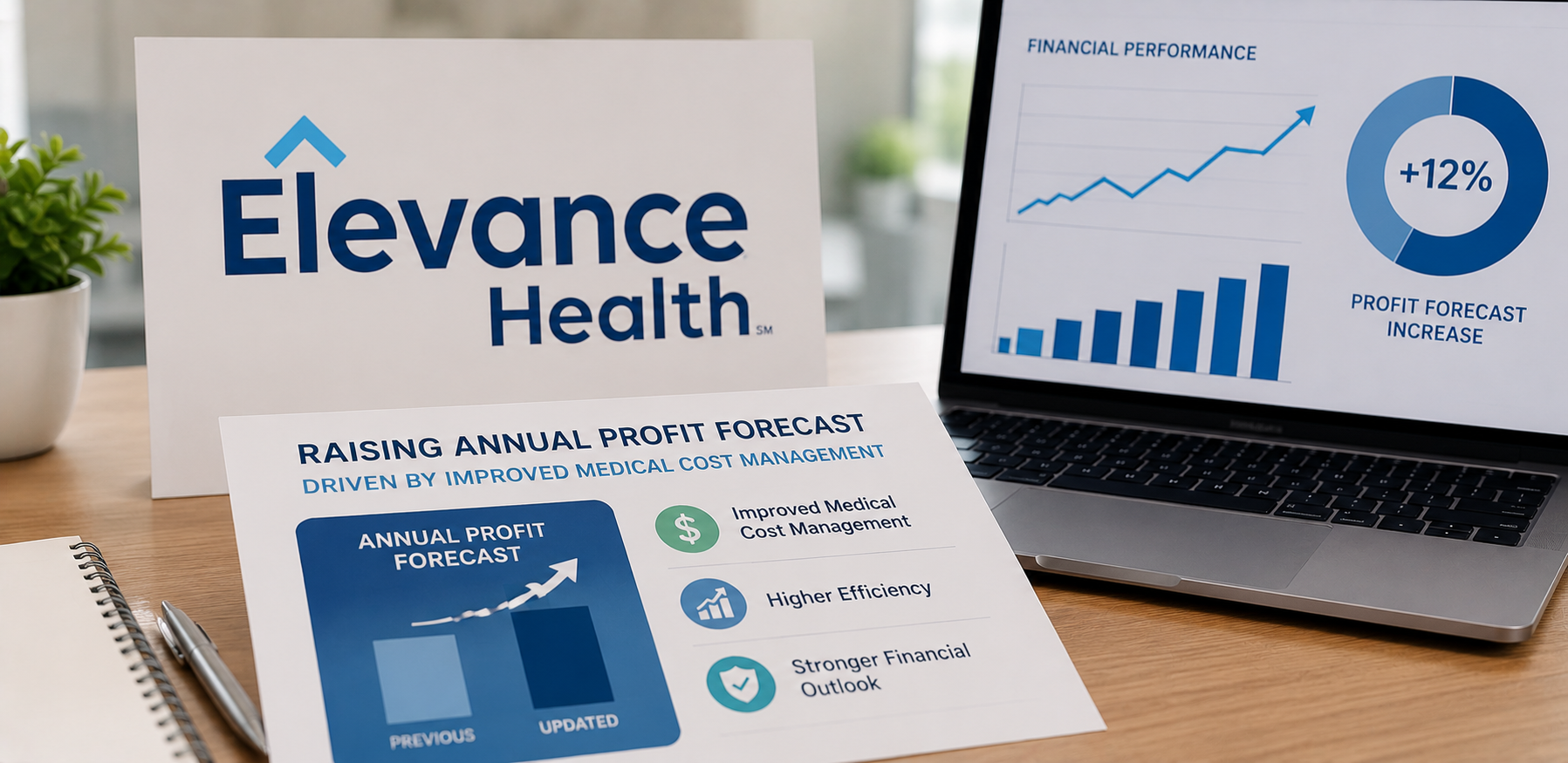
Elevance Health, one of the largest health insurers in the United States, has raised its full-year profit forecast after reporting better-than-expected management of medical costs during the latest quarter. The company said healthcare spending among its members remained lower than anticipated in several areas, helping improve its financial outlook despite continued pressure from rising healthcare expenses.
The updated forecast reflects the insurer's ability to balance healthcare utilization, claims costs, and operational efficiency while continuing to provide coverage for millions of Americans. The results also suggest that recent efforts to better manage medical spending are contributing to stronger financial performance.
Elevance's announcement comes as health insurers continue navigating rising demand for healthcare services, increasing prescription drug costs, and changing reimbursement trends.
About Elevance Health
Elevance Health is one of the largest health benefits companies in the United States.
The company provides:
- Commercial health insurance.
- Medicare Advantage plans.
- Medicaid managed care.
- Pharmacy benefit services.
- Behavioral health programs.
- Care management services.
Through its affiliated health plans, Elevance serves millions of members across the country.
Like other health insurers, the company works to balance affordable coverage with the rising costs of healthcare delivery.
What Is Medical Cost Management?
Medical cost management refers to the strategies health insurers use to manage healthcare spending while ensuring members receive appropriate care.
These efforts may include:
- Preventive care programs.
- Care coordination.
- Disease management.
- Pharmacy benefit management.
- Value-based care initiatives.
- Data analytics.
- Early intervention for chronic conditions.
The goal is not simply to reduce spending but to improve health outcomes while avoiding unnecessary or inefficient healthcare utilization.
Why Medical Costs Matter
Health insurers collect premiums from members and use those funds to pay for healthcare services.
Medical costs include payments for:
- Physician visits.
- Hospital care.
- Prescription medications.
- Surgical procedures.
- Diagnostic testing.
- Emergency care.
- Specialty treatments.
When healthcare spending rises faster than expected, insurers' profitability may decline.
Conversely, effective management of healthcare utilization and claims costs can improve financial performance while supporting long-term sustainability.
Understanding the Medical Loss Ratio (MLR)
One of the most closely watched financial measures for health insurers is the Medical Loss Ratio (MLR).
The MLR represents the percentage of premium revenue spent on patient medical care and quality improvement.
For example:
- A higher MLR generally means a larger share of premiums is being spent on healthcare services.
- A lower MLR may indicate lower-than-expected medical spending.
Health insurers continuously monitor this metric because it influences profitability, pricing, and future premium planning.
Federal regulations also require insurers to spend a minimum percentage of premium revenue on healthcare services.
Challenges Facing Health Insurers
Although Elevance reported improved cost management, insurers continue facing several industry challenges, including:
- Rising healthcare utilization.
- Higher hospital costs.
- Increasing prescription drug spending.
- Growth in specialty medicines.
- Aging populations.
- Inflation affecting healthcare services.
Companies continue investing in technology, preventive care, and data analytics to better predict healthcare needs while improving patient outcomes.
Why This Matters for the Healthcare Industry
Financial performance among major insurers often provides insight into broader healthcare trends.
Better management of medical costs may indicate:
- Improved care coordination.
- More efficient healthcare delivery.
- Stable healthcare utilization.
- Effective chronic disease management.
At the same time, insurers continue balancing financial performance with expectations from regulators, healthcare providers, employers, and patients regarding access to high-quality care.
Industry Impact
- Health Insurers: Strong financial performance may encourage continued investment in care management, analytics, and value-based healthcare programs.
- Healthcare Providers: Changes in insurer cost management strategies can influence reimbursement models, care coordination, and value-based payment initiatives.
- Employers: Companies offering health benefits closely monitor insurer performance because it may affect future premium trends and benefit design.
- Patients: Efficient healthcare management can help support sustainable insurance coverage while encouraging preventive care and better long-term health outcomes.
Why This Matters
Elevance's improved financial outlook highlights the importance of managing healthcare costs without compromising access to care.
As healthcare spending continues rising across the United States, insurers are increasingly relying on data-driven care management, preventive health initiatives, and operational efficiency to maintain financial stability.
The results also demonstrate how closely insurer performance is tied to broader healthcare utilization trends.
Understanding these trends helps healthcare organizations, policymakers, employers, and investors evaluate the overall health of the U.S. insurance market while identifying opportunities to improve both affordability and patient outcomes.
Key Takeaways
- Elevance Health raised its annual profit forecast after reporting better-than-expected medical cost management.
- Lower-than-expected healthcare spending helped improve the company's financial outlook.
- Medical cost management includes care coordination, preventive care, pharmacy management, and data-driven healthcare programs.
- The Medical Loss Ratio remains one of the most important financial indicators for health insurers.
- The results provide insight into broader healthcare spending and utilization trends across the U.S. insurance market.
What This Means for Healthcare Marketers
Elevance's results demonstrate that health insurers are increasingly focused on improving efficiency through better care management rather than simply controlling costs. Investments in preventive care, value-based care models, data analytics, and chronic disease management are helping insurers improve financial performance while supporting better health outcomes. These strategies are becoming central to how payers differentiate themselves in a highly competitive healthcare market.
For healthcare marketers, the results reinforce the growing demand for solutions that help insurers manage healthcare utilization more effectively. Organizations offering population health management, predictive analytics, digital health platforms, pharmacy optimization, and care coordination technologies have opportunities to demonstrate measurable value by improving both operational performance and member health outcomes.
For healthcare intelligence teams, insurer earnings provide valuable insight into healthcare utilization, reimbursement trends, and payer priorities. Monitoring financial performance, medical cost trends, care management initiatives, and value-based healthcare strategies can help organizations anticipate evolving opportunities across the U.S. health insurance landscape.