Eli Lilly Enters the Psychedelic Medicine Race with Up to $3.8 Billion AtaiBeckley Acquisition
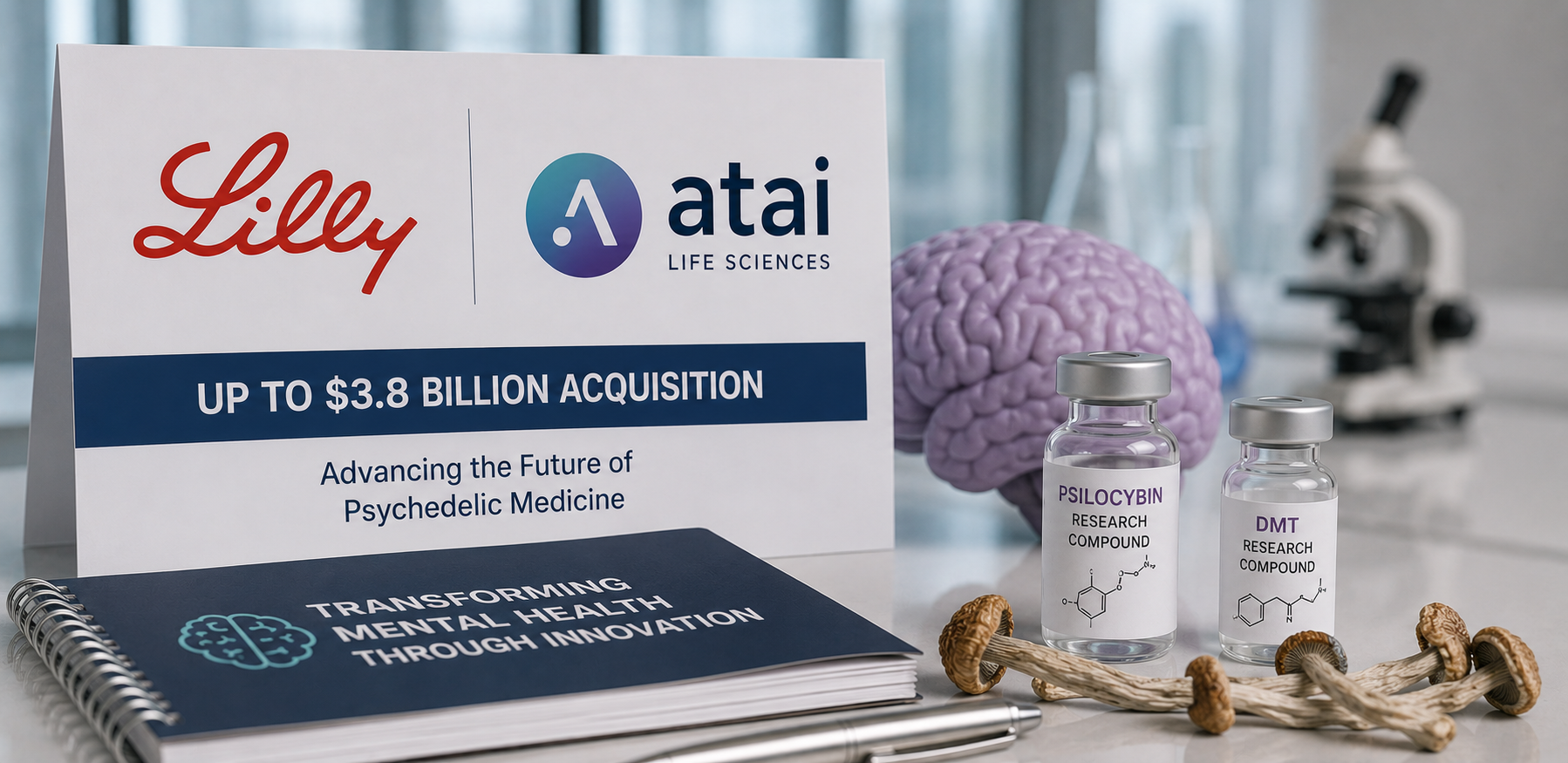
What's Happening
Eli Lilly has announced an agreement to acquire AtaiBeckley, a clinical-stage biotechnology company developing psychedelic-based therapies for mental health conditions, in a deal valued at up to $3.8 billion.
The transaction includes an upfront cash payment of approximately $2.8 billion, with an additional $1 billion tied to the achievement of future clinical, regulatory, and commercial milestones. Through the acquisition, Lilly gains access to AtaiBeckley's lead experimental therapy, BPL-003, an intranasal treatment currently in late-stage development for treatment-resistant depression (TRD).
The acquisition marks Lilly's entry into one of the fastest-growing areas of neuroscience, as large pharmaceutical companies increasingly explore psychedelic compounds as potential treatments for serious mental health disorders.
Why Psychedelic Medicines Are Gaining Attention
Psychedelic medicines are compounds being studied under carefully controlled medical supervision to treat conditions that have been difficult to manage with traditional therapies.
Unlike recreational drug use, these treatments are administered in regulated clinical settings alongside psychological support and extensive patient monitoring.
Researchers are investigating psychedelic-based therapies for conditions including:
- Treatment-resistant depression.
- Major depressive disorder.
- Post-traumatic stress disorder (PTSD).
- Anxiety disorders.
- Substance use disorders.
- Social anxiety disorder.
Over the past several years, growing clinical evidence has suggested that some psychedelic compounds may produce rapid and long-lasting improvements in certain patients who have not responded to conventional antidepressants.
Understanding Treatment-Resistant Depression
Treatment-resistant depression refers to depression that does not improve despite trying multiple standard antidepressant medications.
Millions of people worldwide experience this condition, making it one of the greatest unmet needs in mental healthcare.
People living with treatment-resistant depression often experience:
- Persistent sadness.
- Loss of motivation.
- Difficulty functioning at work or home.
- Sleep disturbances.
- Anxiety.
- Increased risk of suicide.
Because many existing antidepressants require weeks to become effective—and do not work for everyone—drug developers are searching for therapies that provide faster and more durable relief.
What Is BPL-003?
The centerpiece of Lilly's acquisition is BPL-003, a synthetic intranasal formulation based on 5-MeO-DMT, a psychedelic compound being developed specifically for treatment-resistant depression.
Unlike daily antidepressants, BPL-003 is designed as a rapid-acting therapy administered under medical supervision in specialized healthcare settings.
The treatment aims to:
- Produce rapid antidepressant effects.
- Improve symptoms after limited treatment sessions.
- Offer durable clinical benefits.
- Reduce the burden of long-term daily medication.
The program is currently in late-stage clinical development, with important trial results expected over the coming years.
Why Lilly Is Making This Investment
Lilly has become one of the world's fastest-growing pharmaceutical companies, driven largely by the success of its diabetes and obesity medicines.
Those products have generated substantial revenue that the company is now reinvesting into future areas of innovation.
The AtaiBeckley acquisition expands Lilly's neuroscience pipeline while diversifying its portfolio beyond metabolic diseases.
Industry analysts believe the company sees significant long-term potential in mental health, particularly for patients whose conditions remain difficult to treat with existing therapies.
A Growing Market for Psychedelic Therapies
Interest in psychedelic medicine has accelerated in recent years.
Several factors are contributing to this momentum:
- Increasing scientific research.
- Growing investment from biotechnology companies.
- Rising demand for innovative mental health treatments.
- Greater regulatory interest in addressing unmet psychiatric needs.
- Improved understanding of how psychedelic compounds affect the brain.
Analysts expect the psychedelic therapeutics market to grow substantially over the next decade if ongoing clinical trials continue producing positive results.
Challenges Still Remain
Despite growing optimism, psychedelic medicines remain experimental.
Before these therapies become widely available, developers must still demonstrate:
- Long-term safety.
- Consistent clinical effectiveness.
- Appropriate dosing.
- Safe administration protocols.
- Successful completion of regulatory review.
Healthcare providers will also need training on how these therapies should be delivered, since most require supervised administration rather than routine outpatient prescriptions.
Regulators will continue carefully evaluating both benefits and potential risks before approving additional psychedelic-based treatments.
Industry Impact
- Pharmaceutical Companies: Lilly's acquisition signals increasing confidence that psychedelic therapies could become an important new therapeutic category, encouraging additional investment across the pharmaceutical industry.
- Mental Healthcare Providers: If approved, new psychedelic medicines could expand treatment options for patients who have exhausted conventional antidepressant therapies.
- Biotechnology Industry: The acquisition highlights continued interest in innovative neuroscience companies developing first-in-class therapies for difficult-to-treat psychiatric conditions.
- Investors: The transaction demonstrates that major pharmaceutical companies are willing to make significant investments in emerging mental health technologies with long-term commercial potential.
Why This Matters
Mental health disorders remain one of the largest unmet healthcare challenges worldwide.
Although traditional antidepressants have helped millions of patients, many individuals continue experiencing severe symptoms despite multiple treatment attempts. Lilly's acquisition reflects growing confidence that psychedelic-assisted therapies may offer a fundamentally different approach for treating these conditions.
The deal also illustrates how large pharmaceutical companies are increasingly using the financial success of established products to invest in high-risk, high-reward areas of medical innovation. If ongoing clinical trials prove successful, psychedelic therapies could reshape the future of depression treatment and expand options for patients with limited alternatives.
Key Takeaways
- Eli Lilly will acquire AtaiBeckley in a deal worth up to $3.8 billion.
- The acquisition adds BPL-003, an intranasal psychedelic therapy for treatment-resistant depression, to Lilly's neuroscience pipeline.
- Psychedelic medicines are emerging as a promising area of research for difficult-to-treat mental health disorders.
- Lilly is using revenue from its successful obesity and diabetes medicines to diversify into neuroscience.
- The transaction reflects growing pharmaceutical investment in innovative mental health therapies.
What This Means for Healthcare Marketers
Lilly's acquisition underscores the growing importance of mental health as a strategic area for pharmaceutical innovation. Companies are increasingly investing in therapies that address conditions with significant unmet medical need, particularly where existing treatments have limited effectiveness. As neuroscience attracts greater investment, organizations that can demonstrate meaningful clinical outcomes and patient value will likely receive increased attention from providers, payers, and investors.
For healthcare marketers, this development highlights the importance of communicating complex scientific innovations in a way that builds trust among clinicians, patients, and policymakers. Psychedelic medicines remain a relatively new therapeutic category, making education, evidence-based messaging, and transparent communication critical as these therapies advance through clinical development.
For healthcare intelligence teams, Lilly's acquisition is another signal that neuroscience is entering a new phase of innovation. Tracking pharmaceutical acquisitions, late-stage clinical trials, regulatory developments, and investment activity in mental health can help organizations anticipate future shifts in one of healthcare's fastest-evolving therapeutic areas.