What’s Happening
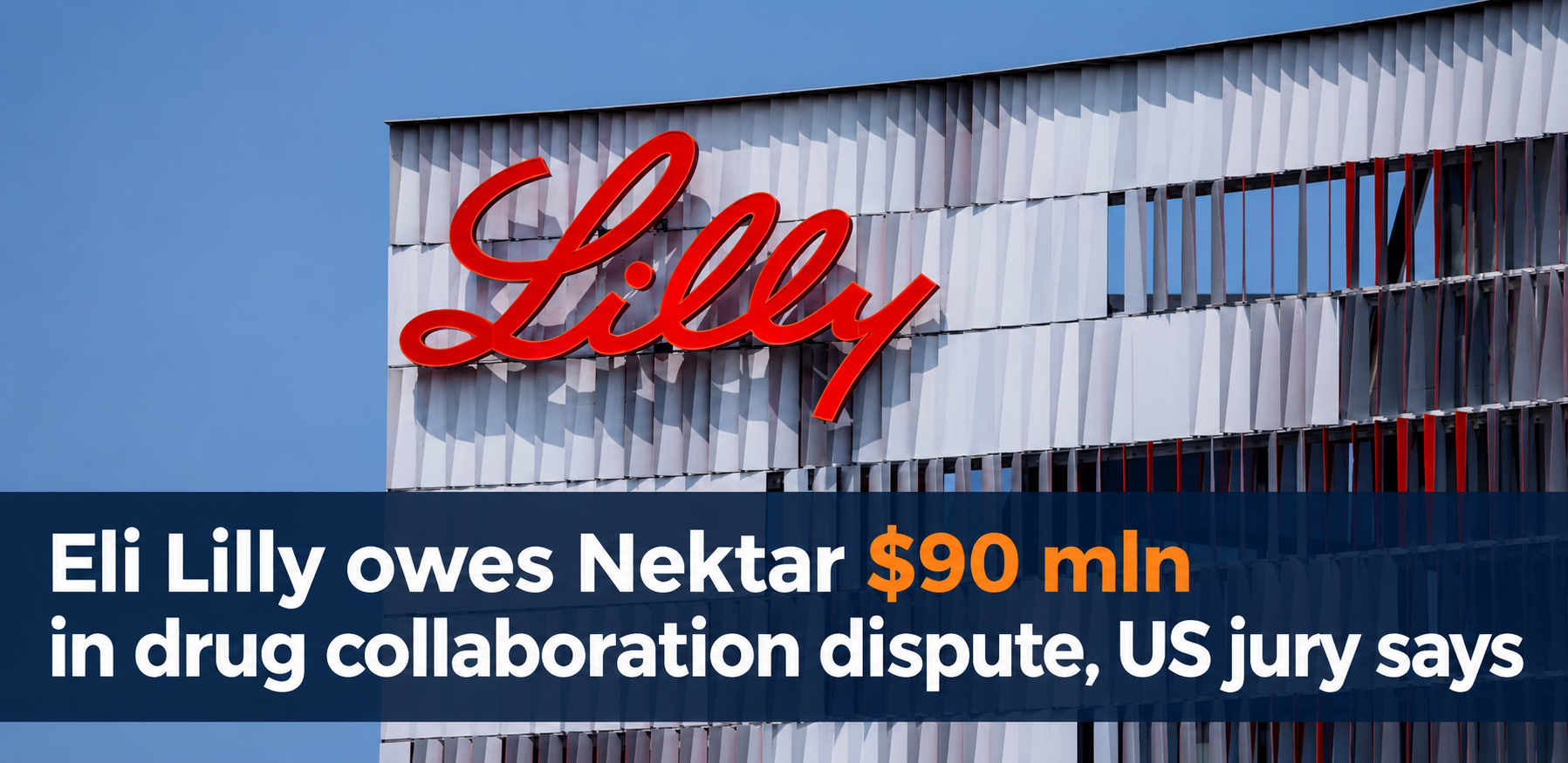
A U.S. federal jury has ordered Eli Lilly to pay Nektar Therapeutics $90 million after finding that Lilly breached its agreement with the biotech company over an experimental autoimmune disease drug.
The dispute involved rezpegaldesleukin, also known as Rezpeg, a drug candidate that Lilly and Nektar had been developing together.
Nektar had sought about $1 billion in damages, arguing that Lilly failed to properly develop the drug after acquiring another company with a competing treatment.
The jury ultimately awarded Nektar $90 million.
Lilly said the verdict awarded only a small portion of the damages Nektar had requested and maintained that it had made commercially reasonable efforts to develop the drug.
What Is Rezpeg?
Rezpeg is an experimental drug designed to treat immune-related diseases.
The treatment was being studied for conditions including:
- Eczema
- Psoriasis
- Other autoimmune and inflammatory diseases
The drug was developed through a collaboration between Nektar and Lilly.
The agreement required Lilly to use commercially reasonable efforts to develop the treatment.
The disagreement arose over whether Lilly met those obligations after the company acquired Dermira, a biotechnology company that had its own treatment for inflammatory skin disease.
What Did Nektar Claim?
Nektar sued Lilly in 2023, arguing that Lilly had not acted in good faith in developing Rezpeg.
Nektar claimed that Lilly had undermined the drug's development and had improperly analyzed clinical-trial results to make the treatment appear less effective.
According to Nektar's argument, this gave Lilly a reason to end its agreement related to Rezpeg after acquiring Dermira.
Nektar sought approximately $1 billion in damages.
Lilly rejected those allegations.
The company argued that Rezpeg's clinical-trial results did not meet the standards that Lilly and Nektar had jointly established for the program.
What Did the Jury Decide?
The jury agreed with Nektar that Lilly had breached its duty to act in good faith under the collaboration agreement.
It awarded Nektar $90 million.
That amount was far below the $1 billion Nektar had requested.
Lilly said the jury's decision confirmed that the company had used commercially reasonable efforts to develop Rezpeg and emphasized that the damages award was only a small fraction of what Nektar had sought.
Nektar, meanwhile, said it was pleased that the jury found Lilly had breached its contractual obligations.
What’s Changing / Business Impact
The dispute highlights the financial and legal risks that can arise when large pharmaceutical companies partner with biotechnology companies.
Drug-development agreements often involve detailed obligations covering:
- Clinical trials
- Development timelines
- Regulatory submissions
- Funding
- Commercialization
- Intellectual property
- Termination rights
When a program does not produce the expected clinical results, disagreements can emerge over whether a company made sufficient efforts to continue development.
The case also shows how corporate acquisitions can complicate existing drug partnerships.
Lilly's acquisition of Dermira brought another potential treatment into its portfolio, creating a situation where the company was working with assets connected to competing development programs.
Why This Matters
Pharmaceutical companies regularly rely on partnerships to discover and develop new medicines.
Smaller biotech companies often depend on larger pharmaceutical partners for the money, clinical-development infrastructure, regulatory expertise, and commercial capabilities needed to advance a drug.
For those agreements to work, both sides need clearly defined responsibilities.
This case shows what can happen when the companies disagree over whether those responsibilities were fulfilled.
The $90 million verdict also demonstrates that failed or discontinued drug programs can create financial consequences beyond the loss of the potential medicine itself.
Looking Ahead
The verdict resolves the jury's decision on the dispute, although further legal proceedings could still occur.
The case also raises broader questions for pharmaceutical companies about how collaboration agreements should address development decisions when a partner acquires another company with competing assets.
For biotech companies, the dispute highlights the importance of carefully defining development obligations, performance standards, and termination provisions before entering large partnerships.
For large pharmaceutical companies, it shows the potential legal exposure that can arise when development priorities change after an acquisition.
What This Means for Healthcare Marketers
The dispute creates several useful signals for healthcare marketers working with pharmaceutical and biotech companies:
- Partnership activity: Drug-development collaborations can reveal where pharmaceutical companies are investing in future products.
- Clinical setbacks: A discontinued or struggling program can change commercial timelines and reduce expected demand for launch-related services.
- M&A activity: Acquisitions can reshape a company's pipeline and change which products receive development resources.
- Pipeline monitoring: Tracking partnerships, acquisitions, clinical results, and termination decisions can reveal shifts in pharmaceutical strategy.
- Commercialization risk: A drug that fails in development may eliminate future needs for launch planning, patient engagement, market access, and provider education.
- Legal disputes: Major partnership litigation can signal changes in ownership, development responsibility, or future commercialization plans.
- Biotech opportunities: Smaller companies entering partnerships with large pharmaceutical companies may eventually require additional support as programs move toward clinical development and commercialization.
For B2B healthcare marketers, partnership changes and clinical-development decisions can be early signals of shifting budgets and priorities. Monitoring these events can help identify companies that are expanding, restructuring, or preparing for new commercial activity.
Key Takeaways
- A U.S. jury ordered Eli Lilly to pay Nektar Therapeutics $90 million.
- The dispute involved Rezpeg, an experimental treatment for autoimmune and inflammatory diseases.
- Nektar accused Lilly of undermining the drug's development after acquiring Dermira.
- Lilly denied the allegations and said the drug's clinical results did not meet the agreed standards.
- Nektar had sought approximately $1 billion in damages.
- The jury found that Lilly breached its duty to act in good faith but awarded substantially less than Nektar requested.
- The case highlights the legal and commercial risks involved in pharmaceutical development partnerships and acquisitions.