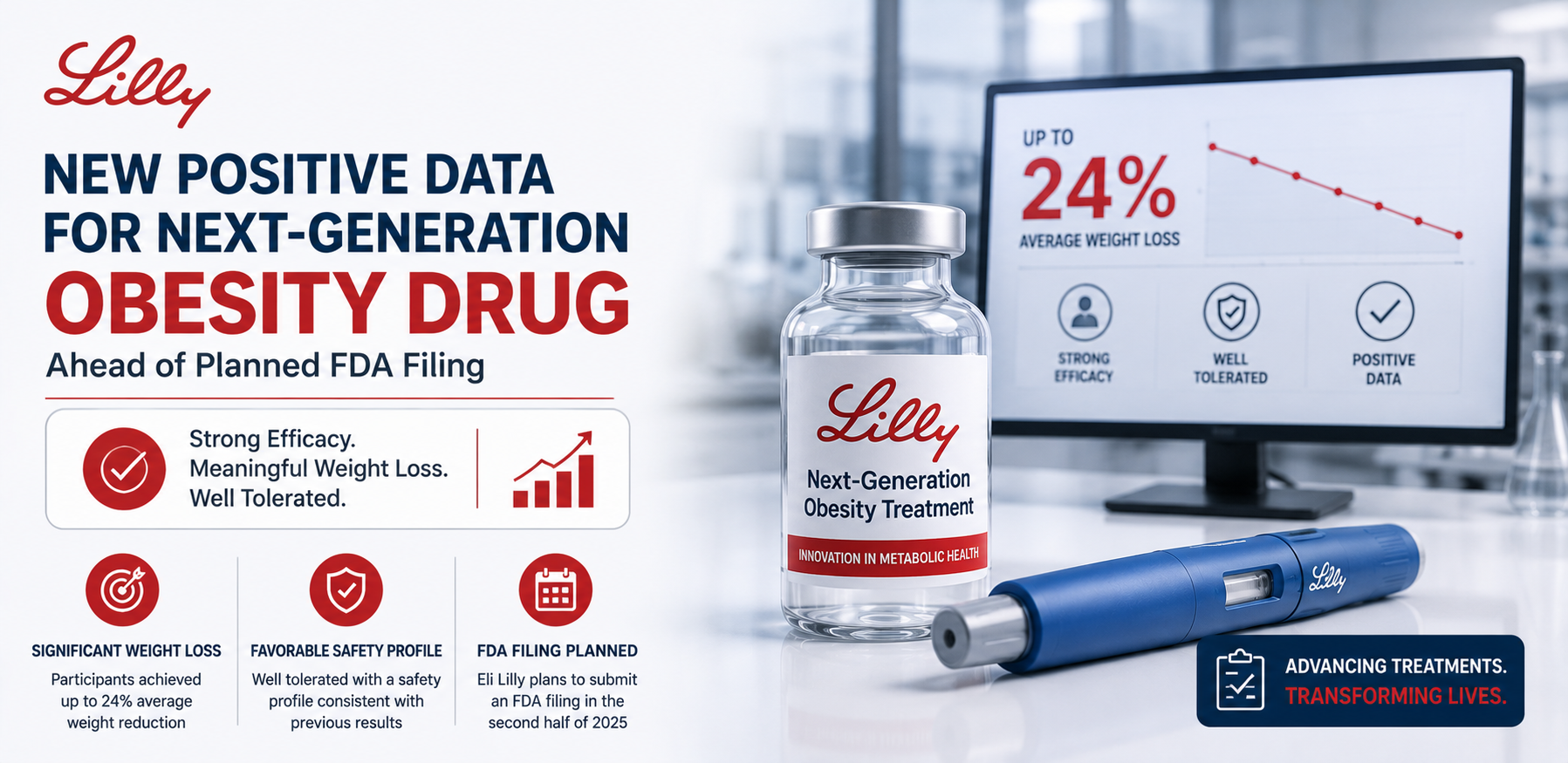
Eli Lilly Reports New Positive Data for Next-Generation Obesity Drug Ahead of Planned FDA Filing
What's Happening
Eli Lilly has announced encouraging new clinical data for its next-generation obesity treatment, reinforcing the company's position at the forefront of one of the fastest-growing therapeutic markets in healthcare.
The company said the latest trial results continue to support development of the investigational therapy and confirmed plans to submit the drug for U.S. Food and Drug Administration (FDA) approval in the first quarter of 2027.
The announcement builds on the extraordinary momentum surrounding obesity medicines over the past several years. What began as a breakthrough treatment for weight management has evolved into one of healthcare's most transformative therapeutic categories, influencing not only diabetes care but also cardiovascular disease, kidney disease, sleep apnea, fatty liver disease, and even consumer behavior across multiple industries.
For healthcare organizations, Lilly's latest update signals that innovation within the obesity drug market is far from slowing down.
The Obesity Drug Market Continues to Evolve
Modern obesity medicines have fundamentally changed how physicians approach chronic weight management.
Unlike earlier treatments that often produced modest results, newer therapies target hormones involved in appetite regulation, glucose metabolism, and energy balance.
These medicines help patients:
- Feel full for longer periods.
- Reduce calorie intake.
- Improve blood sugar control.
- Lose significant amounts of body weight.
- Lower the risk of obesity-related complications.
The success of first-generation GLP-1 therapies has fueled enormous investment across the pharmaceutical industry, with nearly every major drug manufacturer racing to develop next-generation treatments capable of delivering greater weight loss, improved tolerability, and more convenient dosing.
Lilly's newest candidate represents part of this broader innovation wave.
Why Companies Are Developing Next-Generation Therapies
Although existing obesity medicines have demonstrated remarkable effectiveness, manufacturers continue investing in newer compounds that address several remaining challenges.
Researchers are seeking therapies that can:
- Produce greater and more durable weight loss.
- Reduce gastrointestinal side effects.
- Preserve lean muscle mass during treatment.
- Improve long-term adherence.
- Expand benefits across additional diseases associated with obesity.
Many next-generation candidates are designed to act on multiple metabolic pathways rather than targeting a single hormone receptor.
Scientists believe these combination approaches may further improve clinical outcomes while expanding treatment options for patients with varying medical needs.
As clinical evidence grows, obesity medicines are increasingly being viewed as metabolic disease therapies rather than simply weight-loss drugs.
Obesity Is Becoming a Broader Healthcare Priority
Obesity affects millions of Americans and is associated with increased risk for numerous chronic diseases, including:
- Type 2 diabetes.
- Cardiovascular disease.
- Hypertension.
- Chronic kidney disease.
- Obstructive sleep apnea.
- Osteoarthritis.
- Certain cancers.
- Nonalcoholic fatty liver disease.
Because these conditions account for a substantial share of healthcare spending, effective obesity treatment has the potential to generate benefits that extend well beyond weight reduction alone.
Healthcare systems are increasingly recognizing obesity as a chronic disease requiring long-term clinical management rather than a lifestyle issue.
This shift is driving growing demand for pharmacological treatments supported by strong clinical evidence.
What an FDA Filing Means
Lilly's planned FDA submission in early 2027 represents an important milestone in the drug development process.
Before reaching this stage, investigational medicines typically undergo years of laboratory research followed by multiple phases of clinical trials designed to evaluate:
- Safety.
- Effectiveness.
- Appropriate dosing.
- Side effects.
- Long-term outcomes.
Once submitted, the FDA reviews the complete clinical data package before determining whether the therapy meets the standards for approval.
Even with positive trial results, approval is not guaranteed, as regulators carefully examine both benefits and potential risks before making a final decision.
Nevertheless, advancing to the filing stage indicates that development has reached one of its most significant milestones.
Industry Impact
- Pharmaceutical Companies: Lilly's continued progress intensifies competition within the obesity drug market, where manufacturers are investing billions of dollars in research and development. Success for one company often accelerates innovation across the broader industry as competitors pursue differentiated therapies.
- Healthcare Providers: Primary care physicians, endocrinologists, cardiologists, and obesity specialists are likely to see an expanding range of treatment options over the coming years. Greater therapeutic choice may allow clinicians to better tailor treatment to individual patient needs.
- Health Insurers: As obesity medicines continue demonstrating benefits beyond weight loss, insurers may face increasing pressure to expand coverage. Broader reimbursement decisions will depend on clinical outcomes, long-term cost-effectiveness, and healthcare utilization data.
- Healthcare Systems: Effective obesity management has the potential to reduce the burden of chronic disease across healthcare systems by lowering rates of cardiovascular events, diabetes complications, and obesity-related hospitalizations.
- Employers: Many employers are evaluating whether expanded coverage for obesity treatments could improve workforce health while reducing long-term healthcare costs associated with chronic disease.
Looking Ahead
The obesity treatment landscape continues to evolve at an extraordinary pace.
Future innovation is expected to focus not only on greater weight loss but also on improving patient experience, preserving muscle mass, reducing treatment burden, and demonstrating benefits across a wider range of diseases.
As additional therapies enter late-stage development, competition is likely to increase, potentially expanding patient access while encouraging continued scientific innovation.
Lilly's planned FDA submission represents another step toward what is becoming one of the most competitive and clinically significant areas of modern medicine.
Why This Matters
Obesity medicine has emerged as one of healthcare's most rapidly advancing fields, reshaping clinical practice, pharmaceutical research, payer strategies, and public health priorities.
Lilly's latest clinical update demonstrates that the current generation of therapies is only the beginning. Next-generation medicines may further improve outcomes while expanding treatment to millions of additional patients living with obesity and related metabolic diseases.
For healthcare organizations, continued advances in obesity treatment are expected to influence care delivery, reimbursement models, clinical guidelines, and long-term population health strategies for years to come.
Key Takeaways
- Eli Lilly reported positive new clinical data for its next-generation obesity therapy.
- The company plans to submit the treatment for FDA approval during the first quarter of 2027.
- Competition within the obesity drug market continues to accelerate as manufacturers pursue more effective therapies.
- Next-generation medicines aim to improve weight loss, tolerability, and long-term health outcomes.
- Advances in obesity treatment are increasingly influencing healthcare delivery, payer strategies, and chronic disease management across the healthcare ecosystem.
What This Means for Healthcare Marketers
Lilly's latest announcement reinforces that obesity care has become one of healthcare's highest-growth therapeutic markets. Pharmaceutical companies, health systems, digital health providers, diagnostics firms, and employers are all investing in solutions that support long-term metabolic health. For healthcare marketers, organizations expanding obesity care programs, metabolic disease management, nutrition services, and cardiometabolic research represent high-value opportunities. Tracking investment, clinical trial progress, and regulatory milestones in this space can help identify healthcare organizations that are actively preparing for the next generation of obesity therapies.