Elicio Shares Tumble After Pancreatic Cancer Therapy Misses Mid-Stage Trial Goal
What's Happening
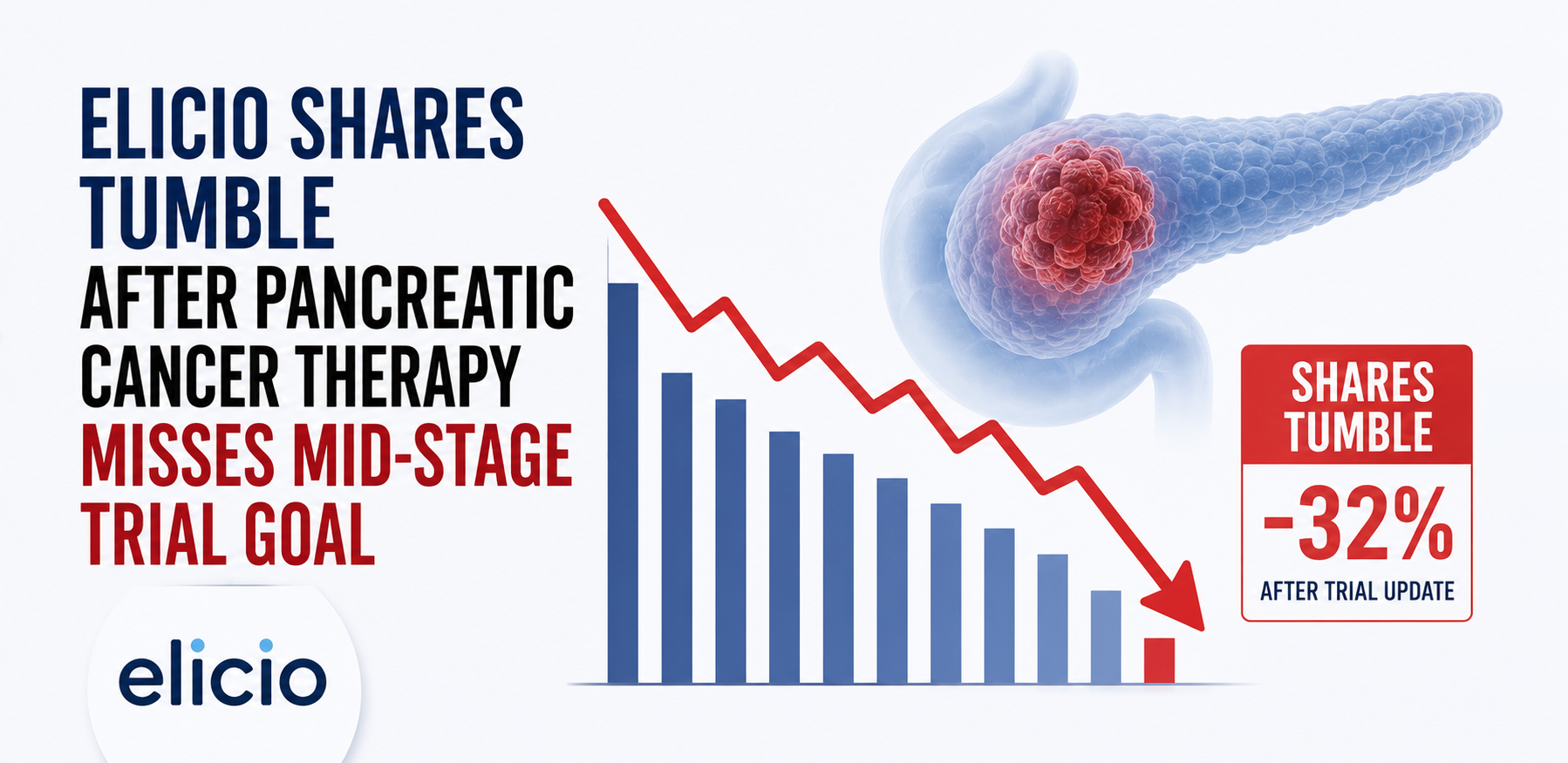
Shares of Elicio Therapeutics fell sharply after the company announced that its experimental pancreatic cancer treatment failed to achieve the primary goal of a mid-stage clinical trial.
The therapy was being evaluated as a potential treatment for pancreatic cancer, one of the most aggressive and difficult-to-treat forms of cancer. Investors had been closely watching the study because positive results could have significantly increased the treatment's chances of advancing into larger late-stage trials.
Instead, the company reported that the study did not meet its main objective, triggering a steep decline in the stock price and raising questions about the future development path for the therapy.
While the results were disappointing, the announcement does not necessarily mean the treatment is ineffective. Clinical trial data often contains multiple measurements and secondary findings that researchers continue to analyze even when the primary endpoint is missed.
However, in biotechnology, failing to meet a primary endpoint is typically viewed as a major setback because it can affect regulatory approval prospects, future funding, and investor confidence.
Why Pancreatic Cancer Is Such a Difficult Disease
Pancreatic cancer remains one of the deadliest forms of cancer worldwide. One of the biggest challenges is that the disease is often discovered late, after it has already spread beyond the pancreas.
Unlike some cancers that can be detected through routine screening, pancreatic cancer frequently develops without obvious symptoms during its early stages. As a result:
- Many patients are diagnosed at advanced stages.
- Treatment options are often limited.
- Survival rates remain lower than many other major cancers.
New therapies are urgently needed. Researchers have spent decades trying to improve outcomes, but progress has generally been slower than in areas such as breast cancer, lung cancer, or certain blood cancers. This is why clinical trial results in pancreatic cancer attract so much attention across the healthcare industry.
Understanding Clinical Trial Endpoints
To understand why investors reacted so strongly, it helps to understand how clinical trials are evaluated. Every clinical trial is designed around specific goals known as endpoints.
The primary endpoint is the most important measurement in the study and is usually the key factor regulators consider when evaluating whether a treatment works. Examples might include:
- Overall survival
- Tumor reduction
- Disease progression
- Recurrence rates
When a trial fails to meet its primary endpoint, it becomes much more difficult for a company to demonstrate that the treatment should move forward toward approval. Companies can still analyze secondary endpoints and subgroup data, but missing the primary goal typically creates a significant challenge. This is why biotechnology stocks often experience dramatic price swings following major clinical trial announcements.
Why Investors Reacted So Strongly
Biotechnology companies frequently depend on a relatively small number of experimental treatments. Unlike large pharmaceutical companies that generate billions of dollars from approved products, smaller biotech firms often derive most of their value from future expectations.
When investors believe a drug has strong approval potential, company valuations can rise rapidly. When a trial disappoints, those expectations can change almost overnight.
In Elicio's case, the market reaction reflects concerns about:
- Future development timelines
- Additional research costs
- Regulatory uncertainty
- Potential fundraising needs
- Competitive positioning
Investors are now waiting to see whether the company identifies encouraging signals elsewhere in the data that could justify continued development.
The Growing Competition in Cancer Drug Development
The oncology market has become one of the most competitive areas in healthcare. Large pharmaceutical companies and smaller biotechnology firms are investing billions of dollars into new cancer treatments, including:
- Immunotherapies
- Personalized medicines
- Cancer vaccines
- Cell therapies
- Targeted treatments
Because competition is so intense, companies often need strong clinical data to attract investment and secure partnerships. A missed endpoint does not automatically end a program, but it can make future development significantly more challenging. At the same time, setbacks are common in oncology research. Many successful cancer medicines experienced earlier trial failures, redesigns, or strategy changes before eventually reaching patients.
What Happens Next?
The next step for Elicio will likely involve a deeper analysis of the trial results. Researchers will examine:
- Secondary endpoints
- Specific patient groups
- Safety data
- Biomarker responses
- Long-term outcomes
In some cases, companies identify subgroups of patients who appear to benefit more than others. If meaningful signals emerge, management may decide to continue development through additional studies. If the data does not support further investment, the company may choose to redirect resources toward other programs. The future of the therapy will depend largely on what additional analysis reveals over the coming months.
Industry Impact
Biotechnology Companies: The results serve as another reminder of the high risks associated with drug development, particularly in oncology.
Investors: Clinical trial outcomes remain one of the biggest drivers of biotechnology valuations.
Cancer Researchers: The findings contribute to the broader understanding of pancreatic cancer and may help guide future research efforts.
Patients: Although disappointing, negative trial results still provide valuable scientific information that can improve future treatment development.
Key Takeaways
- Elicio's pancreatic cancer therapy failed to meet the primary goal of a mid-stage clinical trial.
- The company's stock fell sharply following the announcement.
- Pancreatic cancer remains one of the most difficult cancers to treat successfully.
- Missing a primary endpoint creates significant regulatory and commercial challenges.
- Additional analysis may determine whether development continues.
What This Means for Healthcare Marketers
For healthcare marketers, this story highlights the importance of understanding clinical evidence and development risk when engaging with biotechnology companies.
Drug development is not a straight path. Even promising therapies can encounter setbacks, delays, and unexpected trial results. Companies experiencing negative clinical outcomes often shift priorities, reevaluate budgets, and adjust commercialization strategies.
For vendors selling into biotech and pharmaceutical organizations, clinical milestones frequently influence purchasing decisions, partnership discussions, and investment priorities. A positive trial may accelerate spending, while disappointing results can lead to budget reviews and strategic changes.
The story also reinforces the importance of scientific credibility in healthcare marketing. Investors, providers, regulators, and patients increasingly expect messaging to be supported by strong clinical evidence rather than future promises. Organizations that understand how clinical developments affect business strategy are often better positioned to identify changing opportunities and engage healthcare companies at the right time.