Experimental Drug Helps Advanced Bladder Cancer Patients Avoid Bladder Removal Surgery
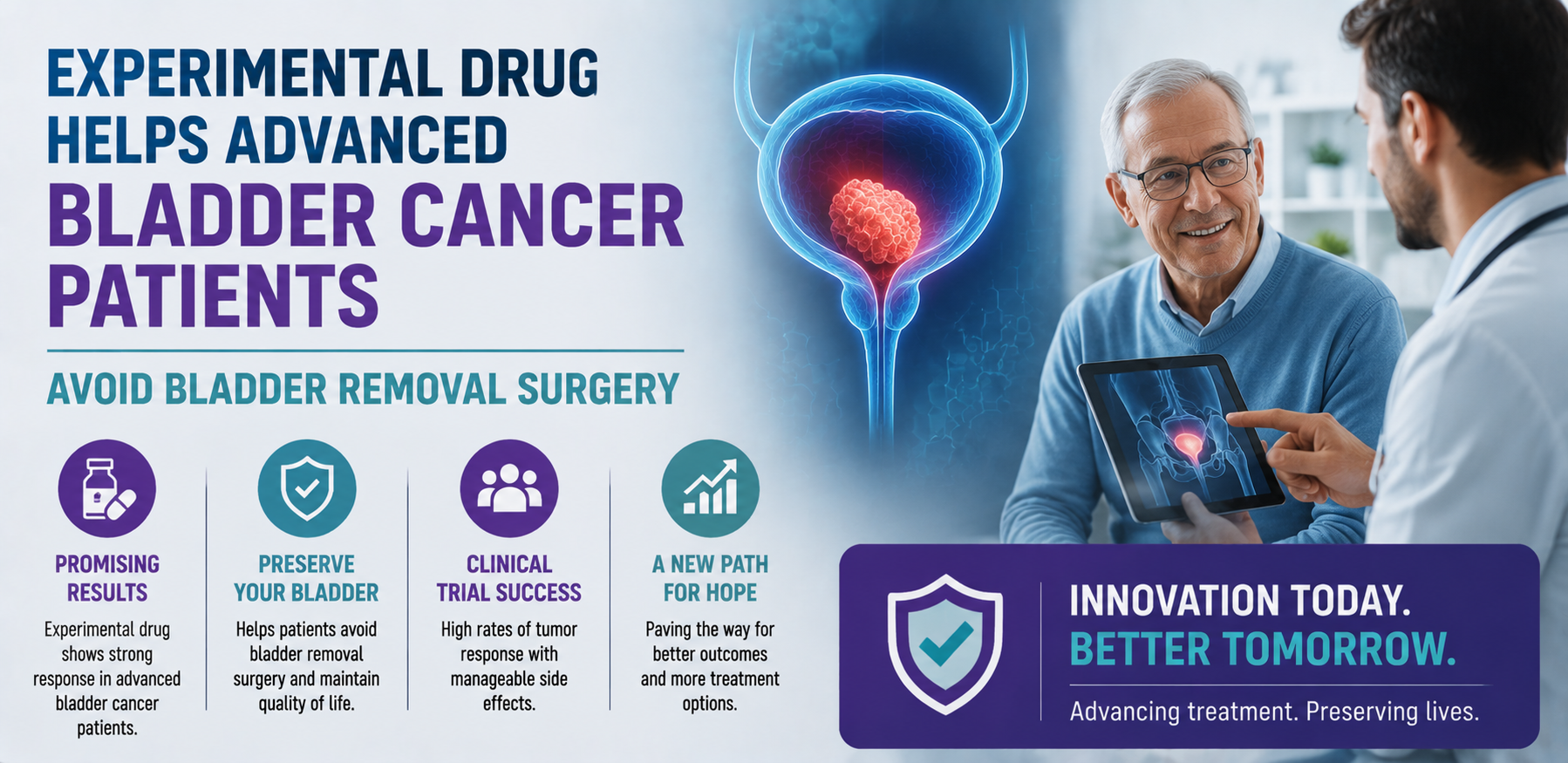
What's Happening
An experimental treatment has shown promising results in helping some patients with advanced bladder cancer avoid bladder removal surgery, according to new clinical trial data.
The therapy was evaluated in patients with muscle-invasive bladder cancer who received treatment before surgery. Researchers found that a significant number of patients experienced such a strong response that they were able to preserve their bladder instead of undergoing a radical cystectomy, the standard surgical treatment for advanced disease.
The findings suggest the therapy could offer a less invasive treatment approach while maintaining effective cancer control for selected patients.
Understanding Muscle-Invasive Bladder Cancer
Muscle-invasive bladder cancer occurs when cancer cells spread into the muscular wall of the bladder.
Treatment typically involves a combination of chemotherapy and radical cystectomy, a major operation that removes the bladder and requires patients to permanently alter how urine is stored and eliminated from the body.
Although the surgery can be lifesaving, it can also significantly affect a patient's quality of life, making bladder-preserving treatment strategies an important area of cancer research.
How the Experimental Therapy Works
The investigational treatment is designed to shrink or eliminate tumors before surgery through a neoadjuvant approach, meaning it is administered prior to the primary surgical procedure.
By reducing the amount of cancer present, researchers hope some patients can achieve a complete clinical response, allowing physicians to safely preserve the bladder while continuing close monitoring.
This strategy aims to maintain both cancer control and organ function, potentially improving long-term quality of life.
Industry Impact
- Oncology Researchers: The study supports continued research into bladder-preserving treatment strategies that may reduce the need for major surgery while maintaining positive clinical outcomes.
- Healthcare Providers: Urologists and oncologists could gain additional treatment options that allow more personalized care based on a patient's response to therapy.
- Patients: Avoiding bladder removal may help eligible patients maintain normal urinary function, improve quality of life, and reduce the physical and emotional impact associated with major surgery.
- Pharmaceutical Industry: The positive trial results reinforce growing investment in innovative cancer therapies designed to improve outcomes while reducing treatment burden.
Looking Ahead
Researchers will continue evaluating the therapy in larger clinical trials to confirm its long-term effectiveness and safety.
If future studies produce similar results and regulatory approvals are obtained, the treatment could become an important option for patients seeking bladder-preserving care.
Additional research will also help identify which patients are most likely to benefit from this treatment approach.
Why This Matters
Bladder cancer remains one of the most common cancers worldwide, and treatment often involves life-changing surgery.
Therapies that allow patients to preserve their bladder while effectively treating cancer have the potential to significantly improve quality of life without compromising clinical outcomes.
The study also reflects a broader trend in oncology toward more personalized treatments that focus not only on survival but also on preserving organ function and reducing treatment-related complications.
Key Takeaways
- An experimental therapy helped some patients with advanced bladder cancer avoid bladder removal surgery.
- The treatment was given before surgery to shrink or eliminate tumors.
- Bladder-preserving approaches could improve quality of life for eligible patients.
- Larger clinical trials are needed to confirm the treatment's long-term safety and effectiveness.
- The findings highlight continued innovation in personalized cancer care and organ-preserving therapies.
What This Means for Healthcare Marketers
The promising trial results highlight continued investment in oncology, precision medicine, and organ-preserving cancer treatments. Pharmaceutical companies, cancer centers, urology practices, academic medical centers, and biotechnology firms are expanding research into therapies that improve patient outcomes while reducing treatment burden. For healthcare marketers, organizations developing innovative oncology treatments represent high-intent opportunities for physician education, clinical trial awareness, patient engagement, medical affairs initiatives, and future commercial launch strategies.