Experimental GLP-1 Therapy Shows Liver Benefits Beyond Weight Loss in Mid-Stage Trial
What's Happening
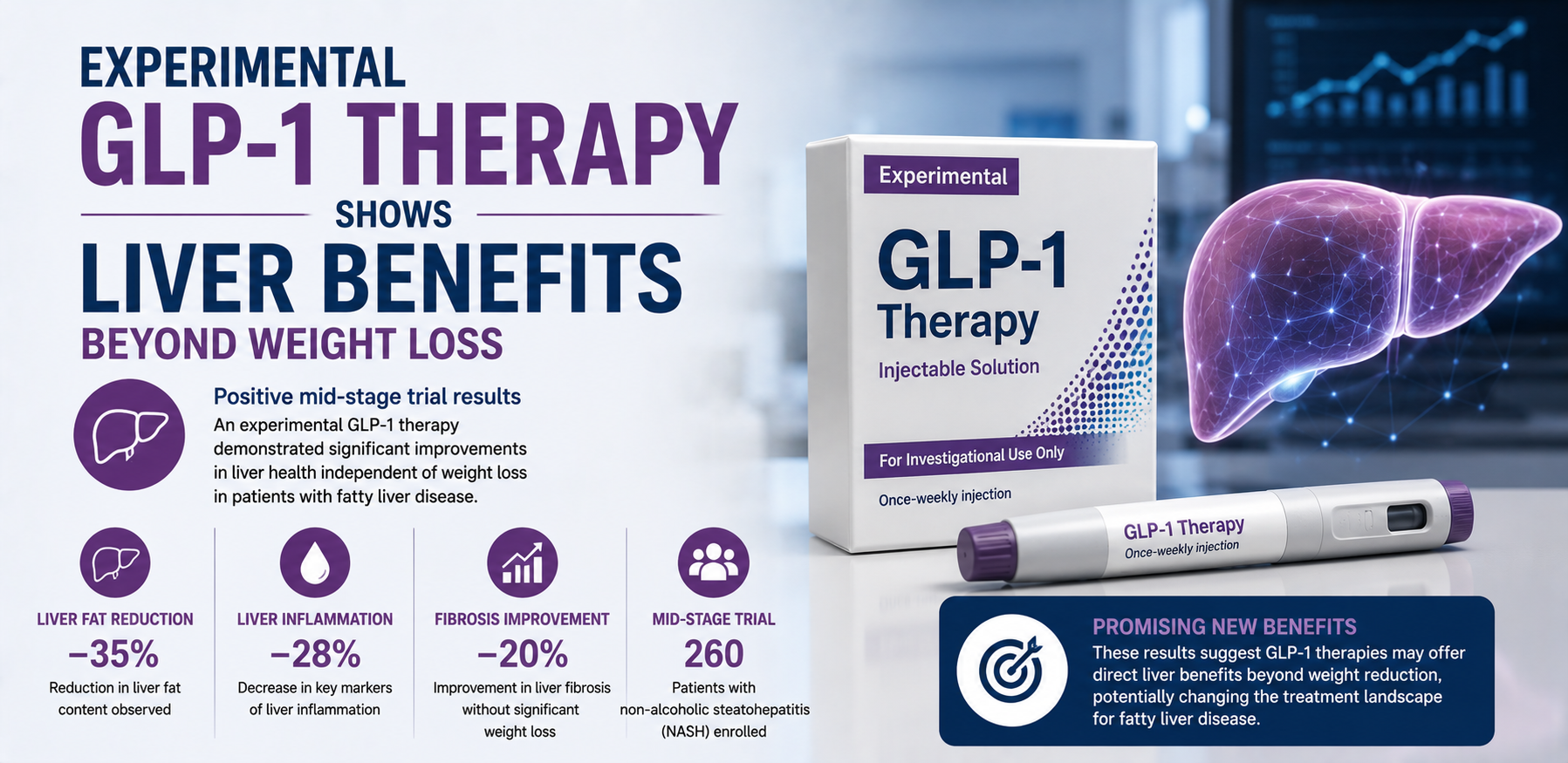
An experimental GLP-1-based medicine has demonstrated significant improvements in metabolic dysfunction-associated steatohepatitis (MASH), formerly known as nonalcoholic steatohepatitis (NASH), even after accounting for the amount of weight patients lost during treatment.
The findings come from a mid-stage clinical trial evaluating an investigational therapy being developed for patients with MASH, a serious liver disease that affects millions of people worldwide. Researchers reported that improvements in liver health appeared to extend beyond the benefits typically associated with weight reduction alone, suggesting the drug may have direct biological effects on the liver.
The results add to growing evidence that GLP-1 medicines could play an increasingly important role in treating chronic liver disease, one of the fastest-growing causes of liver failure, liver transplantation, and liver-related deaths.
Understanding MASH
Metabolic dysfunction-associated steatohepatitis (MASH) is an advanced form of metabolic dysfunction-associated steatotic liver disease (MASLD), a condition in which excess fat accumulates in the liver.
While many people with fatty liver disease experience few symptoms, MASH develops when fat buildup is accompanied by inflammation and liver cell injury.
Over time, this ongoing inflammation can lead to:
- Liver fibrosis (scarring).
- Cirrhosis.
- Liver failure.
- Liver cancer.
- The need for liver transplantation.
The disease is closely linked to several common metabolic conditions, including obesity, type 2 diabetes, high cholesterol, high blood pressure, and insulin resistance.
Because these conditions continue to become more common globally, MASH is emerging as one of the largest unmet medical needs in hepatology. Many patients remain undiagnosed until significant liver damage has already occurred because early stages of the disease often cause few noticeable symptoms.
Why GLP-1 Medicines Are Being Studied for Liver Disease
GLP-1 receptor agonists were originally developed to improve blood sugar control in people with type 2 diabetes and later transformed obesity treatment because of their ability to promote substantial weight loss. Researchers soon noticed that patients taking GLP-1 medicines frequently showed improvements in liver fat, liver inflammation, and metabolic health, prompting clinical trials specifically focused on liver disease.
Scientists believe these medicines may benefit the liver through several mechanisms:
- Promoting weight loss.
- Improving insulin sensitivity.
- Reducing inflammation.
- Decreasing fat accumulation within liver cells.
- Improving metabolic function throughout the body.
Until recently, much of the benefit was thought to result primarily from weight reduction. The latest study suggests that at least some liver improvements may occur through additional biological pathways independent of weight loss.
Why the New Findings Matter
One of the most significant observations from the trial was that improvements in liver disease appeared to remain significant even after researchers adjusted for the amount of weight participants lost. This distinction is important.
Potential implications include:
- More effective treatment for patients with advanced liver disease.
- Greater benefit for patients unable to achieve substantial weight loss.
- New scientific understanding of how GLP-1 medicines affect metabolic disease.
- Expanded use of GLP-1 therapies beyond diabetes and obesity.
Although additional late-stage clinical trials will be needed to confirm these findings, the results strengthen confidence that GLP-1 medicines may become an important component of future liver disease treatment.
The Growing Burden of Fatty Liver Disease
Fatty liver disease has become one of the most common chronic liver conditions worldwide. Healthcare systems are seeing increasing numbers of patients because of rising rates of obesity and type 2 diabetes.
Risk factors include:
- Excess body weight.
- Poorly controlled diabetes.
- Sedentary lifestyles.
- Elevated triglycerides.
- Metabolic syndrome.
Without effective treatment, progressive liver scarring can eventually require transplantation. Until recently, treatment options were largely limited to lifestyle changes such as diet, exercise, and weight loss. The development of medicines capable of slowing or reversing liver damage represents a major advancement for hepatology.
Industry Impact
- Pharmaceutical Companies: Positive results further expand the commercial potential of GLP-1 medicines beyond diabetes and obesity, creating opportunities for broader product portfolios.
- Healthcare Providers: Hepatologists, endocrinologists, gastroenterologists, and primary care physicians may eventually gain additional treatment options for patients with MASH if future clinical trials confirm these benefits.
- Patients: Individuals living with fatty liver disease could benefit from therapies that address both metabolic health and liver injury. A treatment capable of improving liver disease independently of weight loss may offer hope for patients who struggle to achieve significant weight reduction through lifestyle changes alone.
- Healthcare Systems: As MASH becomes a leading cause of advanced liver disease, effective medicines could help reduce hospitalisations, liver transplant demand, and long-term healthcare costs associated with progressive liver failure.
Looking Ahead
The current study represents a mid-stage clinical trial, meaning further research will be necessary before the therapy can be considered for regulatory approval.
Future phase III studies will evaluate:
- Long-term safety.
- Durability of liver improvements.
- Reduction in fibrosis progression.
- Clinical outcomes such as cirrhosis and liver failure.
- Benefits across diverse patient populations.
If these findings are confirmed, they could reshape treatment strategies for one of the fastest-growing chronic diseases worldwide.
Why This Matters
The latest trial adds to a growing body of evidence showing that GLP-1 medicines may have benefits extending far beyond diabetes and obesity. Rather than acting solely as weight-loss therapies, these medicines increasingly appear to influence multiple metabolic diseases through interconnected biological pathways.
For patients with MASH, this could represent an important step toward treatments that directly slow liver damage while simultaneously improving broader metabolic health. As research continues, these medicines may fundamentally change how clinicians approach metabolic disease management across multiple specialties.
Key Takeaways
- An experimental GLP-1 therapy improved MASH in a mid-stage clinical trial.
- Researchers found that liver benefits appeared to extend beyond the effects of weight loss alone.
- MASH is a progressive liver disease closely linked to obesity, diabetes, and metabolic syndrome.
- Additional late-stage clinical trials will be needed before the therapy can be considered for regulatory approval.
- The findings strengthen evidence that GLP-1 medicines may become important treatments for multiple metabolic diseases beyond diabetes and obesity.
What This Means for Healthcare Marketers
The expanding clinical potential of GLP-1 medicines continues to reshape multiple therapeutic markets beyond endocrinology. Pharmaceutical companies, liver disease specialists, healthcare systems, and biotechnology firms are increasing investment in metabolic disease research as evidence grows that these therapies may address interconnected chronic conditions. For healthcare marketers, organisations advancing treatments for obesity, diabetes, liver disease, cardiovascular disease, and related metabolic disorders represent high-intent prospects as they prepare for future clinical development, regulatory submissions, physician education, and commercial expansion.