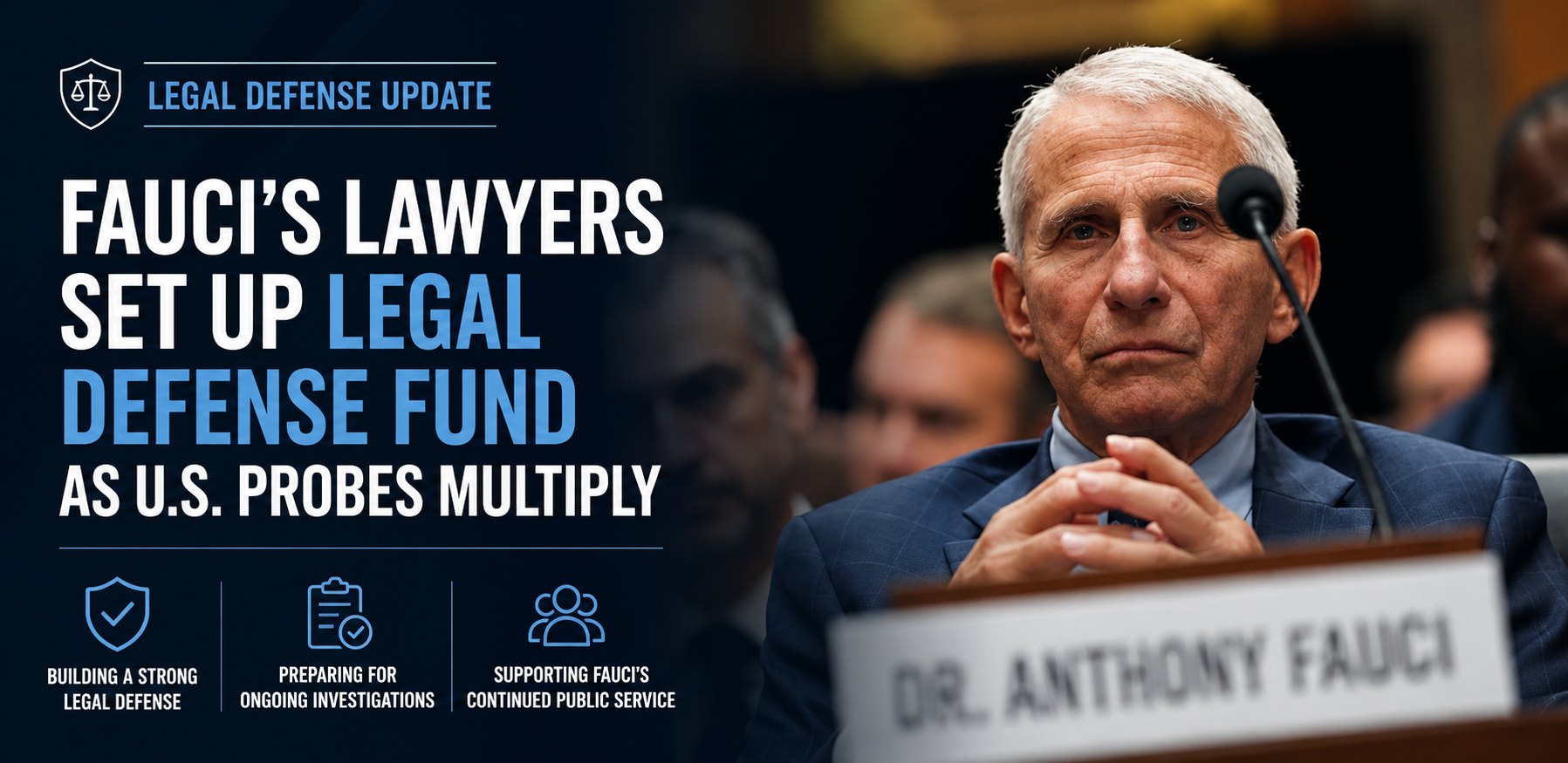
Fauci's Lawyers Set Up Legal Defense Fund as U.S. Probes Multiply
What's Happening
Lawyers for Dr. Anthony Fauci, the former top U.S. infectious-disease expert, have established a legal defense fund to help cover the costs of responding to a growing number of federal and state investigations related to his handling of the COVID-19 pandemic. The fund is intended to support Fauci's legal defense as investigations continue into decisions made during the pandemic and questions surrounding COVID-19 research funding.
Fauci himself will not receive payments from the fund, according to his lawyers. It is being managed by an independent trustee and adviser.
Why Fauci Is Facing Investigations
Fauci became one of the most prominent public figures of the U.S. COVID-19 response during his nearly four decades leading the National Institute of Allergy and Infectious Diseases (NIAID). He has increasingly become a target of Republican lawmakers investigating:
- The U.S. government's COVID-19 response.
- Federal funding of coronavirus research.
- The origins of COVID-19.
- Government decision-making during the pandemic.
- Fauci's communications and handling of government records.
Republican Senator Rand Paul has asked the Justice Department to prosecute Fauci after Fauci refused to answer certain questions at a congressional hearing. Three state attorneys general have also launched their own investigations.
Fauci Denies Wrongdoing
Fauci has denied wrongdoing, and his lawyers have described the investigations as an unprecedented legal burden for a retired civil servant. His attorneys say he is facing substantial legal costs despite having received a preemptive presidential pardon from Joe Biden in January 2025.
The pardon does not prevent state investigations, and the ongoing federal and state inquiries continue to create legal exposure and costs.
Connection to the COVID-19 Pandemic
The investigations are closely connected to continuing political and scientific disputes surrounding the origins of COVID-19 and U.S. funding for coronavirus research. U.S. intelligence agencies remain divided over the origins of the pandemic. Some agencies have considered a laboratory-related origin more likely, while others have assessed natural transmission as more likely.
Fauci himself has not been accused of wrongdoing in the criminal case involving his former adviser David Morens.
Why This Matters for U.S. Public Health
Although this is primarily a legal and political development, it is directly connected to the U.S. government's management of the COVID-19 pandemic and public-health decision-making. The investigations could affect how future administrations, federal health agencies and public-health officials approach:
- Pandemic response.
- Research funding.
- Government transparency.
- Scientific communication.
- Public-health policy.
- Federal health-agency oversight.
Looking Ahead
Fauci's legal team expects the investigations to require significant resources as additional state and federal inquiries continue. The growing number of investigations also means that decisions made during the COVID-19 pandemic will remain under scrutiny well after the public-health emergency itself has ended.
Key Takeaways
- Fauci's lawyers have established a legal defense fund.
- The fund will help cover costs associated with federal and state investigations into his pandemic-era work.
- Fauci will not receive payments from the fund.
- Three states have launched their own investigations, while Senator Rand Paul has sought a Justice Department prosecution.
- Fauci denies wrongdoing.
- The investigations center partly on COVID-19 response, research funding, and the origins of the pandemic.
What This Means for Healthcare Marketers
The story underscores how public-health policy, scientific leadership and government health agencies can remain under scrutiny long after a major health crisis ends. For healthcare organizations, pharmaceutical companies, research institutions and public-health technology providers, the developments could influence future conversations around research governance, regulatory transparency, pandemic preparedness and trust in health institutions.